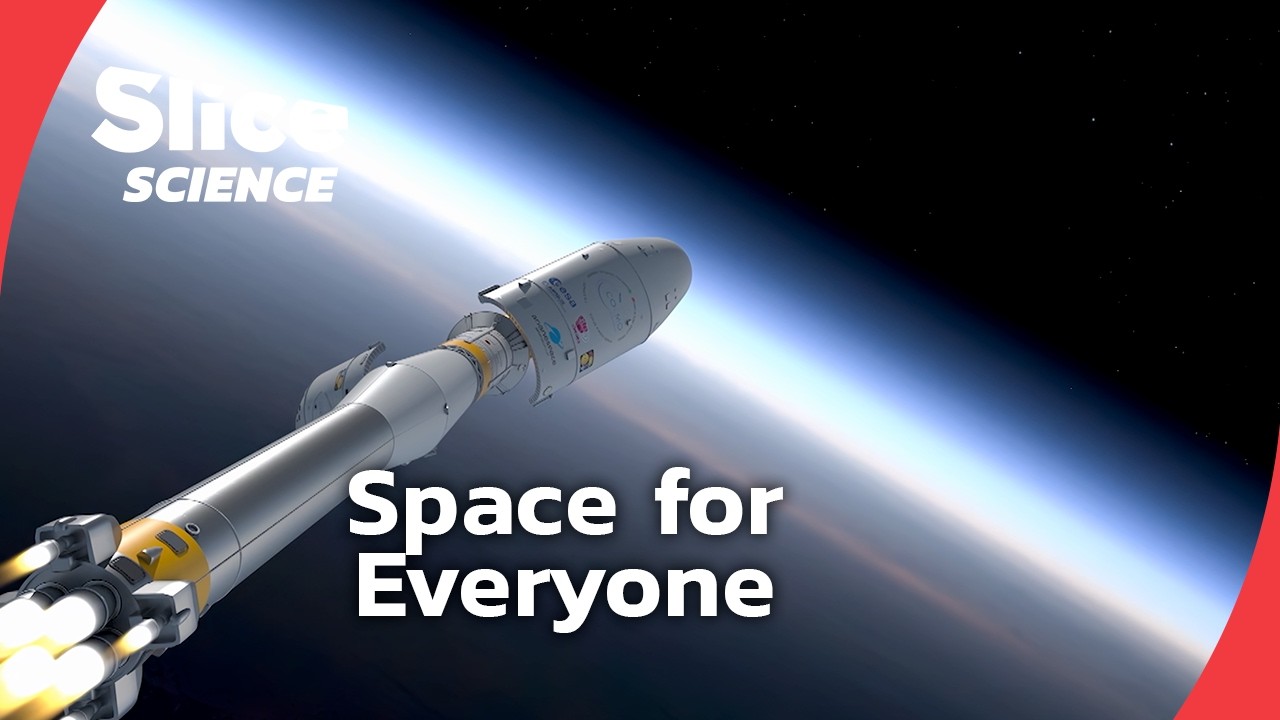
SpaceX: The New Era of Space Travel | SLICE SCIENCE
Keywords
Summary
135 words
Critical Evaluation
The documentary provides a solid historical foundation, accurately explaining orbital mechanics and the early space race. The use of archival footage and expert commentary adds credibility. However, the title promises a focus on SpaceX’s new era, yet the video dedicates only a few minutes to SpaceX, mostly at the end. The content is largely derivative, covering well-known history without offering new insights. There are minor factual errors, such as misspelling ‘Copernicus’ and ‘Laika’, which detract from its scientific rigor. The sources are not explicitly cited, and the documentary relies on general historical knowledge. The argumentation is coherent but lacks depth on the technical aspects of SpaceX’s achievements. The production quality is good, but the scientific value is moderate. The adéquation titre/contenu is poor, as the title overstates the SpaceX focus. Overall, it serves as a decent educational overview but fails to deliver on its promise of exploring SpaceX’s new era.
150 words
Title / Content Match
The title suggests a focus on SpaceX's new era, but the video spends most time on historical context, with only brief mentions of SpaceX at the end. The title is somewhat misleading.
Quality & Reliability
6/10
The documentary provides a historical overview of rocketry and orbital mechanics, with accurate references to Newton, Lagrange, and early space missions. However, it lacks depth on SpaceX specifics and contains minor inaccuracies (e.g., 'Capernicus' misspelling, 'Leica' instead of Laika). The content is largely derivative and not up-to-date with recent SpaceX developments.
Key Moments
Markers derived by PSI from the transcript: the creator did not define chapters.
- Introduction to orbital mechanics and satellite trajectories.
- Historical context: Newton, Kepler, and Lagrange's contributions.
- Development of V2 rockets and early missile technology.
- The R7 and Redstone missiles, and the Vanguard program.
- Launch of Sputnik and its impact on the space race.
- American response and the Vanguard failure.
- Transition to commercial spaceflight and SpaceX's role.
- Conclusion: SpaceX's vision for Mars and the future of space travel.
Cited Sources
- No explicit sources cited in the video or description. — The documentary does not reference specific sources; it relies on general historical knowledge.
Concurring Sources
- NASA History — Provides historical context on the space race and early satellites.
Dissenting Sources
Contribution & Novelties
The documentary offers a concise historical recap of rocketry, but its novelty is limited. It does not provide new information on SpaceX’s current missions or technologies. The ‘Pour aller plus loin’ section suggests further exploration:
Pour aller plus loin :
- SpaceX official website — For up-to-date information on SpaceX missions and technology.
- NASA History — For detailed accounts of early space programs.
- Orbital mechanics on Wikipedia — For a deeper understanding of the physics involved.
75 words
Radar Profile
The radar profile shows moderate scores across all dimensions, indicating a balanced but not exceptional documentary. The highest score is in information quantity, while technical depth is lower, reflecting the historical focus.
💬 No comments were provided for analysis.