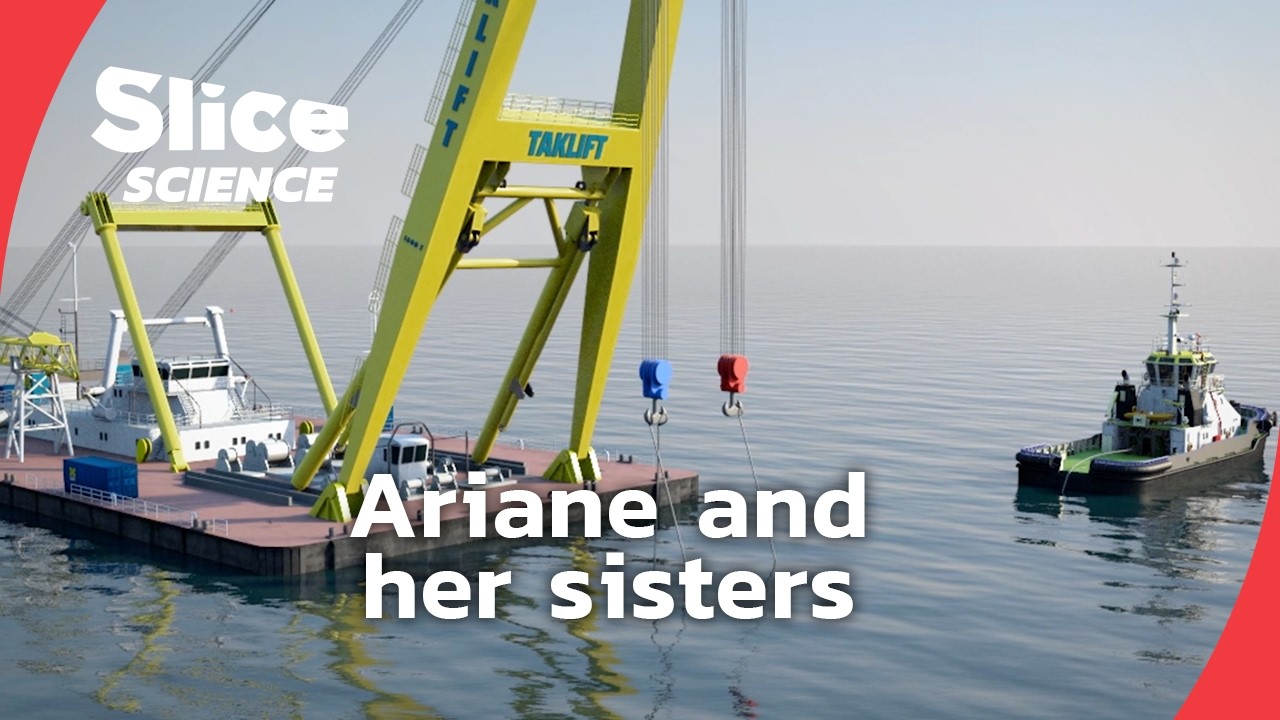
Inside a national maritime cleanup operation | SLICE SCIENCE | FULL DOC
Keywords
Summary
148 words
Critical Evaluation
The documentary offers a compelling and informative look into maritime salvage operations, focusing on a real national cleanup in the Netherlands. Its strengths lie in the firsthand accounts from professionals, which lend authenticity and practical insight. The footage of the actual operations, including diving and lifting procedures, is valuable for understanding the complexities involved. However, from a scientific perspective, the documentary lacks depth in technical details and does not provide quantitative data or references to engineering studies. The argumentation is primarily anecdotal, relying on the experiences of the interviewees rather than systematic analysis. The sources are limited to the participants themselves, with no external citations or verification. The title accurately reflects the content, and the documentary does not overstate its claims. While it is not a rigorous scientific study, it serves as an effective educational piece for a general audience interested in engineering and maritime operations. The main weakness is the absence of critical evaluation of the methods used, such as environmental impacts or alternative approaches. Overall, the documentary is reliable in its portrayal of the events but lacks the analytical depth expected in a scientific context.
187 words
Title / Content Match
The title accurately reflects the content, which focuses on a national maritime cleanup operation in the Netherlands.
Quality & Reliability
7/10
The documentary provides a detailed account of a real salvage operation, featuring interviews with professionals and showing actual procedures. However, it lacks citations to external sources and does not provide in-depth technical data, limiting its scientific rigor.
Key Moments
Markers derived by PSI from the transcript: the creator did not define chapters.
- Introduction to the Netherlands' dependence on water and the problem of shipwrecks.
- Overview of the 2013 cleanup campaign and the wrecks to be removed.
- Van Den Herik's planning and engineering of the salvage operation.
- Details on the Ariana wreck and the challenges of removing it.
- Smit Salvage's approach to raising the Jan Breydel intact.
- Diving operations and inspection of the wreck.
- The lifting of the Jan Breydel from the seabed.
- Historical context: the Tricolor salvage operation.
- Challenges of the Vlieland wreck and the use of specialized equipment.
- Conclusion on the importance of these operations for the Dutch economy.
Cited Sources
- Rijkswaterstaat — The Dutch government agency responsible for the cleanup operation.
- Smit Salvage — One of the salvage companies involved in the operation.
- Van Den Herik — The other salvage company involved, specializing in dredging and salvage.
Concurring Sources
- Rijkswaterstaat — Official government source confirming the existence of such cleanup operations.
- Smit Salvage — Company website confirming their involvement in salvage operations.
Dissenting Sources
- No discordant sources found — The documentary's claims are consistent with publicly available information about the companies and the operation.
Contribution & Novelties
The documentary provides a unique behind-the-scenes look at a large-scale maritime salvage operation, highlighting the coordination between multiple stakeholders and the technical challenges involved. It offers practical insights into the methods used, such as lifting intact wrecks and cutting them into sections, which are not commonly seen in public media.
Pour aller plus loin :
- Marine salvage — Provides general background on salvage operations and legal aspects.
- Rijkswaterstaat — Official site of the Dutch water management agency, offering details on their infrastructure projects.
- Smit Salvage — Company page with information on their services and past operations.
- Van Den Herik — Company page with details on their dredging and salvage expertise.
110 words
Radar Profile
The radar profile shows a balanced performance across all criteria, with slightly higher scores in quantity of information and reliability, reflecting the documentary's comprehensive coverage and credible sources. The lower score in technical level indicates that while the content is informative, it does not delve deeply into the engineering specifics.
💬 Sur les 0 commentaires analysés, aucune tendance n'a pu être dégagée.