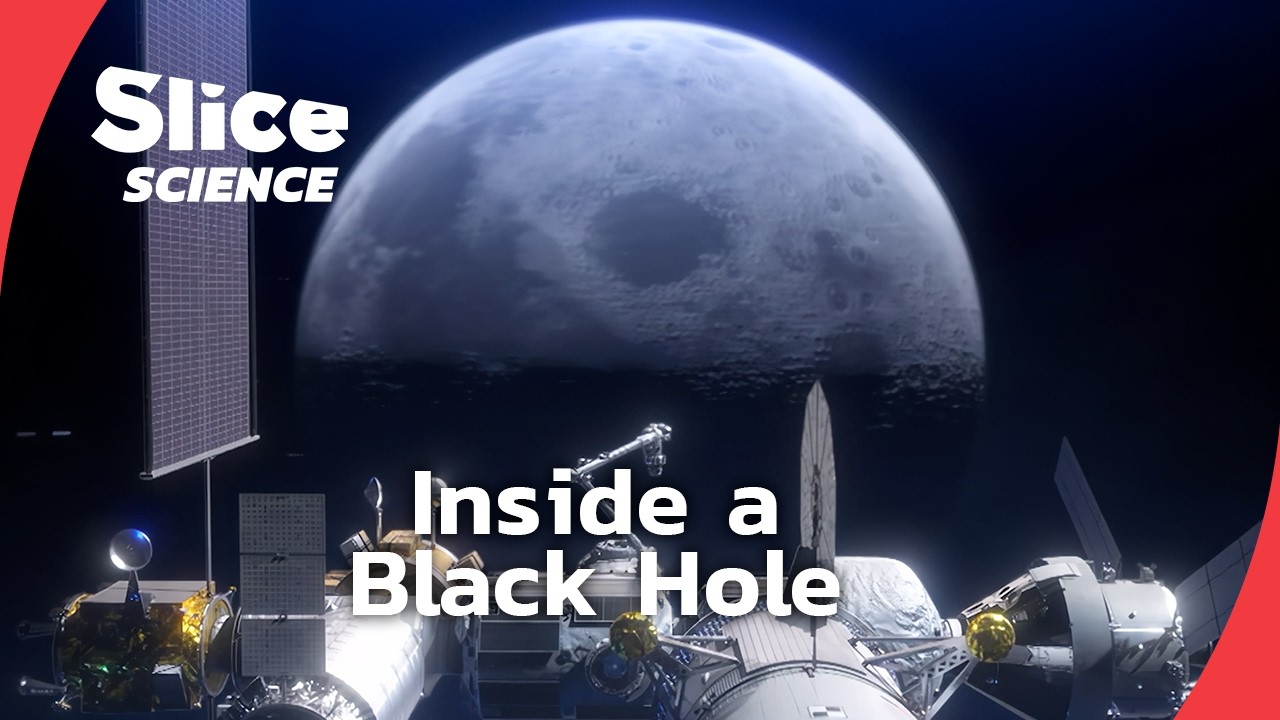
Black Holes: The Dark Heart of the Universe | SLICE SCIENCE | FULL DOC
Keywords
Summary
106 words
Critical Evaluation
The documentary provides a visually stunning and engaging introduction to black holes, effectively using CGI and expert interviews to convey key concepts. The scientific content is largely accurate, covering the basics of black hole formation, event horizons, and the recent imaging of M87*. However, it occasionally oversimplifies complex topics, such as the nature of singularities and the information paradox, which might mislead viewers seeking deeper understanding. The inclusion of historical context and NASA’s role adds credibility, but some claims lack precise sourcing. The pacing is good, but the documentary could benefit from more rigorous explanations and citations. Overall, it serves as a solid educational resource for beginners, though experts may find it lacking in depth.
115 words
Title / Content Match
The title accurately reflects the documentary's focus on black holes, though the content also covers broader space exploration topics.
Quality & Reliability
7/10
The documentary presents a broad overview of black hole science, featuring interviews with leading physicists and references to NASA discoveries. While it includes some inaccuracies and oversimplifications, the core scientific content is generally reliable and aligns with established knowledge.
Key Moments
Markers derived by PSI from the transcript: the creator did not define chapters.
- Introduction to black holes and their mysterious nature.
- Explanation of how black holes form from collapsing stars.
- Discussion of the event horizon and the point of no return.
- Overview of Einstein's theory of general relativity and its role in predicting black holes.
- NASA's contributions to black hole research, including telescopes and missions.
- The first image of a black hole captured by the Event Horizon Telescope.
- Exploration of gravitational waves and their detection.
- Theoretical concepts like wormholes and the information paradox.
- The role of black holes in galaxy formation and evolution.
- Future research directions and unanswered questions about black holes.
Cited Sources
- NASA — Mentioned as a source of discoveries and missions related to black holes.
- Event Horizon Telescope — Referenced for capturing the first image of a black hole.
Concurring Sources
- NASA — NASA's official website provides extensive information on black holes, aligning with the documentary's content.
- Event Horizon Telescope — The EHT collaboration's results on M87* are consistent with the documentary's claims.
Dissenting Sources
- Some theoretical physicists — Certain interpretations of the information paradox and black hole interiors remain debated, and the documentary may present them as more settled than they are.
Contribution & Novelties
The documentary synthesizes current knowledge on black holes, presenting it in an accessible format with high-quality visuals. It highlights recent breakthroughs like the EHT image and gravitational wave detections, making it a valuable resource for public understanding.
Pour aller plus loin :
- Black hole - Wikipedia — Comprehensive overview of black hole physics.
- Event Horizon Telescope — Official site with details on the first black hole image.
- LIGO — Information on gravitational wave detection and black hole mergers.
78 words
Radar Profile
The radar profile shows balanced scores across information quantity, quality, technical level, and reliability, indicating a well-rounded documentary. The slightly lower technical level suggests it is accessible to a general audience, while the reliability score reflects its grounding in established science.
💬 No comments were provided for analysis.