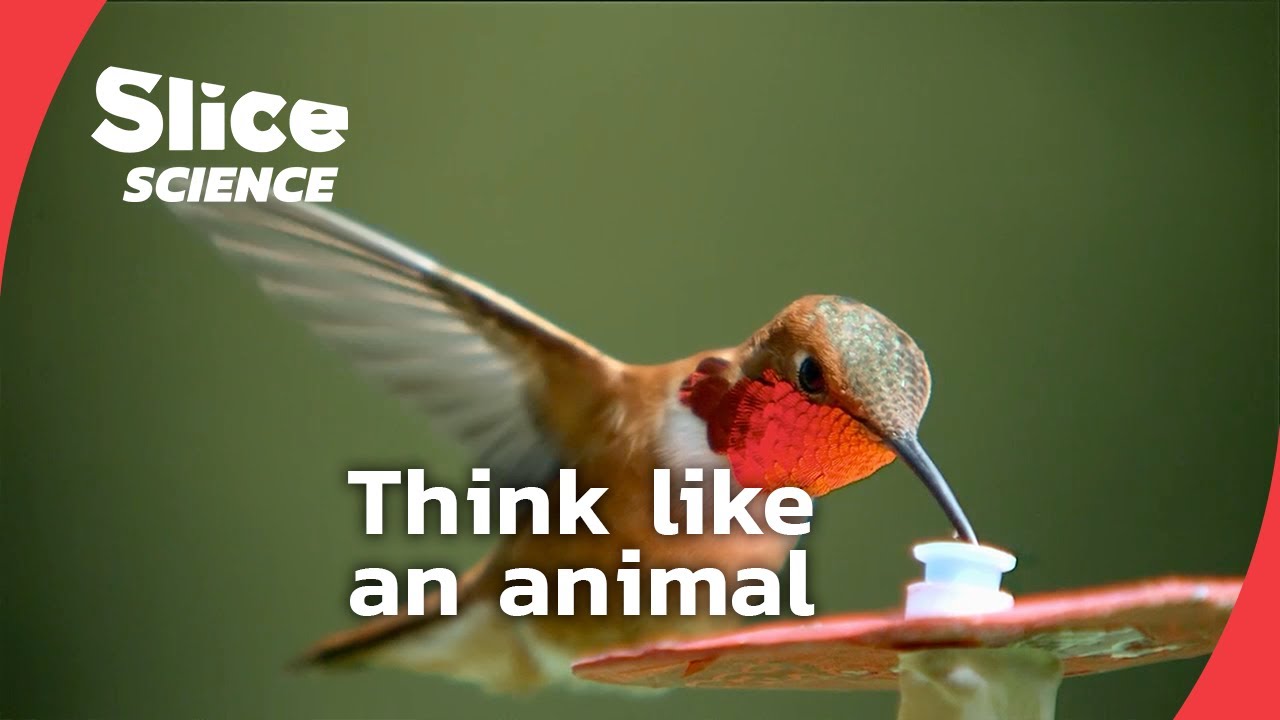
Animal intelligence beyond human logic | SLICE SCIENCE | FULL DOC
Keywords
Summary
126 words
Critical Evaluation
The documentary provides a compelling and scientifically grounded exploration of animal intelligence, drawing on research from established scientists. It effectively challenges anthropocentric biases by presenting evidence of sophisticated cognitive abilities in various species. The strength of the film lies in its emphasis on ecological validity, showcasing experiments conducted in natural settings, which enhances the relevance of the findings. The researchers’ explanations are clear and accessible, making complex concepts understandable without oversimplifying. However, the documentary lacks explicit citations to specific studies or publications, which would strengthen its scientific credibility. While the experts are credible, the absence of references limits the viewer’s ability to verify claims. The narrative is well-structured, moving from terrestrial to marine to avian examples, and maintains a balanced tone. The inclusion of anthropomorphism as a cautionary concept is valuable, and the film successfully argues that intelligence must be understood in context. The production quality is high, with stunning visuals and engaging storytelling. Overall, the documentary is a valuable contribution to science communication, though it could benefit from more rigorous sourcing. The title accurately reflects the content, and the film does not overstate its claims, instead inviting viewers to reconsider their assumptions about animal minds.
196 words
Title / Content Match
The title accurately reflects the content, which explores various forms of animal intelligence beyond human-centric logic.
Quality & Reliability
8/10
The documentary presents scientific research from established researchers and institutions, with field observations and experiments. It avoids sensationalism and emphasizes the importance of studying animals in their natural contexts. However, it lacks detailed citations or references to specific studies, and some claims are presented without direct sourcing.
Key Moments
Markers derived by PSI from the transcript: the creator did not define chapters.
- Introduction to the documentary's theme: challenging human-centric views of intelligence.
- Louise Barrett and Peter Henzy discuss studying vervet monkeys in South Africa.
- Experiment with alarm calls and vervet monkey responses.
- Explanation of grooming as a social tool in vervet monkeys.
- Shane Garrow and the Dominica Sperm Whale Project: studying communication.
- Sperm whale vocalizations and the use of hydrophones.
- Tagging a sperm whale to record underwater behavior and communication.
- Andy Hurley and Sue Healey study hummingbird memory in Alberta.
- Experiment with artificial flowers to test episodic memory in hummingbirds.
- Discussion on brain size and intelligence, concluding that context matters.
Cited Sources
- Vervet Monkey Research Project — Mentioned as the research project in South Africa where Louise Barrett and Peter Henzy study vervet monkey behavior.
- Dominica Sperm Whale Project — The project led by Shane Garrow studying sperm whale communication in Dominica.
- University of Lethbridge — Affiliation of Louise Barrett and Peter Henzy, mentioned as their home institution.
Concurring Sources
- Animal Cognition (journal) — A peer-reviewed journal that publishes research on animal cognition, aligning with the documentary's themes.
- The Cambridge Declaration on Consciousness — A declaration supporting the continuity of consciousness across species, relevant to the documentary's argument.
Dissenting Sources
Contribution & Novelties
The documentary offers a fresh perspective on animal intelligence by emphasizing ecological and evolutionary contexts. It showcases recent research that challenges traditional laboratory-based studies, highlighting the importance of field observations. The film’s strength is its ability to present complex scientific concepts in an engaging manner, making it accessible to a broad audience. It contributes to the ongoing discourse on animal cognition by featuring diverse species and innovative experimental designs.
Pour aller plus loin :
- Animal cognition - Wikipedia — Provides a comprehensive overview of the field.
- Episodic memory - Wikipedia — Explains the concept of episodic memory, which is central to the hummingbird experiments.
- Sperm whale communication - ResearchGate — Note: exact URL not verified; search for ‘sperm whale communication’ on ResearchGate for relevant studies.
125 words
Radar Profile
The radar profile shows high scores in information quantity, quality, and reliability, with a moderate technical level. This indicates a well-researched documentary that is accessible to a general audience while maintaining scientific rigor.