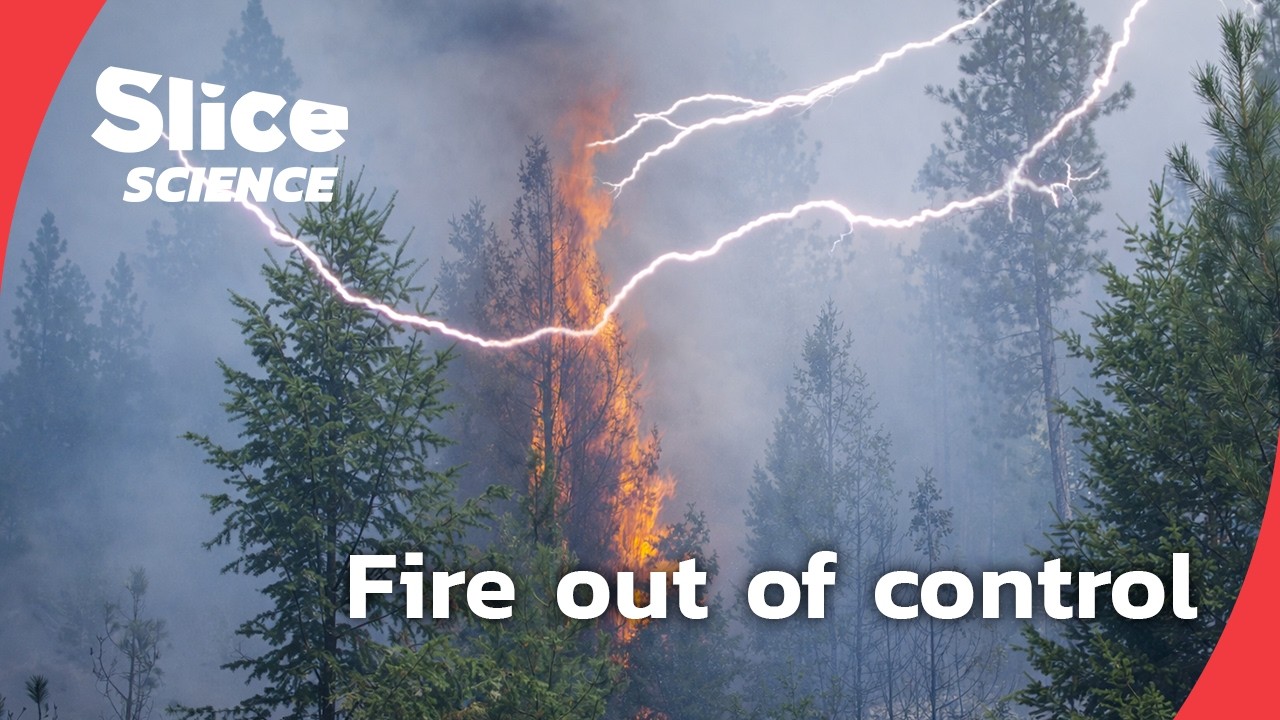
Fire, from natural force to global threat | SLICE SCIENCE | FULL DOC
Keywords
Summary
123 words
Critical Evaluation
The documentary provides a compelling and informative overview of wildfire science, effectively combining expert interviews, real footage, and laboratory experiments. The strength of the content lies in its presentation of current research on fire behavior, particularly the work on flame structure and ember transport, which are often overlooked in mainstream media. The scientists interviewed are credible and articulate, and the explanations are accessible without being overly simplistic. However, the documentary lacks explicit citations or references to specific studies, which limits its utility for viewers seeking to verify the information. The argumentation is generally sound, but some segments, such as the discussion of fire whirls, could benefit from more detailed scientific context. The inclusion of the Fort McMurray case study provides a concrete example of the wildland-urban interface problem, and the emphasis on embers as the primary cause of home ignition is a valuable takeaway. The documentary also touches on the controversial topic of fire suppression and its unintended consequences, presenting a balanced view. Overall, it is a high-quality production that raises awareness about the growing threat of wildfires, though it could be enhanced by more rigorous sourcing.
187 words
Title / Content Match
The title accurately reflects the content, which traces fire from its natural role to its current threat as wildfires intensify due to climate change.
Quality & Reliability
8/10
The documentary features interviews with established wildfire scientists (Mike Flanagan, Mark Finney, Sara McAllister, Alan Westhaver) and presents research from recognized institutions (Missoula Fire Sciences Lab, Institute of Catastrophic Loss Reduction). It explains scientific concepts clearly and includes real footage and case studies. However, it lacks detailed citations or references to specific studies, and some explanations are simplified for a general audience.
Key Moments
Markers derived by PSI from the transcript: the creator did not define chapters.
- Introduction to the 2017 British Columbia wildfire season and its scale.
- Explanation of fire as a chemical reaction and the fire triangle.
- Mark Finney's experiments on flame spread and the discovery of the role of cold air downdrafts.
- Discussion of fire creating its own weather, including fire whirls and lightning.
- Sara McAllister's research on how live fuels burn, challenging conventional wisdom.
- The fire paradox: how fire suppression leads to more intense fires.
- The Fort McMurray fire of 2016 and the concept of the wildland-urban interface.
- Alan Westhaver's analysis of ember ignitions and the importance of thinking like an ember.
- Strategies for reducing wildfire risk, including FireSmart practices.
- Conclusion: the need to adapt to living with fire in a changing climate.
Cited Sources
- Documentary: Into the Fire — The documentary itself, produced by Jambika and directed by Leora Eisen.
Concurring Sources
- National Fire Protection Association (NFPA) — Provides general information on wildfire safety and the wildland-urban interface.
Contribution & Novelties
The documentary provides a comprehensive and accessible overview of current wildfire science, highlighting recent research on flame structure and ember transport. It emphasizes the role of climate change in increasing fire activity and the need for adaptive strategies. The inclusion of the Fort McMurray case study offers a concrete example of the wildland-urban interface problem.
Pour aller plus loin :
- Fire Weather: A Guide for Application of Meteorological Information to Forest Fire Control Operations — Official guide on fire weather and its application.
- The Fire Paradox — Research paper discussing the unintended consequences of fire suppression.
- National Fire Protection Association (NFPA) - Wildfire Safety — Resources on wildfire safety and mitigation.
111 words
Radar Profile
The radar profile shows high scores in quantity and quality of information, with a moderate level of technical depth. The reliability is strong, reflecting the credibility of the scientists and institutions featured. The overall balance suggests a well-researched documentary suitable for a general audience interested in wildfire science.
💬 No comments were provided for analysis.