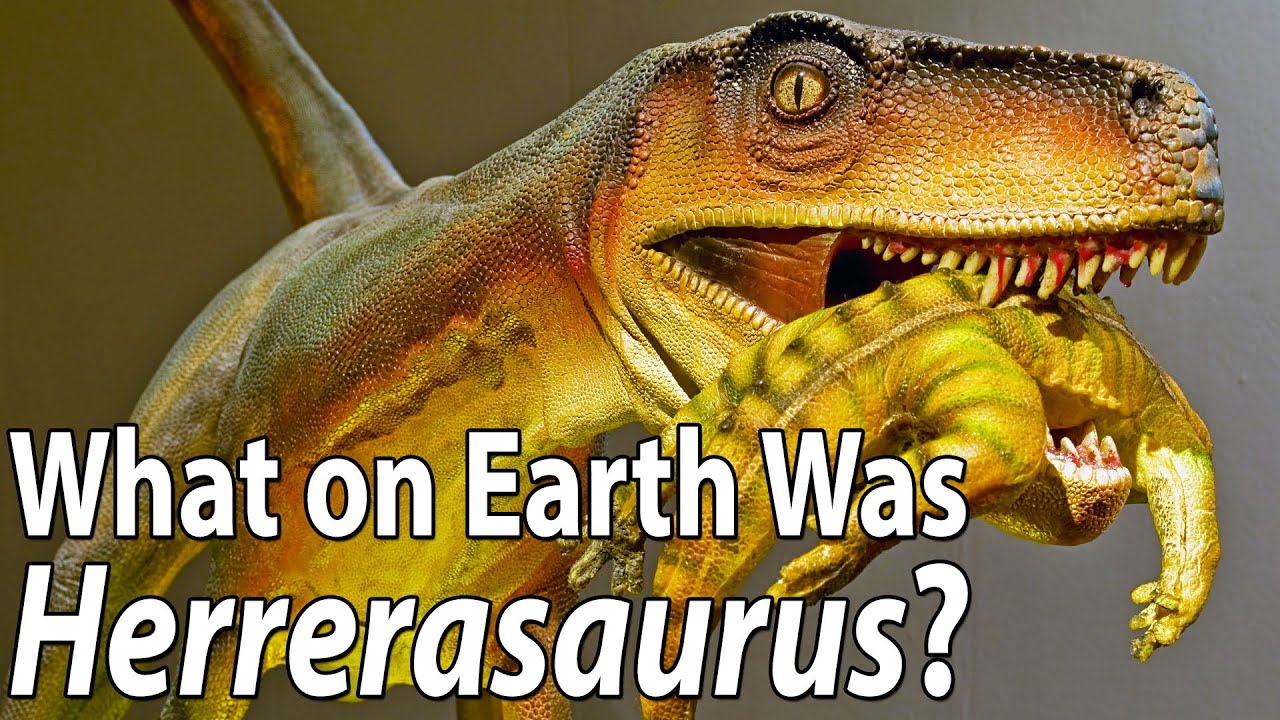
What on Earth Was Herrerasaurus?
Keywords
Summary
178 words
Critical Evaluation
Value of the Information & Strength of the Argument
The video provides high value by synthesizing a complex, multi-decade scientific debate into an accessible narrative. It clearly explains the phylogenetic methods and the changing interpretations, giving viewers the context needed to understand why Herrerasaurus’ position remains contested. The argumentation is solid, guided by the historical sequence of studies rather than personal bias, and the presenter objectively presents conflicting views before highlighting recent consensus. The discussion of anatomical features and their implications strengthens the scientific rigor of the explanation.
Scientific Rigor, Source Quality, Title Accuracy
Scientific rigor is high; the presenter cites numerous primary research papers and uses them to build the historical timeline. The description includes a large list of references, and the video explicitly credits studies for each new classification. The title perfectly encapsulates the video’s content, and the depth of coverage justifies the question posed. There is no obvious misinformation, and the presenter distinguishes between well-supported conclusions and ongoing debates. The only minor flaw is the absence of explicit timestamps for each study, but overall sources are handled responsibly.
181 words
Title / Content Match
The title directly poses the central question of the video, which is thoroughly addressed through the dinosaur's discovery, anatomy, and classification debates. Excellent fit.
Quality & Reliability
9/10
The video presents a comprehensive historical review of Herrerasaurus classification, referencing numerous peer-reviewed studies and presenting the evolution of scientific thought accurately. The presenter demonstrates a strong command of the subject, and the description provides a long list of primary sources.
Key Moments
Markers derived by PSI from the transcript: the creator did not define chapters.
- Introduction: mystery of Herrerasaurus and its debated classification
- Discovery of Herrerasaurus and early expeditions to Ischigualasto
- Overview of major classification shifts: sauropodomorph, theropod, and outside Dinosauria
- Key anatomical features: skull, hands, sacrum, and their significance
- The 2017 Nature paper and the new dinosaur family tree
- Environment and ecosystem of Ischigualasto; concluding remarks
Cited Sources
- Reig, O.A. (1963) - Description of Herrerasaurus ischigualastensis (from AMNH Digital Library) — Original description of Herrerasaurus by Osvaldo Reig, naming the genus.
- Sereno, P.C. & Novas, F.E. (1992) - The skull and neck of Herrerasaurus (from Springer) — Detailed description of new skull and neck material, supporting theropod affinities.
- Baron, M.G., Norman, D.B., & Barrett, P.M. (2017) - A new hypothesis of dinosaur relationships (Nature) — Proposed Ornithosclida grouping Theropoda and Ornithischia, placing Herrerasauridae with Sauropodomorpha.
- Sereno, P.C. et al. (1993) - Primitive dinosaur skeleton from Argentina (Nature) — Description of Eoraptor and re-affirmation of Herrerasaurus as a theropod.
- Novas, F.E. (1996) - Phylogeny of basal theropods (from ResearchGate) — Large-scale phylogenetic analysis placing Herrerasauridae within Theropoda.
- Pacheco, C. et al. (2019) - Gnathovorax cabreirai, a new herrerasaurid (from PMC) — Description of a complete skeleton of Gnathovorax, providing new anatomical data for herrerasaurid phylogeny.
Concurring Sources
- Pacheco et al. (2019) on Gnathovorax (PMC) — Supports the placement of Herrerasauridae as early saurischians, close to sauropodomorphs.
- Baron et al. (2017) Nature paper — Presents the phylogenetic analysis that groups Herrerasauridae with Sauropodomorpha.
Dissenting Sources
- Sereno & Novas (1992) interpretation (Springer)
- Novas (1996) basal theropod analysis (ResearchGate)
External References
Contribution & Novelties
The video’s primary contribution is a clear, chronological synthesis of the classification history of Herrerasaurus, making a technical academic debate accessible to a broader audience. It highlights the role of new discoveries and anatomical reinterpretations in shifting phylogenetic hypotheses, culminating in the 2017 Ornithosclida proposal. The original insight lies in the presenter’s balanced treatment of conflicting evidence and his emphasis on the dynamic nature of scientific classification.
Pour aller plus loin :
- Cladistics — The analytical method used to infer evolutionary relationships among dinosaurs.
- Carnian Pluvial Episode — An interval of increased humidity that may have facilitated early dinosaur diversification.
- Ornithosclida — The novel clade proposed by Baron et al. (2017) uniting theropods and ornithischians, restructuring the dinosaur family tree.
120 words
Radar Profile
The radar profile shows high scores across quantity, quality, and reliability, indicating a content-rich and trustworthy video. Technical level is moderate (7), reflecting a balance between accessibility and scientific depth. The overall high confidence aligns with the well-researched nature of the presentation.
💬 très positif — Sur les 30 commentaires analysés, une grande majorité exprime de l'enthousiasme pour la vulgarisation de la paléontologie, remercie pour les sources, et demande d'autres vidéos sur des sujets similaires comme Heterodontosaurus ou la faune du Trias. Aucune critique négative significative n'est présente.