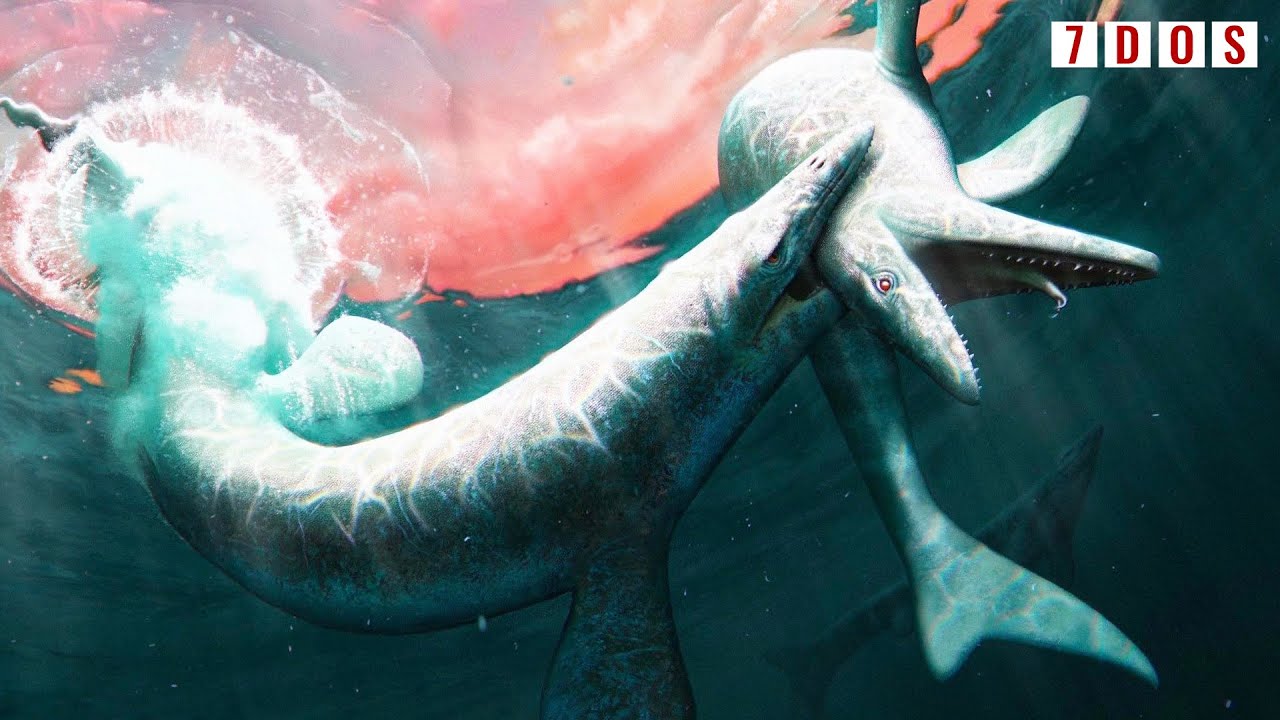
A New Mosasaur Species Named Jormungandr | 7 Days of Science
Keywords
Summary
201 words
Critical Evaluation
Value of the Information & Strength of the Argument
The video provides valuable information by summarizing recent scientific discoveries and placing them in context. The argumentation is solid, as each news item is supported by references to peer-reviewed studies, and the host explains the significance of each finding. The presentation is balanced, acknowledging uncertainties and alternative interpretations, such as the tentative identification of the spinosaur claw and the potential for the mosasaur’s phylogenetic placement to change.
Scientific Rigor, Source Quality, Title Accuracy
The scientific rigor is high, with the host accurately representing the findings and citing the original papers. The sources are credible, including journals like The Astronomical Journal, Science, Nature, and specialized paleontology journals. The title accurately reflects the content, focusing on the new mosasaur species, which is a highlight of the episode. The video’s structure with clear chapters and references enhances its reliability.
145 words
Title / Content Match
The title accurately reflects the content, as the video covers the new mosasaur species Jormungandr among other science news.
Quality & Reliability
8/10
The video presents a weekly roundup of scientific news, each item backed by references to peer-reviewed papers. The host accurately describes the findings and provides context, demonstrating a good understanding of the subject. The information is reliable and well-sourced, though the format limits depth.
Chapters
Cited Sources
- The dangers of massive planets (paper 1) — Discussed in the first news story about the dangers of massive planets.
- The dangers of massive planets (paper 2) — Discussed in the first news story about the dangers of massive planets.
- Menopause in chimpanzees (Science article) — Discussed in the second news story about chimpanzee menopause.
- Menopause in chimpanzees (Science paper) — Discussed in the second news story about chimpanzee menopause.
- Menopause in chimpanzees (Cell paper) — Discussed in the second news story about chimpanzee menopause.
- Possible Jurassic spinosaur (paper) — Discussed in the third news story about the possible Jurassic spinosaur.
- New Mid Triassic assemblage in Poland (paper) — Discussed in the fourth news story about the new Triassic fossil assemblage.
- New mosasaur species Jormungandr walhallaensis (paper) — Discussed in the fifth news story about the new mosasaur species.
- New titanosaur species Inawentu oslatus (paper) — Discussed in the sixth news story about the new titanosaur species.
- Chicxulub impact winter sustained by fine silicate dust (paper) — Discussed in the seventh news story about the Chicxulub impact winter.
Concurring Sources
- Science News article on giant exoplanets — Provides additional coverage of the massive planets study.
- Science News article on Chicxulub dust — Provides additional coverage of the Chicxulub impact winter study.
External References
Contribution & Novelties
The video synthesizes recent scientific discoveries, providing a concise overview of new findings in astronomy, primatology, and paleontology. Its original contribution lies in the accessible presentation of these studies, highlighting their significance and connections. The discussion of the new mosasaur Jormungandr walhallaensis and the potential oldest spinosaur are particularly novel.
Pour aller plus loin :
- Mosasaur — Provides background on the group to which Jormungandr belongs.
- Chicxulub crater — Context for the impact winter study.
- Grandmother hypothesis — Relevant to the discussion of menopause evolution.
85 words
Radar Profile
The radar profile shows high scores in quantity and quality of information, with a slightly lower technical level, indicating that the content is accessible yet informative. The overall reliability is strong, reflecting the use of peer-reviewed sources.
💬 Très positif. Sur les 30 commentaires analysés, les spectateurs expriment un enthousiasme marqué pour la découverte du mosasaure Jormungandr, saluant son nom et la qualité de la présentation, avec quelques discussions sur les implications scientifiques.