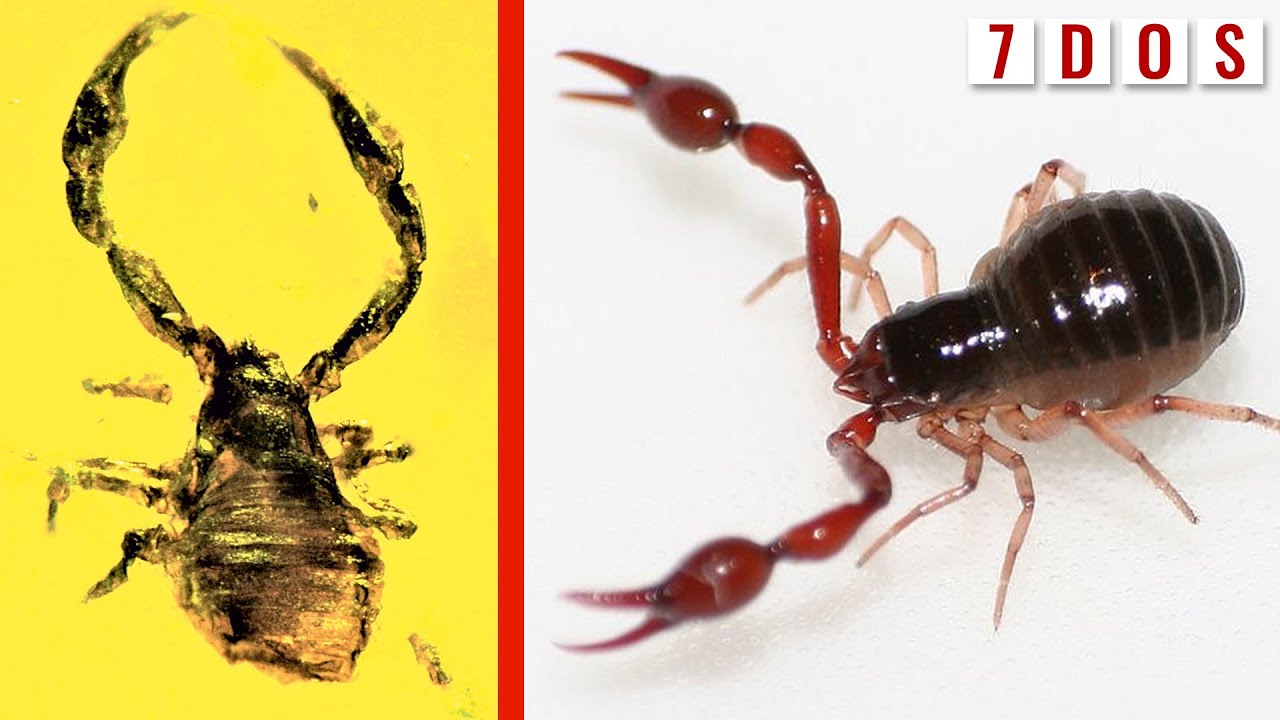
50 Million-Year-Old Pseudoscorpion Found Trapped in Amber | 7 Days of Science
Keywords
Summary
185 words
Critical Evaluation
Value of the Information & Strength of the Argument
The video provides a high-value digest of recent scientific findings, each presented with sufficient context to understand its significance. The argumentation is solid, as each news item is grounded in a specific peer-reviewed study or credible news source, and the host clearly explains the methodology and implications. The coverage is balanced, including both exciting discoveries and more sobering topics like climate change and whaling. The host’s enthusiasm is evident but does not compromise the factual presentation.
Scientific Rigor, Source Quality, Title Accuracy
The scientific rigor is high, with direct references to primary literature (e.g., Nature, Palaeontologia Electronica) and reputable science news outlets (e.g., Sci.News, Phys.org). The sources are appropriately cited for each segment, and the host accurately represents the findings. The title accurately reflects the content, focusing on the most visually striking story while the ‘7 Days of Science’ branding correctly indicates a weekly news roundup. The video’s structure with clear chapters and timestamps enhances its reliability as a reference.
169 words
Title / Content Match
The title accurately highlights the most eye-catching story (the pseudoscorpion in amber) and the '7 Days of Science' branding correctly indicates a weekly news roundup format.
Quality & Reliability
8/10
The video consistently cites peer-reviewed studies and reputable news outlets for each news item, with direct links provided in the description. The information is presented accurately and without significant exaggeration, though the format is a summary rather than in-depth analysis.
Chapters
- Introduction
- 2023 was the hottest summer in 2,000 years
- Sperm Whale communication found to have similarities to human languages
- Japan whaling
- Prehistoric Pseudoscorpion in amber
- Ancient magnetic field
- New titanosaur dinosaur species
- The hunting of bears by Paleolithic humans
- The bovids that coexisted with early hominins
- Outro
Cited Sources
- 2023 was the hottest summer in 2,000 years — Study confirming 2023 summer as hottest in 2000 years, based on tree ring data.
- Sperm whale communication — Study revealing combinatorial structure in sperm whale codas, termed 'phonetic alphabet'.
- Japan whaling — News article on Japan's proposal to add fin whales to commercial whaling list.
- Prehistoric pseudoscorpion in amber — Paper describing the new pseudoscorpion species Geogaranya valiyaensis from Indian amber.
- Ancient magnetic field — Study on the earliest evidence of Earth's magnetic field from 3.7-billion-year-old rocks in Greenland.
- New sauropod dinosaur species from Brazil Tiamat valdecii — Paper describing the new titanosaur species Tiamat valdecii from Brazil.
- The hunting of bears by Paleolithic humans — Study on Paleolithic human exploitation of cave bears in Germany.
- The bovids that coexisted with early hominins — Study analyzing fossil bovid assemblages at the Cradle of Humankind site.
Concurring Sources
- IPCC AR6 Summary for Policymakers Figure SPM-1 — Provides context on historical temperature reconstructions, supporting the climate study.
- BBC News article on 2023 summer heat — Corroborates the finding that 2023 was the hottest summer on record.
- Sci.News article on sperm whale communication — Independent coverage of the sperm whale communication study.
- The Guardian article on Japan whaling — Reports on the new whaling mother ship, adding context to Japan's whaling plans.
- Sci.News article on pseudoscorpion in amber — Independent coverage of the pseudoscorpion discovery.
- Sci.News article on Earth's magnetic field — Independent coverage of the ancient magnetic field study.
External References
Contribution & Novelties
The video’s original contribution lies in its concise synthesis of diverse scientific news, making recent discoveries accessible to a broad audience. It highlights the interconnectedness of climate science, marine biology, and paleontology, offering a snapshot of current research trends.
Pour aller plus loin :
- Phonetic alphabet — The concept of a phonetic alphabet is central to the sperm whale communication study, providing a framework for understanding combinatorial vocalizations.
- Titanosaur — The new species Tiamat valdecii is a titanosaur, a group of sauropod dinosaurs known for their immense size.
- Paleolithic — The study on bear hunting by Paleolithic humans is set in this prehistoric period, offering context on human evolution and subsistence.
- Amber — The pseudoscorpion fossil was preserved in amber, a key medium for exceptional fossil preservation.
- Earth’s magnetic field — The study on the ancient magnetic field is crucial for understanding planetary evolution and habitability.
146 words
Radar Profile
The radar profile shows a balanced performance across all dimensions, with high scores in information quantity, quality, and reliability, and a slightly lower but still solid score in technical level. This indicates a well-researched and informative video that is accessible to a general audience while maintaining scientific accuracy.
💬 Positif. Sur les 30 commentaires analysés, le public exprime un enthousiasme général pour le contenu, avec des discussions engageantes sur les sujets présentés, notamment les pseudoscorpions et les baleines, et un soutien appréciable pour le format de la chaîne.