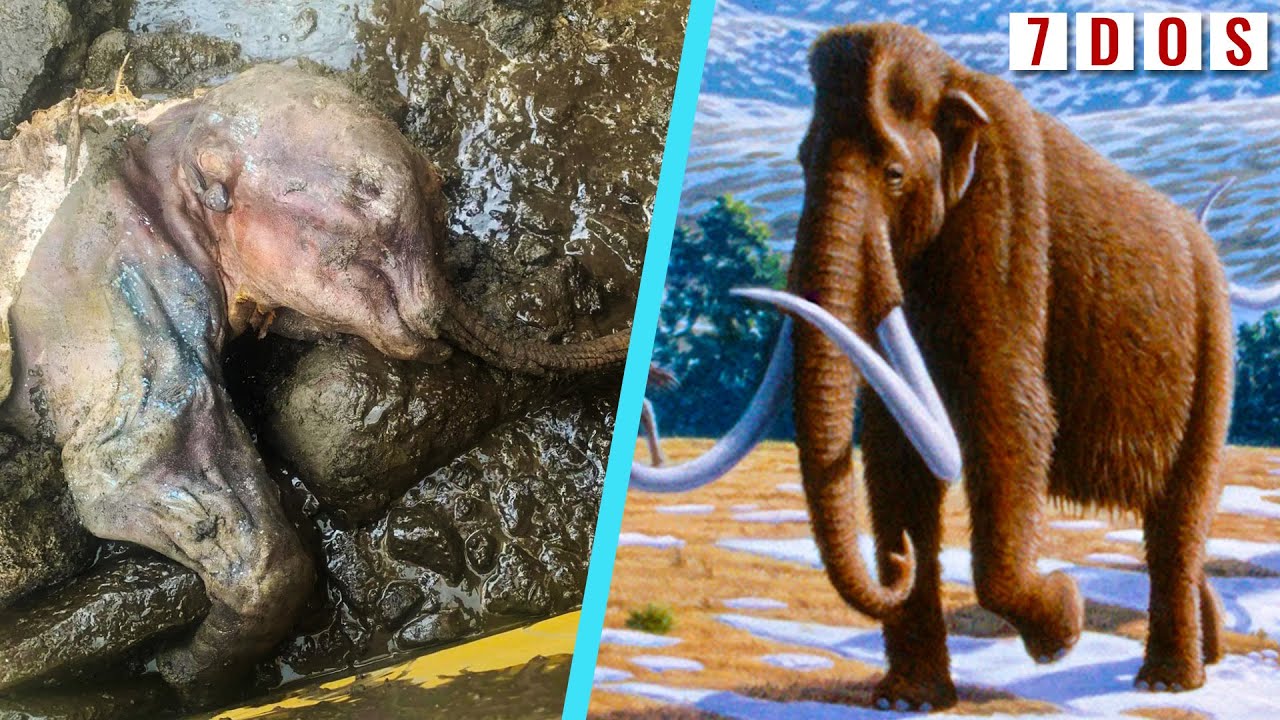
Woolly Mammoth Chromosomes Found Frozen in Ice (52,000 Years Old!) | 7 Days of Science
Keywords
Summary
112 words
Critical Evaluation
Value of the Information & Strength of the Argument
The video provides substantial value by summarizing multiple recent scientific papers, making them accessible to a general audience. The argumentation is solid, as the presenter explains the significance of each finding and often includes methodological details. For instance, the mammoth chromosome study is explained with the freeze-drying hypothesis and even includes a humorous experimental validation. The LUCA study is contextualized with the tree of life and the universal genetic code. The presentation is balanced, noting uncertainties and limitations, such as the need for further research on Titan’s waves or the acoustic trauma tests for the whales.
Scientific Rigor, Source Quality, Title Accuracy
The video demonstrates high scientific rigor by citing peer-reviewed articles for each story, with links provided in the description. The sources are reputable journals like Nature, Cell, and Science. The title accurately reflects the content, focusing on the most newsworthy item while the subtitle indicates a weekly news format. The adéquation between title and content is good, as the video indeed covers the mammoth chromosomes prominently and other science news.
181 words
Title / Content Match
The title accurately highlights the most striking story (mammoth chromosomes) while the subtitle '7 Days of Science' correctly indicates a weekly news roundup.
Quality & Reliability
8/10
The video presents a wide range of recent scientific studies, each with direct references to peer-reviewed publications. The information is accurately conveyed and the tone is appropriately cautious, acknowledging uncertainties. The inclusion of multiple sources per story and the presenter's expertise contribute to high reliability.
Chapters
- Introduction
- Studying Titan’s seas
- A cave on the moon?
- Pilot whale mass stranding
- The age of the Last Universal Common Ancestor (LUCA)
- Woolly mammoth chromosomes found frozen in ice
- Frozen woolly rhinoceros mummy
- New iguanodontian dinosaur from England
- New species of burrowing dinosaur
- New speedy troodontid dinosaur from Mongolia
- New species of Triassic croc relative
- Neanderthal / modern human interbreeding
- Outro
Cited Sources
- Titan’s seas: Nature article — Study on Titan's seas, analyzing Cassini data.
- Moon cave: Nature Astronomy article — Evidence of a cave on the Moon from radar images.
- Pilot whale stranding: BBC News — Report on the mass stranding of pilot whales in Orkney.
- LUCA: Nature Ecology & Evolution article — Study on the age and nature of the last universal common ancestor.
- Woolly mammoth chromosomes: Cell article — Study on 52,000-year-old mammoth chromosomes.
- Mammoth music video — Supplementary material with the music video of the freeze-drying experiment.
- Frozen woolly rhinoceros: Doklady Earth Sciences article — Description of the Abyisky woolly rhinoceros mummy.
- Comptonatus chasei: Journal of Systematic Palaeontology article — New iguanodontian dinosaur from England.
- Fona herzogae: The Anatomical Record article — New burrowing dinosaur species from Utah.
- Harenadraco prima: Journal of Vertebrate Paleontology article — New troodontid dinosaur from Mongolia.
- Benggwigwishingasuchus eremicarminis: Biology Letters article — New Triassic pseudosuchian from Nevada.
- Neanderthal gene flow: Science article — Study on gene flow between modern humans and Neanderthals.
Concurring Sources
- Sci.News article on LUCA — Summarizes the LUCA study, consistent with the video.
- Sci.News article on mammoth chromosomes — Summarizes the mammoth chromosome study, consistent with the video.
- BBC News article on Moon cave — Reports on the Moon cave discovery, consistent with the video.
External References
Contribution & Novelties
The video provides a concise yet comprehensive overview of recent scientific breakthroughs, with a focus on ancient DNA and paleontology. It highlights the novelty of the mammoth chromosome preservation, which is a first in the field, and the implications for understanding gene expression in extinct species. The LUCA study pushes back the origin of life to 4.2 billion years ago, suggesting a rapid emergence of complex ecosystems. The Neanderthal interbreeding study reveals multiple pulses of gene flow, refining our understanding of human evolution.
Pour aller plus loin :
- Ancient DNA research — Provides background on the field and its methods.
- Last universal common ancestor — Explains the concept and its significance.
- Neanderthal genetics — Discusses interbreeding and its impact on modern humans.
122 words
Radar Profile
The radar profile is well-balanced, with high scores in information quantity and quality, and slightly lower but still solid scores in technical level and reliability. This indicates a video that is informative and trustworthy, with a good depth of scientific content.
💬 Très positif. Sur les 30 commentaires analysés, les téléspectateurs expriment un fort enthousiasme pour le contenu, en particulier pour la découverte du mammouth et la présentation d'Emilia, avec des remarques humoristiques sur le clip musical.