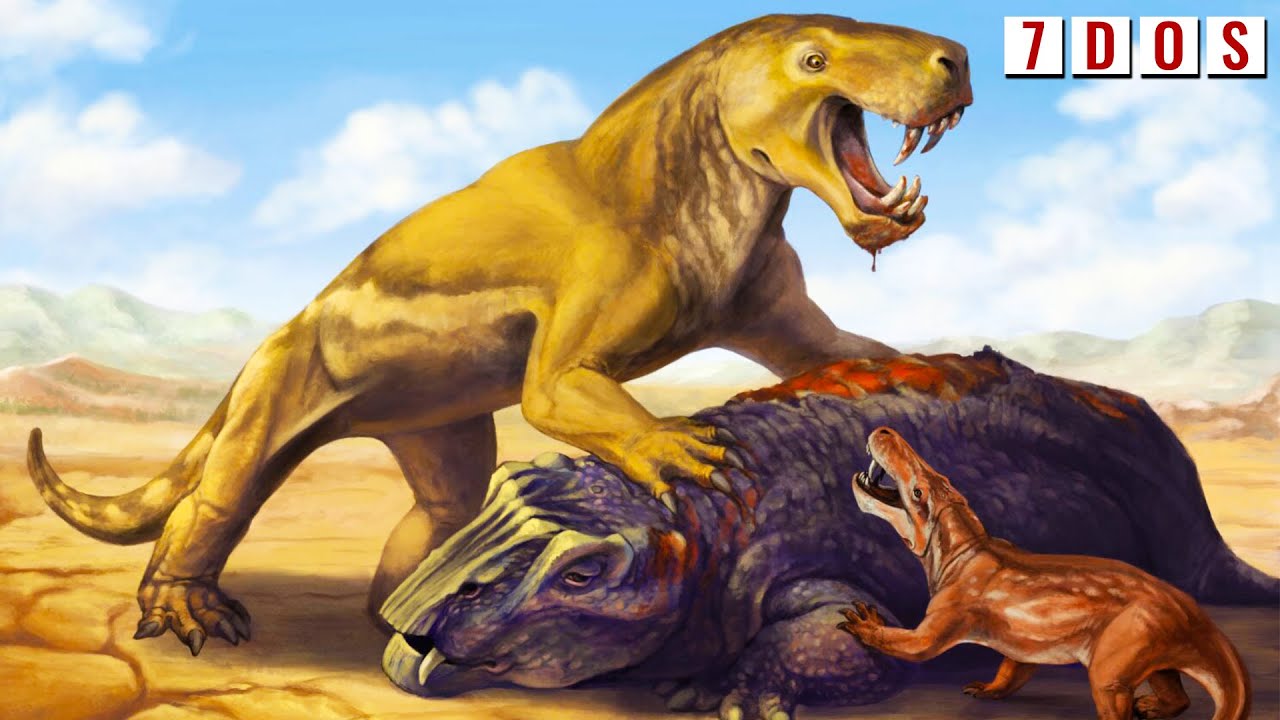
Giant Gorgonopsians Roamed Africa Earlier Than We Thought | 7 Days of Science
Keywords
Summary
144 words
Critical Evaluation
Value of the Information & Strength of the Argument
The video provides a high density of information, each news item backed by specific scientific papers or reports. The argumentation is solid, with the presenter explaining the significance of each discovery and often providing context, such as the evolutionary implications of the gorgonopsian findings. The discussion of the baleen whale vocalization study is particularly well-argued, linking anatomical findings to ecological impacts. The presentation is balanced, acknowledging uncertainties (e.g., the cause of the Odysseus lander tipping) and the need for further research.
Scientific Rigor, Source Quality, Title Accuracy
The video demonstrates strong scientific rigor by citing primary sources for each story, including articles in Nature and peer-reviewed journals. The sources are reputable and directly relevant. The title accurately reflects the main paleontological highlight, though it doesn’t encompass the full scope of the news roundup. The adéquation between title and content is good, with the gorgonopsian story being a significant portion of the video, but the title could be broader to represent the entire episode.
172 words
Title / Content Match
The title highlights the gorgonopsian discovery, which is a significant segment, but the video covers multiple science news stories, making the title somewhat narrower than the content.
Quality & Reliability
8/10
The video cites primary sources (Nature, peer-reviewed journals) for each news item, and the presenter provides accurate context and caveats. The information is up-to-date and presented with appropriate scientific nuance.
Chapters
Cited Sources
- Odysseus moon landing — News article about the Odysseus moon landing.
- New moons of Uranus and Neptune — Report on the discovery of new moons around Uranus and Neptune.
- Surprisingly massive black hole — Research paper on a surprisingly massive black hole in the early universe.
- Surprisingly massive black hole (Sci.News) — News article about the same black hole discovery.
- How baleen whales sing — BBC News article on the study of baleen whale vocalization.
- How baleen whales sing (Nature) — Research paper on the vocal production of baleen whales.
- New prehistoric dolphin species Aureia rerehua — Paper describing the new dolphin species.
- New sauropod from China Jingia dongxingensis — Paper describing the new sauropod dinosaur.
- New specimens of Dinocephalosaurus orientalis — Paper providing updated description of Dinocephalosaurus orientalis.
- Earliest evidence of Inostrancevia in the Southern Hemisphere — Paper reporting new fossils of Inostrancevia in Tanzania.
Concurring Sources
- Nature article on Odysseus landing — Confirms the landing and subsequent tipping of the Odysseus lander.
- Nature article on black hole — Supports the claim of a surprisingly massive black hole.
- Nature article on baleen whale vocalization — Provides the primary research behind the whale song segment.
External References
Contribution & Novelties
The video synthesizes recent scientific discoveries, providing a concise overview for a general audience. Its original contribution lies in contextualizing the gorgonopsian discovery within the broader narrative of Permian extinctions and faunal turnover. The discussion of the baleen whale vocalization study highlights a novel finding with conservation implications.
Pour aller plus loin :
- Gorgonopsia - Wikipedia — Overview of the group to which Inostrancevia belongs.
- Permian–Triassic extinction event - Wikipedia — Context for the faunal changes discussed.
- Baleen whale - Wikipedia — Background on the biology of baleen whales.
89 words
Radar Profile
The radar profile shows high scores in information quantity and quality, with a slightly lower technical level, indicating content that is dense but accessible. The global reliability is high, reflecting the use of primary sources.
💬 Très positif : Sur les 30 commentaires analysés, la grande majorité exprime des félicitations pour le sixième anniversaire de la série et un soutien enthousiaste, avec quelques commentaires appréciant spécifiquement le contenu scientifique.