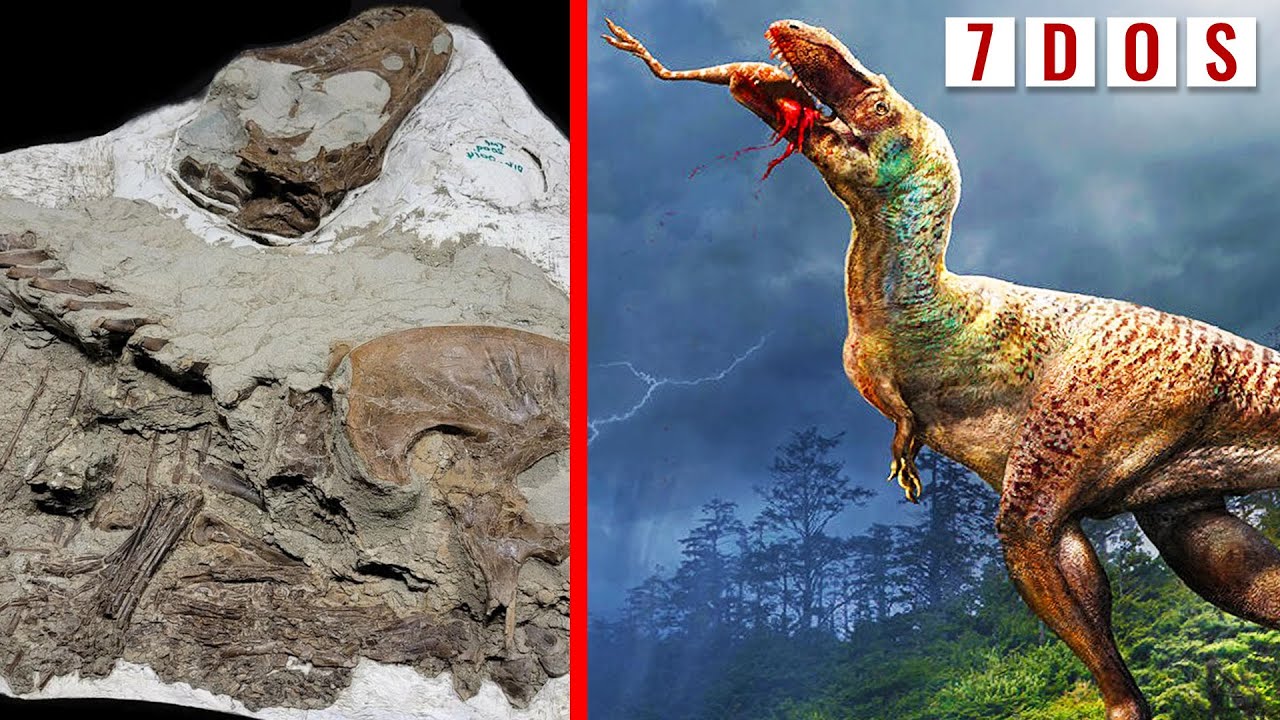
This Fossil Preserves The Last Meal of a Tyrannosaur | 7 Days of Science
Keywords
Summary
168 words
Critical Evaluation
Value of the Information & Strength of the Argument
The video provides substantial value by summarizing multiple recent scientific findings in an accessible yet accurate manner. Each story is based on a peer-reviewed paper or official announcement, and the presenters explain the significance and context clearly. The argumentation is solid, with appropriate caveats and explanations of methodology, such as the use of ecospace cubes in the extinction study. The presentation is engaging, with occasional humor, but maintains scientific rigor.
Scientific Rigor, Source Quality, Title Accuracy
The scientific rigor is high: the video cites specific studies and provides links in the description for each major story. The sources are reputable (e.g., Science Advances, PeerJ, Current Biology). The title accurately reflects the content, focusing on the most newsworthy fossil discovery. The video is well-structured with clear chapters, and the presenters demonstrate a good understanding of the material. The adéquation between title and content is excellent.
153 words
Title / Content Match
The title accurately highlights the most striking story (the tyrannosaur stomach contents) while the '7 Days of Science' indicates the news format. It is engaging and representative of the content.
Quality & Reliability
8/10
The video is a well-structured news review covering multiple recent scientific studies. Each segment is based on peer-reviewed papers or official announcements, with links provided in the description. The presentation is accurate and appropriately cautious, acknowledging uncertainties. The channel has a consistent track record of science communication.
Chapters
- Introduction
- Electric eel shocks can transfer DNA to other animals
- Java stingaree declared extinct
- Endangered species list grows
- Tyrannosaur fossil with stomach contents
- Giant Pliosaur skull found in UK
- New mosasaur species with giant flippers
- Oldest fossil mosquitos discovered
- Effects of the end-Triassic mass extinction
- Outro
Cited Sources
- Electric eel shocks can transfer genetic material to other animals — Study on electroporation by electric eels, discussed at 0:26.
- Java Stingaree declared extinct — IUCN Red List entry for the Java stingaree, discussed at 2:15.
- Endangered species list grows — IUCN press release about Red List update, discussed at 3:20.
- Stomach contents of a young tyrannosaur (Gorgosaurus libratus) — Study on Gorgosaurus stomach contents, discussed at 5:01.
- Giant pliosaur skull found in England — BBC article about the pliosaur skull, discussed at 7:51.
- New mosasaur Megapterygius with giant flippers — Study describing the new mosasaur, discussed at 9:10.
- The earliest fossil mosquito — Study on the earliest fossil mosquitoes, discussed at 10:02.
- Terrestrial and marine ecosystems after the end-Triassic extinction — Study comparing extinction impacts, discussed at 11:53.
Concurring Sources
- IUCN Red List — The video references the IUCN Red List for extinction statuses, which is the authoritative source.
External References
Contribution & Novelties
The video’s original contribution lies in its synthesis of recent scientific news, making complex findings accessible to a general audience. It highlights the significance of each discovery, such as the first evidence of stomach contents in a tyrannosaur, which provides direct evidence of dietary habits and niche partitioning.
Pour aller plus loin :
- Gorgosaurus — Background on the genus.
- Electroporation — The mechanism behind the electric eel study.
- End-Triassic extinction — Context for the extinction study.
76 words
Radar Profile
The radar profile shows high scores in information quantity and quality, with a slightly lower technical level, indicating content that is informative and reliable but not overly technical. The overall reliability is strong, reflecting the use of peer-reviewed sources.
💬 Très positif : Sur les 30 commentaires analysés, le public exprime un accueil très favorable, saluant notamment la nouvelle présentatrice Emilia, l'humour et la qualité des informations scientifiques.