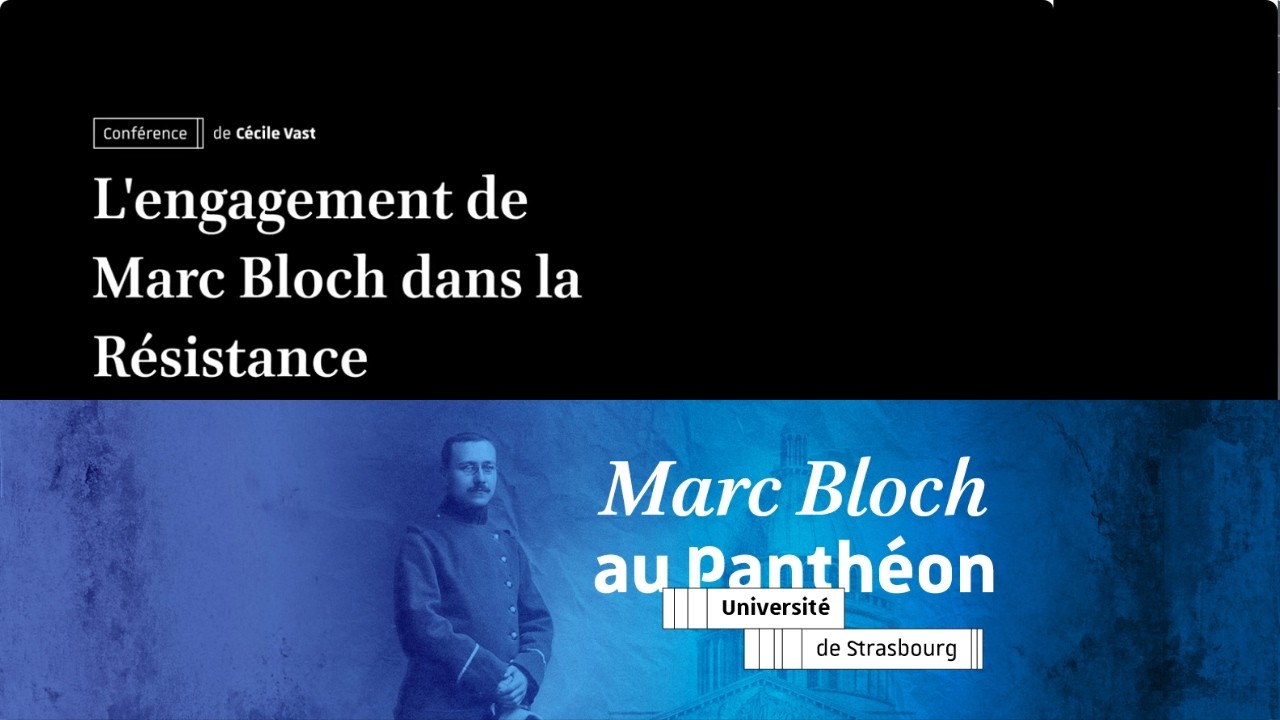
Penser et agir l’engagement de Marc Bloch dans la Résistance
Keywords
Summary
173 words
Critical Evaluation
The lecture provides a nuanced and well-informed analysis of Marc Bloch’s engagement in the Resistance, moving beyond the common heroic narrative to explore the complexities and uncertainties of his path. Vast, a certified history professor, demonstrates deep familiarity with Bloch’s writings and the historical context. She effectively uses primary sources, such as Bloch’s correspondence and archival documents, to support her arguments. The structure is clear, with three distinct parts that logically progress from Bloch’s intellectual reflections to his practical actions. The argument that Bloch’s engagement was both ordinary and exceptional is compelling, as she highlights the gradual and tentative nature of his entry into resistance while also noting his rapid rise to leadership. The discussion of Bloch’s use of his historical skills, such as his ability to analyze mentalities and representations, adds depth to the understanding of his contribution. However, the lecture could benefit from more explicit citations of scholarly works or archival references, as some claims are made without direct sourcing. Additionally, the presentation is somewhat dense and assumes a certain level of prior knowledge about the Resistance, which might limit accessibility for a general audience. The adéquation between title and content is strong, as the lecture indeed focuses on both thinking and acting in Bloch’s engagement. Overall, the content is rigorous and insightful, though it could be enhanced with more detailed source citations and a more accessible presentation style.
231 words
Title / Content Match
The title accurately reflects the content, which focuses on Marc Bloch's intellectual and practical engagement in the Resistance.
Quality & Reliability
8/10
The speaker is a certified history and geography professor, and the content is based on archival documents and scholarly knowledge. The presentation is well-structured and cites specific sources, though it lacks direct references to published works.
Key Moments
Markers derived by PSI from the transcript: the creator did not define chapters.
- Introduction and quote from 'L'Étrange Défaite' about sacrifice and uncertainty.
- Discussion of Bloch's questioning of his utility as a historian during the war.
- Analysis of Bloch's intellectual preparation and writings between 1940 and 1942.
- Transition to Bloch's entry into clandestine action and his role in the Franc-Tireur movement.
- Discussion of Bloch's responsibilities as regional leader and his use of historical skills.
- Presentation of archival sources, including a note from Bloch to Alban Vistel.
- Reflections on the nature of clandestine warfare and the challenges of studying Bloch's resistance.
- Conclusion summarizing Bloch's dual role as thinker and actor in the Resistance.
Cited Sources
- L'Étrange Défaite — Bloch's work written during the occupation, quoted at the beginning.
- Apologie pour l'histoire — Bloch's methodological work, also written during the occupation.
- Cahiers politiques — Clandestine publication to which Bloch contributed.
- Archives nationales - Papiers d'Alban Vistel — Archival collection containing a note from Bloch.
Concurring Sources
- Marc Bloch - Wikipedia — General biography confirming Bloch's involvement in the Resistance.
- Franc-Tireur (movement) - Wikipedia — Information on the movement's activities and Bloch's role.
Contribution & Novelties
The lecture offers a fresh perspective on Marc Bloch’s Resistance engagement by emphasizing the gradual and reflective nature of his commitment, countering the heroic narrative. It highlights how Bloch’s historical expertise informed his practical actions, bridging intellectual and clandestine work.
Pour aller plus loin :
- Marc Bloch - Wikipedia — Provides a comprehensive overview of Bloch’s life and works.
- Franc-Tireur (movement) - Wikipedia — Details on the Resistance movement Bloch joined.
- Alban Vistel - Wikipedia — Information on the regional leader Bloch temporarily replaced.
84 words
Radar Profile
The radar profile shows high scores in quality and reliability, with moderate scores in quantity and technical level, indicating a well-researched but somewhat specialized presentation.