Redox, Coupled and Activating Reactions - Sugars Terms
Keywords
Summary
144 words
Critical Evaluation
The video serves as an effective review session, reinforcing fundamental concepts in biochemistry. The instructor’s explanations are clear and methodical, breaking down complex topics into digestible segments. The use of biologically relevant examples, such as FAD and CoQ in redox reactions, helps contextualize the material. The discussion of coupled reactions is particularly well-executed, with a step-by-step thermodynamic analysis that clarifies how endothermic reactions can proceed when coupled to exergonic ones. The explanation of the prime symbol in standard states is also valuable, as it addresses a common point of confusion. However, the video lacks citations to external sources, which limits its utility for further verification. The instructor’s informal tone and occasional anthropomorphisms, while engaging, may not suit all learners. The content is accurate and aligns with standard biochemistry textbooks, but the absence of references means that the information cannot be independently verified from the video alone. The video’s focus on review rather than novel content means it is best suited for students who have already attended the lectures. Overall, the video is a solid educational resource, but its reliance on prior knowledge and lack of citations prevent it from being a standalone reference.
193 words
Title / Content Match
The title accurately reflects the content, covering redox reactions, coupled reactions, and sugar terms as promised.
Quality & Reliability
8/10
The video is a well-structured review of redox reactions, coupled reactions, and sugar chemistry, with clear explanations and relevant biological examples. The instructor demonstrates deep knowledge and provides a balanced treatment of concepts. However, the video is a lecture review and does not cite external sources, limiting its verifiability.
Key Moments
Markers derived by PSI from the transcript: the creator did not define chapters.
- Introduction and congratulations on reaching halfway point
- Explanation of the prime symbol in standard conditions
- Refresher on redox reactions with FAD and CoQ example
- Balancing half-reactions and identifying oxidation/reduction
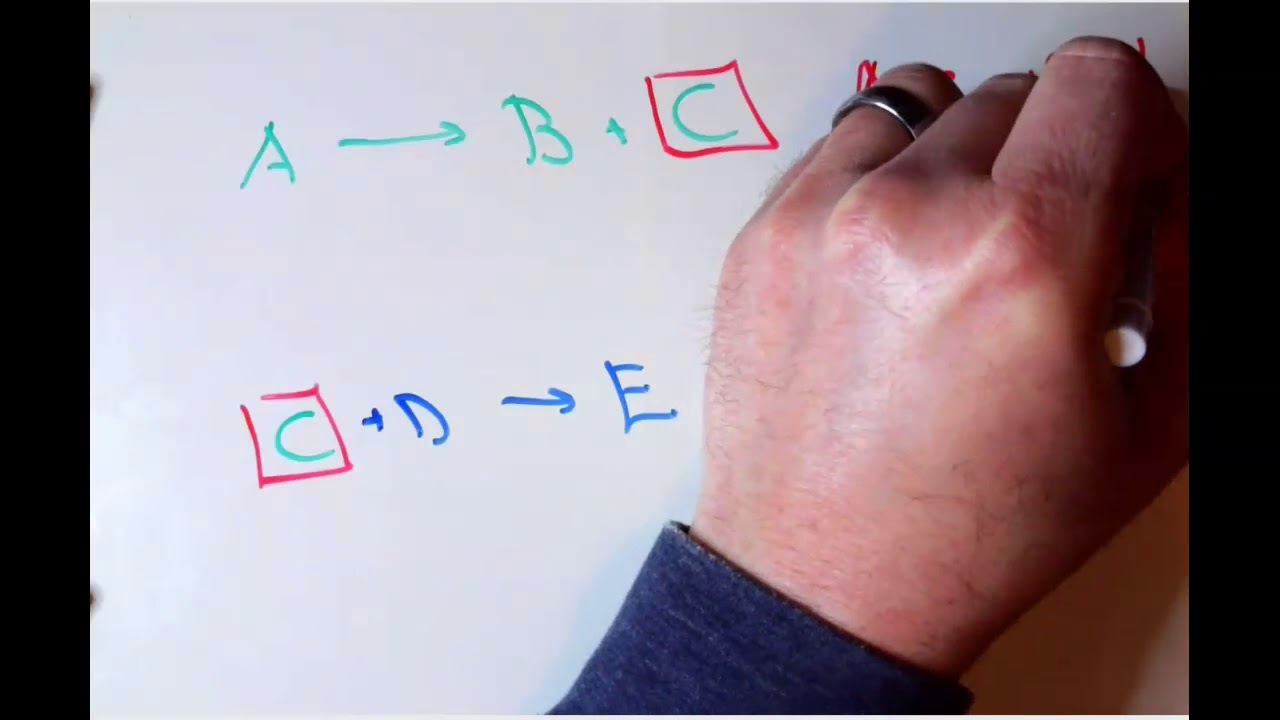
- Explanation of coupled reactions and thermodynamic favorability
- Discussion of activating reactions and sugar chemistry
- Review of monosaccharides and disaccharides
- Closing remarks and advice for midterm preparation
Contribution & Novelties
The video provides a clear and concise review of redox reactions, coupled reactions, and sugar chemistry, with a focus on biological relevance. It clarifies common misconceptions, such as the prime symbol in standard states, and offers a step-by-step approach to balancing half-reactions. The explanation of coupled reactions is particularly insightful, demonstrating how endothermic reactions can be driven by exergonic ones.
Pour aller plus loin :
- Redox reactions in biochemistry — Provides a comprehensive overview of redox reactions, including biological examples.
- Coupled reactions in metabolism — Explains the concept of coupled reactions and their role in driving endergonic processes.
- Sugar chemistry and structure — Details the structure and classification of monosaccharides, relevant to the discussion of sugars.
116 words
Radar Profile
The radar profile shows high scores in quantity and quality of information, with a moderate level of technical depth. The video is reliable and well-structured, making it a valuable resource for students seeking to reinforce their understanding of key biochemical concepts.