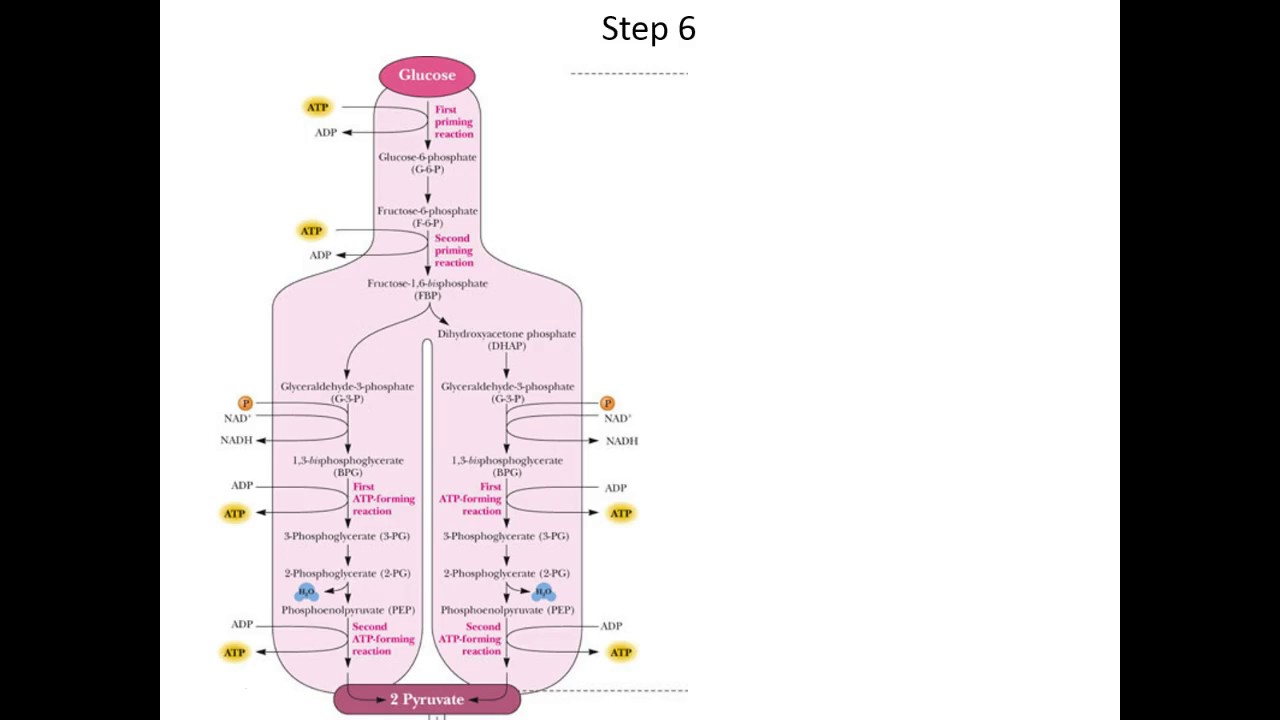
Lecture 12A - Glycolysis: Stage 2
Keywords
Summary
150 words
Critical Evaluation
The lecture provides a thorough and accurate explanation of the second stage of glycolysis, focusing on the chemical reactions, enzyme mechanisms, and energy changes. The instructor demonstrates a strong command of the subject, breaking down complex steps into understandable components. The use of analogies, such as the TV transfer potential, helps clarify abstract concepts like phosphate transfer potential. The content aligns with standard biochemistry textbooks, ensuring reliability. However, the lecture lacks citations to primary literature, which would enhance its scientific rigor. The presentation is well-structured, with clear transitions between steps, and the instructor emphasizes the parallel processing of the two GAP molecules. The adéquation between title and content is excellent. Overall, this is a high-quality educational resource for students learning glycolysis, though it could benefit from references to original research or reviews.
132 words
Title / Content Match
The title accurately reflects the content, which focuses on the second stage of glycolysis.
Quality & Reliability
8/10
The lecture is based on a standard biochemistry textbook (chapter 17) and presents accurate, detailed information on glycolysis. The instructor explains concepts clearly and uses analogies to aid understanding. However, no external sources are cited, and the content is not peer-reviewed.
Key Moments
Markers derived by PSI from the transcript: the creator did not define chapters.
- Introduction to the lecture and overview of glycolysis stage 2.
- Recap of the previous lecture and the formation of GAP.
- Explanation of step 6: oxidation and phosphorylation of GAP to 13-BPG.
- Detailed discussion of the redox reaction and NAD+ reduction.
- Explanation of the phosphorylation event and the role of inorganic phosphate.
- Discussion of the enzyme glyceraldehyde 3-phosphate dehydrogenase.
- Introduction of the concept of phosphate transfer potential using an analogy.
- Step 7: substrate-level phosphorylation of ADP to ATP by 13-BPG.
- Steps 8 and 9: conversion of 3-phosphoglycerate to 2-phosphoglycerate and then to PEP.
- Step 10: production of pyruvate and ATP.
- Summary of the energy yield and the overall payoff phase.
Contribution & Novelties
The lecture provides a clear and detailed explanation of the second stage of glycolysis, emphasizing the chemical mechanisms and energy changes. It clarifies the high phosphate transfer potential of 13-BPG and PEP, which is crucial for understanding substrate-level phosphorylation. The instructor’s analogies make abstract concepts accessible.
Pour aller plus loin :
- Glycolysis - Wikipedia — Comprehensive overview of the pathway.
- Glyceraldehyde 3-phosphate dehydrogenase - Wikipedia — Details on the enzyme.
- Substrate-level phosphorylation - Wikipedia — Explanation of ATP production.
79 words
Radar Profile
The radar profile shows high scores in quantity and quality of information, with a moderate level of technical depth. The reliability is solid, reflecting the educational nature of the content.