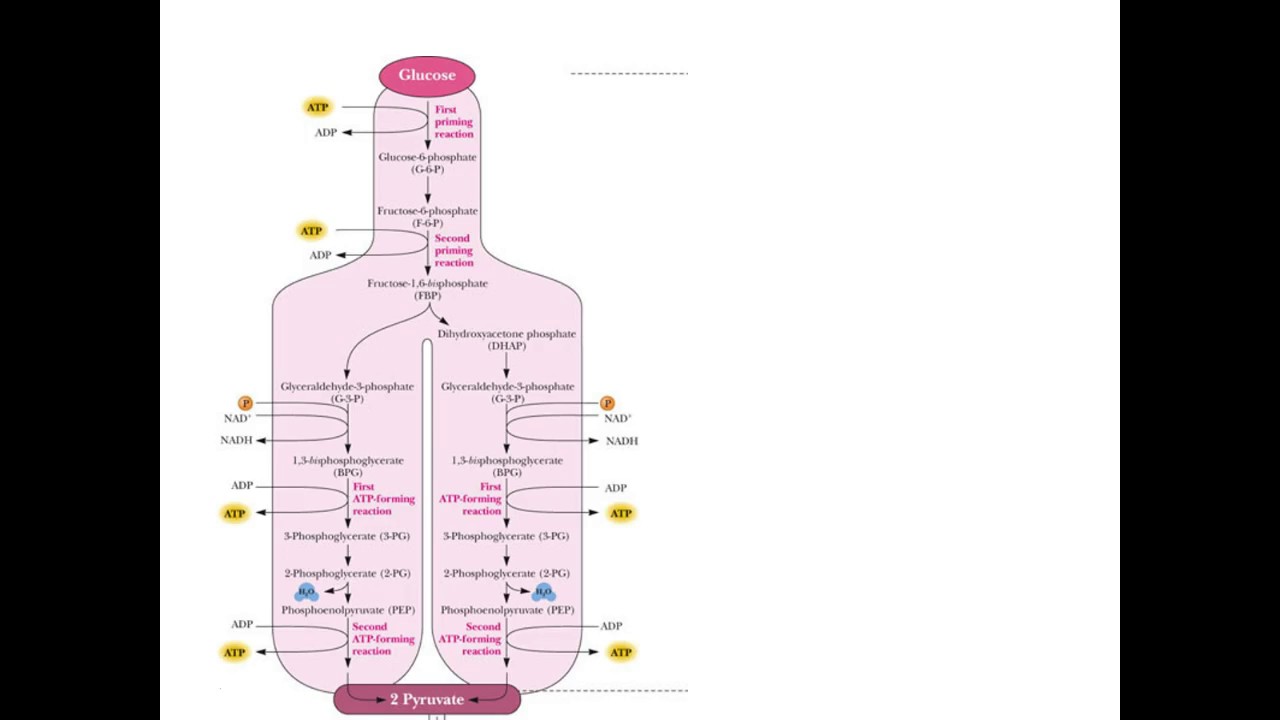
Lecture 11B - Glycolysis: Stage 1
Keywords
Summary
155 words
Critical Evaluation
The lecture provides a thorough and accurate explanation of the first stage of glycolysis, covering the key reactions, enzymes, and regulatory mechanisms. The instructor demonstrates a strong command of the subject matter and uses effective analogies to make complex concepts accessible. The content aligns with standard biochemistry textbooks, such as Stryer’s Biochemistry, and is presented in a logical sequence. The explanation of the coupling of unfavorable reactions with ATP hydrolysis is particularly clear, and the analogy of daycare costs effectively illustrates the concept of energy investment. The discussion of feedback inhibition and the committed step highlights important regulatory aspects of glycolysis. However, the lecture lacks citations to primary literature or specific sources, which limits its utility for advanced students seeking original references. Additionally, the presentation is somewhat informal, with occasional digressions, but this does not detract from the scientific accuracy. The adéquation between the title and content is excellent, as the lecture precisely covers the first stage of glycolysis. Overall, the lecture is a valuable educational resource for students learning biochemistry, providing a solid foundation for understanding glycolysis.
178 words
Title / Content Match
The title accurately reflects the content, as the lecture focuses on the first stage of glycolysis, covering the first five reactions in detail.
Quality & Reliability
8/10
The lecture is a well-structured educational presentation of glycolysis stage 1, with accurate biochemical details and clear explanations. The content is consistent with established biochemistry knowledge. However, it lacks citations to primary sources and is based on a single instructor's presentation.
Key Moments
Markers derived by PSI from the transcript: the creator did not define chapters.
- Introduction and overview of lecture structure
- Explanation of step 1: phosphorylation of glucose to glucose-6-phosphate
- Discussion of ATP coupling and the daycare analogy
- Introduction of hexokinase and its substrate specificity
- Explanation of feedback inhibition of hexokinase
- Step 2: isomerization of glucose-6-phosphate to fructose-6-phosphate
- Step 3: phosphorylation of fructose-6-phosphate to fructose-1,6-bisphosphate
- Explanation of bisphosphate vs diphosphate nomenclature
- Discussion of the committed step of glycolysis
Concurring Sources
- Glycolysis - Wikipedia — Provides a general overview of glycolysis, confirming the steps and enzymes described in the lecture.
- Hexokinase - Wikipedia — Confirms the role of hexokinase in phosphorylating glucose and its inhibition by glucose-6-phosphate.
Contribution & Novelties
The lecture provides a clear and engaging explanation of the first stage of glycolysis, emphasizing the energetic coupling of reactions and the regulatory mechanisms. It offers a pedagogical approach that uses analogies to make abstract concepts tangible.
Pour aller plus loin :
- Glycolysis - Wikipedia — Provides a comprehensive overview of glycolysis, including all steps and regulation.
- Hexokinase - Wikipedia — Detailed information on hexokinase, its isoforms, and its role in glucose metabolism.
- Phosphofructokinase 1 - Wikipedia — Discusses the enzyme that catalyzes the committed step of glycolysis, its regulation, and its importance.
- Biochemistry Textbook (Stryer) — A reliable source for detailed biochemical pathways, including glycolysis.
106 words
Radar Profile
The radar profile shows high scores in quantity and quality of information, with a moderate technical level. The reliability is also high, indicating that the lecture is informative and trustworthy, though it could benefit from more advanced technical depth.