PCR ReversePrimer Design & Confirming T-DNA Disruption w/PCR
Keywords
Summary
180 words
Critical Evaluation
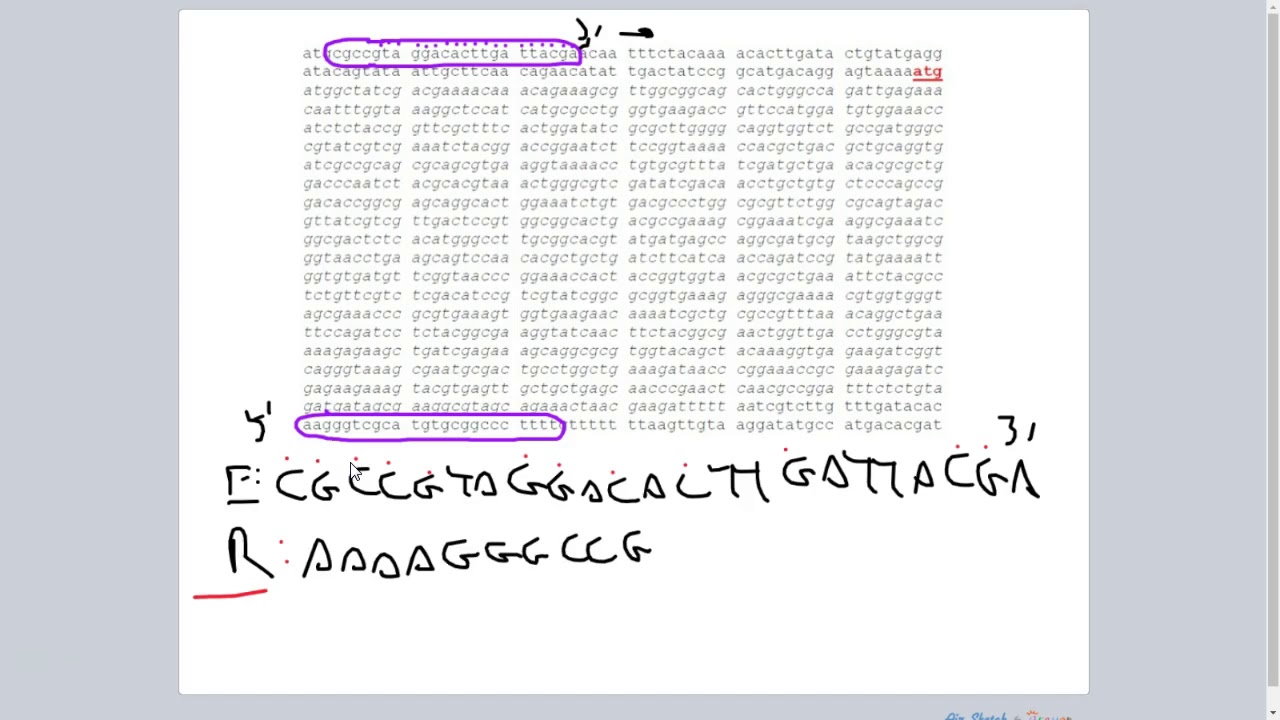
The video provides a solid, pedagogically effective explanation of two fundamental molecular biology techniques: PCR primer design and the use of PCR to confirm T-DNA insertion. The instructor’s approach is methodical, starting with basic primer design rules and then applying them to a specific example. He clearly explains the importance of GC content, melting temperature, and avoiding repetitive sequences, and he demonstrates the process of writing a reverse primer as the reverse complement of the target sequence. The explanation of T-DNA disruption confirmation is particularly clear, emphasizing the concept of primer proximity and orientation. The use of diagrams helps visualize the process, making it accessible to students. However, the video lacks citations to primary literature or external sources, which limits its scientific rigor. The content is based on standard molecular biology knowledge, but the absence of references means viewers cannot verify the information independently. Additionally, the video is a tutorial, not a peer-reviewed source, so it should be used as a learning aid rather than a definitive reference. The adéquation between the title and content is excellent, as both topics are covered thoroughly. Overall, the video is a valuable educational resource, but its lack of citations and reliance on informal presentation prevent it from being considered a highly rigorous scientific source.
211 words
Title / Content Match
The title accurately reflects the content, which covers both reverse primer design and confirmation of T-DNA disruption via PCR.
Quality & Reliability
8/10
The video provides a clear, step-by-step explanation of PCR primer design and the use of PCR to confirm T-DNA integration, based on established molecular biology principles. The content is technically accurate and well-structured, though it lacks citations and is presented as a tutorial rather than a peer-reviewed source.
Key Moments
Markers derived by PSI from the transcript: the creator did not define chapters.
- Introduction: overview of two topics - reverse primer design and confirming T-DNA disruption by PCR.
- Primer design basics: selecting a forward primer from a DNA sequence, considering GC content and melting temperature.
- Writing the forward primer sequence and explaining its orientation.
- Selecting a reverse primer target sequence and explaining the need for reverse complement.
- Writing the reverse primer as the reverse complement of the target sequence.
- Introduction to T-DNA disruption: diagram of a gene and insertion of transforming DNA.
- PCR strategy for confirming disruption: forward primer on target gene, reverse primer on T-DNA.
- Explanation that PCR product only forms if T-DNA is inserted within proximity, confirming disruption.
- Summary and conclusion.
Contribution & Novelties
The video provides a clear, step-by-step tutorial on PCR primer design and the use of PCR to confirm T-DNA disruption, which is a common technique in plant genetic engineering. It offers practical tips for selecting primers and emphasizes the importance of primer orientation and proximity in PCR verification.
Pour aller plus loin :
- PCR primer design guidelines — Detailed guidelines on primer design from Thermo Fisher Scientific.
- T-DNA insertion mutagenesis — Overview of T-DNA insertion mutagenesis in plants.
- Agrobacterium-mediated transformation — Background on Agrobacterium tumefaciens, the organism commonly used for T-DNA delivery.
92 words
Radar Profile
The radar profile shows high scores in quality of information, technical level, and reliability, with a slightly lower score in quantity of information. This indicates a focused, technically sound tutorial that could benefit from more comprehensive coverage of related concepts.