Lecture 1A: Water (Polarity)
Keywords
Summary
181 words
Critical Evaluation
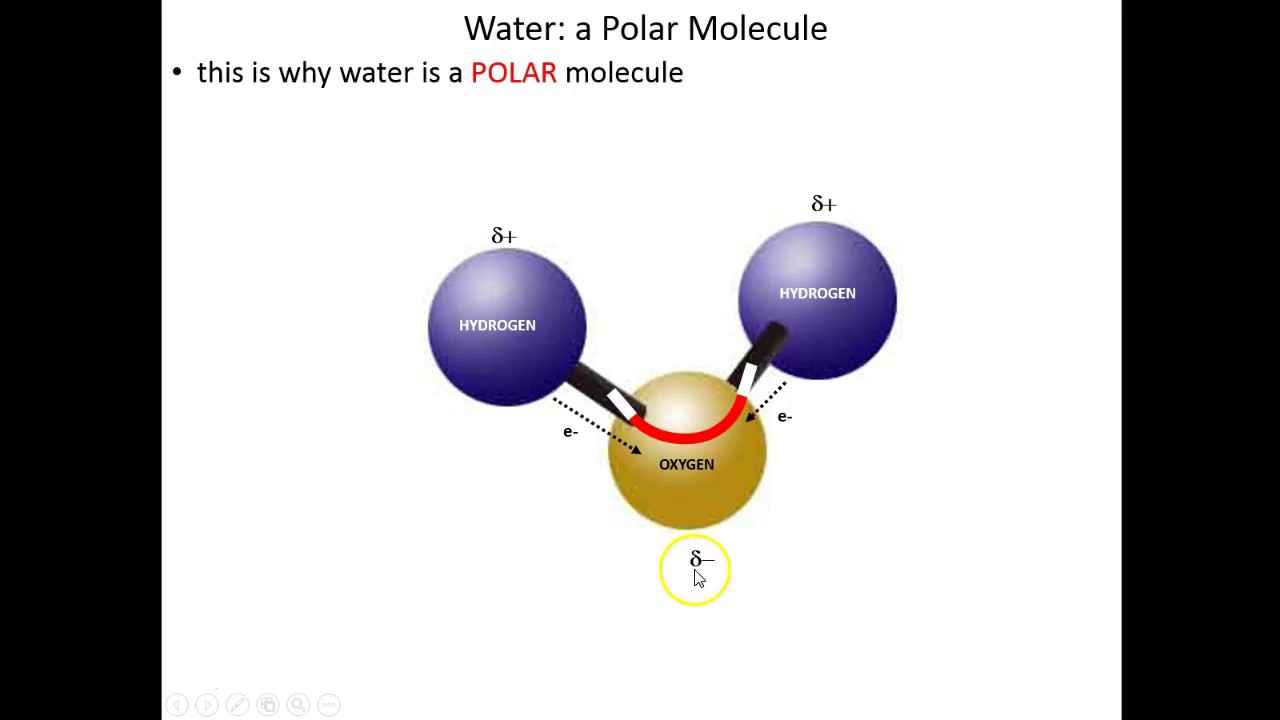
The lecture provides a solid, accurate introduction to the concept of water polarity, a fundamental topic in biochemistry. The instructor’s explanations are clear and well-structured, building from basic definitions to more complex interactions. The use of visual aids, such as diagrams of water molecules and charge distributions, enhances understanding. The analogy of Velcro to explain the cumulative strength of hydrogen bonds is effective and memorable. However, the lecture is relatively basic and does not delve into quantitative aspects or experimental evidence. No sources are cited, which is typical for an introductory lecture but limits its utility for deeper research. The content is consistent with standard biochemistry textbooks, and the instructor’s teaching style is engaging. The main weakness is the lack of depth and absence of references, but for its intended purpose as an introductory tutorial, it is highly effective. The title accurately reflects the content, and the lecture fulfills its goal of explaining water polarity clearly.
156 words
Title / Content Match
The title accurately reflects the content, which focuses on water polarity as the first part of a series on water.
Quality & Reliability
8/10
The lecture is a clear, accurate introduction to water polarity, electronegativity, and hydrogen bonds, consistent with standard biochemistry textbooks. The instructor uses analogies and diagrams to explain concepts, but no primary sources are cited, and the content is basic.
Key Moments
Markers derived by PSI from the transcript: the creator did not define chapters.
- Introduction to the lecture series and overview of topics on water.
- Explanation of why water is important for life and its role as a solvent.
- Definition of polarity and electronegativity, with water as an example.
- Detailed explanation of partial charges on water molecule.
- Introduction to hydrogen bonds and their role in water.
- Comparison with non-polar molecules like carbon dioxide.
- Explanation of the four hydrogen bonds per water molecule and ice structure.
- Analogy of Velcro to illustrate cumulative strength of hydrogen bonds.
Contribution & Novelties
This lecture provides a clear and accessible explanation of water polarity, emphasizing the role of electronegativity and partial charges. It effectively uses analogies to make abstract concepts tangible. The lecture is part of a series that will cover more advanced topics like pH and buffers.
Pour aller plus loin :
- Hydrogen bond — For a detailed overview of hydrogen bonding, its properties, and significance.
- Electronegativity — To understand the concept of electronegativity and its trends in the periodic table.
- Properties of water — For a comprehensive list of water’s physical and chemical properties.
- Non-covalent interactions — To explore other types of weak interactions in biochemistry.
105 words
Radar Profile
The radar profile shows high scores in quality and reliability, moderate in quantity and technical level, indicating a focused, accurate, but introductory lecture.