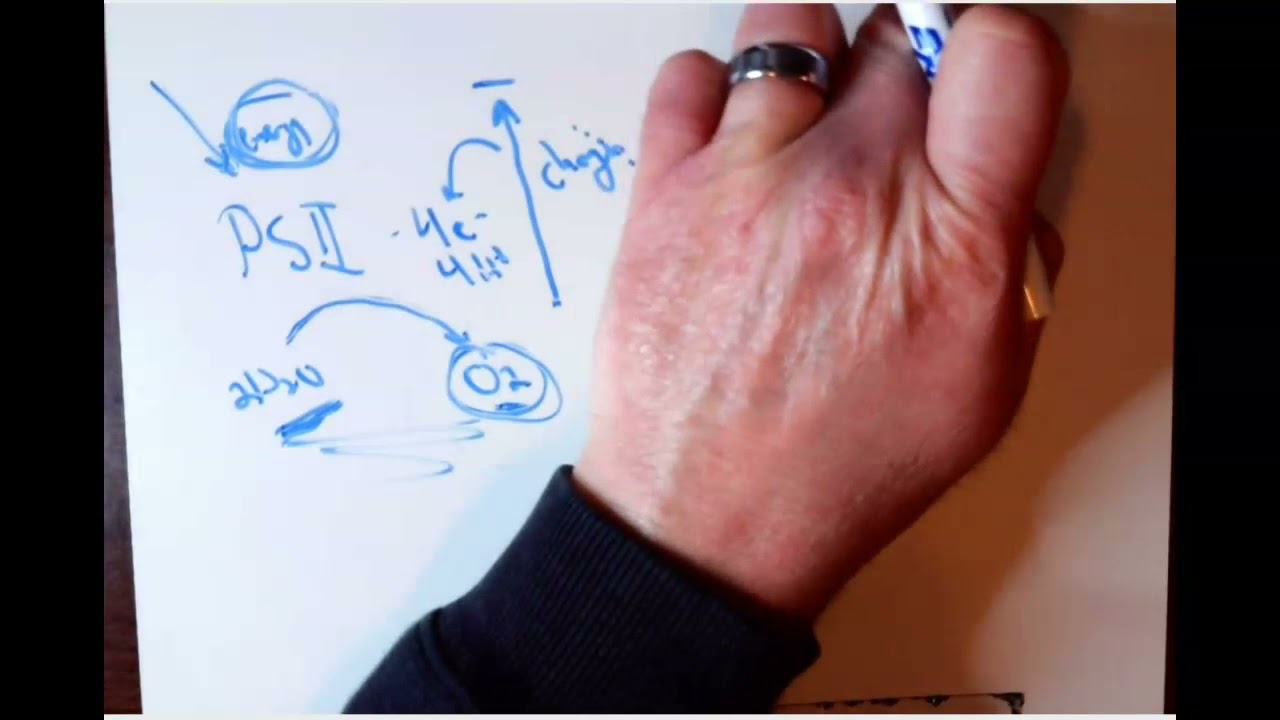
BIO300 - Week 12 Review Video - Photosynthesis
Keywords
Summary
209 words
Critical Evaluation
The video provides a thorough and accurate review of photosynthesis, suitable for reinforcing concepts taught in a college-level biology course. The instructor demonstrates strong pedagogical skills, using clear analogies and step-by-step explanations to demystify complex biochemical processes. The content is scientifically sound, with correct descriptions of the light reactions, including the roles of photosystems I and II, the electron transport chain, and ATP synthase. The explanation of the Calvin cycle is also accurate, covering carbon fixation, reduction, and regeneration phases. The instructor effectively links the three essential inputs (water, carbon dioxide, sunlight) to their specific roles in photosynthesis, which helps students see the big picture. However, the video lacks citations to primary literature or external sources, which limits its utility for deeper research. The discussion of the C4 pathway is brief but accurate, mentioning key enzymes and the spatial separation of reactions. The video’s production quality is adequate, with occasional focus issues, but these do not detract significantly from the content. The instructor’s engaging style and motivational remarks create a supportive learning environment. Overall, this is a valuable educational resource, though it could be enhanced by including references and perhaps visual aids to illustrate molecular structures. The title accurately reflects the content, and the video fulfills its purpose as a review session.
212 words
Title / Content Match
The title accurately reflects the content: a review video for a biology course covering photosynthesis.
Quality & Reliability
8/10
The video is a comprehensive review of photosynthesis by a college professor with 15 years of experience. The content is accurate and well-structured, covering light and dark reactions, and C4 pathway. The explanation is clear and pedagogically sound, though it lacks citations to primary literature.
Key Moments
Markers derived by PSI from the transcript: the creator did not define chapters.
- Introduction and motivational message about the semester.
- Overview of the three requirements for plant survival: water, carbon dioxide, and sunlight.
- Explanation of light reactions: sunlight absorption by chlorophyll and reaction centers.
- Detailed breakdown of photosystem II: water splitting, oxygen release, and electron harvesting.
- Electron transport to photosystem I and generation of NADPH and ATP.
- Introduction to the Calvin cycle: carbon fixation and the role of RuBP.
- Detailed steps of the Calvin cycle: reduction and regeneration phases.
- Explanation of the C4 pathway for tropical plants.
- Conclusion and summary of key points.
Contribution & Novelties
The video provides a clear and cohesive synthesis of photosynthesis, integrating the light and dark reactions into a single narrative. It emphasizes the connection between the three essential inputs and their biochemical roles, which is pedagogically valuable. The explanation of the C4 pathway adds depth for students interested in plant adaptations.
Pour aller plus loin :
- Photosynthesis (Wikipedia) — General overview and additional details.
- Calvin cycle (Wikipedia) — Detailed description of the cycle.
- C4 carbon fixation (Wikipedia) — Further information on the C4 pathway.
84 words
Radar Profile
The radar profile shows high scores in information quantity, quality, and reliability, with a slightly lower technical level, indicating a well-balanced educational video that is accessible yet comprehensive.