Experimental Techniques in Molecular Biology, Part 3
Keywords
Summary
153 words
Critical Evaluation
The lecture provides a comprehensive and pedagogically effective overview of techniques for studying DNA-protein interactions. The explanation of the molecular basis of specificity is particularly strong, using the Velcro analogy to illustrate how multiple weak interactions sum to create strong, specific binding. This conceptual foundation is crucial for understanding the techniques that follow. The progression from gel shift assays to ChIP and ChIP-seq is logical, showing the evolution from in vitro to in vivo and from single-gene to genome-wide analyses. The lecturer clearly explains the principles, steps, and applications of each technique, making complex methods accessible. However, the lecture lacks direct citations to primary literature or specific studies, which would enhance its scientific rigor. The discussion of systems biology is brief but provides a good introduction to the concept. Overall, the content is accurate and well-presented, suitable for an advanced undergraduate or graduate audience. The absence of citations is a minor weakness, but the lecture’s clarity and depth compensate. The title accurately reflects the content, and the lecture fulfills its educational purpose effectively.
173 words
Title / Content Match
The title accurately reflects the content, which covers experimental techniques in molecular biology, specifically DNA-protein interactions and systems biology.
Quality & Reliability
8/10
The lecture is well-structured, accurate, and provides clear explanations of molecular biology techniques. It includes analogies and references to established concepts, but lacks direct citations to primary literature.
Key Moments
Markers derived by PSI from the transcript: the creator did not define chapters.
- Introduction to the lecture and overview of topics: DNA binding proteins, gel shift, ChIP, ChIP-seq, systems biology.
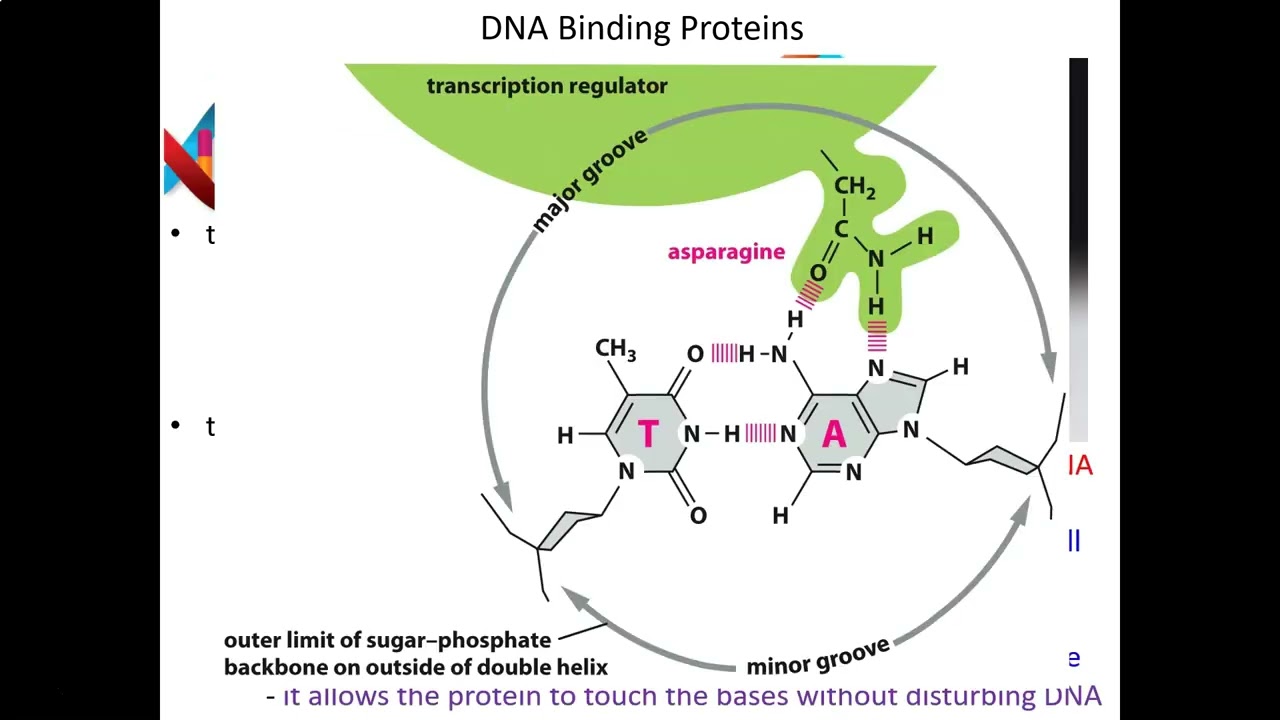
- Explanation of how proteins specifically bind to DNA, focusing on non-covalent interactions and the major groove.
- Discussion of DNA binding domains and motifs as scaffolds for specific recognition.
- Introduction to gel shift assays (EMSA) as an in vitro technique to detect protein-DNA binding.
- Explanation of chromatin immunoprecipitation (ChIP) to identify DNA regions bound by proteins in vivo.
- Description of ChIP-seq, combining ChIP with sequencing for genome-wide analysis.
- Introduction to systems biology and how ChIP-seq data contribute to understanding gene regulatory networks.
- Conclusion and summary of the lecture.
Contribution & Novelties
The lecture provides a clear and accessible explanation of techniques for studying DNA-protein interactions, emphasizing the molecular basis of specificity. It bridges the gap between classical methods like gel shift and modern high-throughput approaches like ChIP-seq, and introduces systems biology as an integrative framework.
Pour aller plus loin :
- Electrophoretic mobility shift assay — Wikipedia article on EMSA, a key technique discussed.
- Chromatin immunoprecipitation — Wikipedia article on ChIP, detailing the method and applications.
- ChIP-sequencing — Wikipedia article on ChIP-seq, explaining the high-throughput variant.
- Systems biology — Wikipedia article providing an overview of systems biology, the concluding topic.
98 words
Radar Profile
The radar profile shows high scores in quantity and quality of information, with a moderate technical level. This indicates a well-balanced lecture that is informative and accurate, but not overly technical, making it suitable for a broad audience.