Lecture 12 - Bacterial Genetic Systems
Keywords
Summary
148 words
Critical Evaluation
The lecture provides a solid introduction to bacterial genetic systems, suitable for an undergraduate genetics course. The instructor demonstrates a strong command of the subject, presenting complex concepts in an accessible and engaging manner. The content is accurate and well-organized, progressing logically from DNA structure to genetic exchange mechanisms. The use of analogies, such as comparing bacterial warfare to antibiotic production, helps to illustrate abstract concepts. However, the lecture lacks explicit citations to primary literature or specific sources, which limits its utility for deeper research. The discussion of horizontal gene transfer is brief and could be expanded to include its broader implications for evolution and public health. The visual aids, including electron micrographs, are helpful but not always clearly explained. Overall, the lecture is a valuable educational resource, though it would benefit from more rigorous referencing and a deeper exploration of certain topics.
143 words
Title / Content Match
The title accurately reflects the content, which is a comprehensive lecture on bacterial genetic systems.
Quality & Reliability
8/10
The lecture is a well-structured educational presentation by an academic instructor, providing accurate and up-to-date information on bacterial genetics. It covers fundamental concepts with clarity and appropriate depth, and the content aligns with established scientific knowledge. The presentation is engaging and includes practical examples, though it does not cite specific sources or references.
Key Moments
Markers derived by PSI from the transcript: the creator did not define chapters.
- Introduction to molecular genetics and overview of the lecture topics.
- Review of DNA structure and base pairing rules.
- Discussion on the importance of bacteria and their prevalence on Earth.
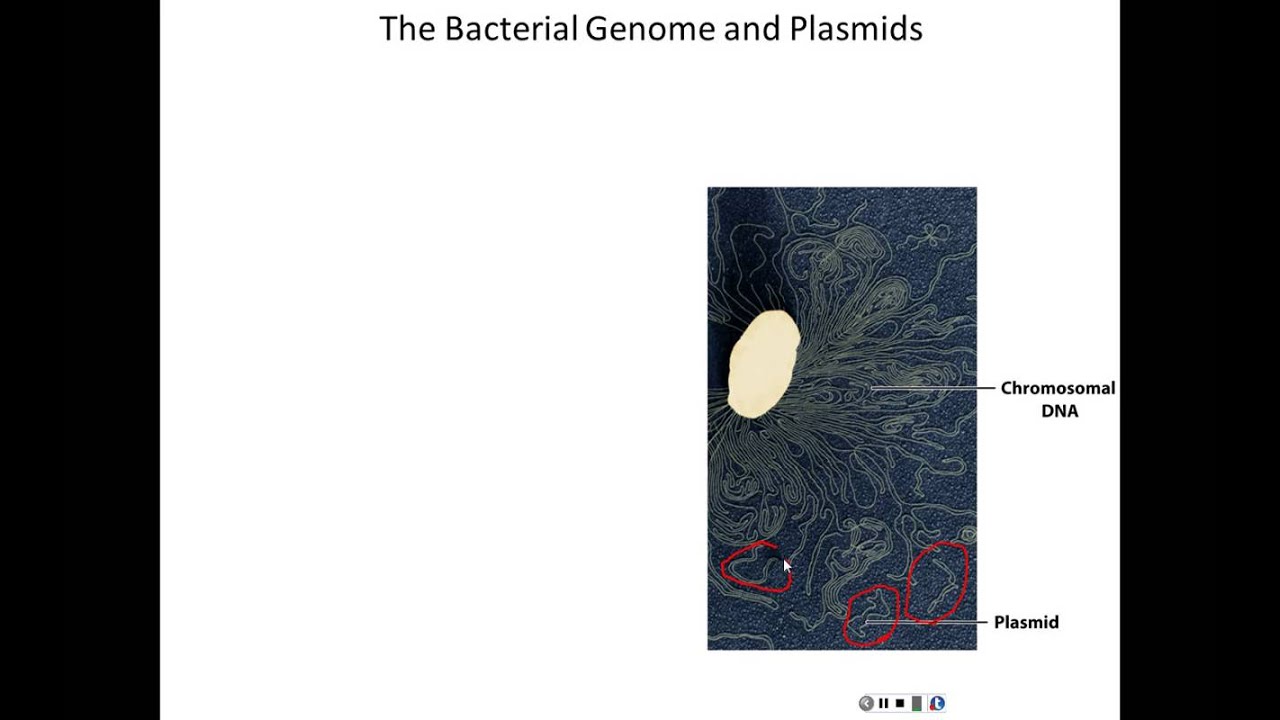
- Description of bacterial genomes: circular, supercoiled, and efficient.
- Introduction to plasmids and their functions, including antibiotic resistance.
- Explanation of genetic exchange in bacteria: conjugation, transformation, and transduction.
- Detailed discussion on conjugation and the role of plasmids in mating.
- Discussion on gene mapping in bacteria using recombination frequencies.
- Introduction to horizontal gene transfer and its significance.
- Conclusion and summary of key points.
Contribution & Novelties
The lecture provides a comprehensive overview of bacterial genetic systems, emphasizing the practical importance of plasmids and the three mechanisms of genetic exchange. It highlights the efficiency of bacterial genomes and the role of horizontal gene transfer in evolution and antibiotic resistance.
Pour aller plus loin :
- Bacterial conjugation — Provides detailed molecular mechanisms of conjugation.
- Transformation (genetics) — Explains the process of transformation and its applications.
- Transduction (genetics) — Describes transduction and its role in gene transfer.
- Horizontal gene transfer — Discusses the broader implications of HGT in evolution.
- Plasmid — Overview of plasmid structure and functions.
98 words
Radar Profile
The radar chart shows a balanced profile with high scores in information quantity, quality, and reliability, indicating a well-rounded and trustworthy lecture. The technical level is slightly lower, reflecting its introductory nature, but still appropriate for the target audience.