Lecture 16 - Control of Gene Expression in Prokaryotes
Keywords
Summary
196 words
Critical Evaluation
The lecture provides a solid introduction to prokaryotic gene regulation, covering the essential concepts with clarity and pedagogical effectiveness. The instructor’s explanations are accurate and well-structured, building from basic definitions to more complex regulatory mechanisms. The use of analogies (car for positive control, hot water heater for negative control) helps make abstract concepts more accessible. The discussion of the lac operon is thorough, including the roles of the repressor, inducer, and CAP, and the interplay between positive and negative control. The trp operon is also well explained, with a clear description of the attenuation mechanism, which is often challenging for students. The lecture is based on standard textbook material (Chapter 16) and is consistent with established molecular biology knowledge. However, it lacks citations to primary research or specific sources, which limits its utility for deeper verification. The presentation is engaging, but the lack of visual aids (slides) in the transcript may make it harder for viewers to follow complex diagrams. Overall, the lecture is a valuable educational resource for students learning about gene regulation, but it does not offer novel insights beyond what is typically found in textbooks. The title accurately reflects the content, and the lecture stays on topic throughout. The public comments (if any) were not provided, so no analysis of audience reception is possible.
217 words
Title / Content Match
The title accurately reflects the content, which is a lecture on control of gene expression in prokaryotes.
Quality & Reliability
8/10
The lecture is a well-structured educational presentation by a biology instructor, covering fundamental concepts of prokaryotic gene regulation. It is based on standard textbook material (Chapter 16) and presents accurate information with clear explanations and analogies. The content is consistent with established molecular biology knowledge, though it lacks citations to primary literature.
Key Moments
Markers derived by PSI from the transcript: the creator did not define chapters.
- Introduction to gene regulation in prokaryotes; importance of energy conservation.
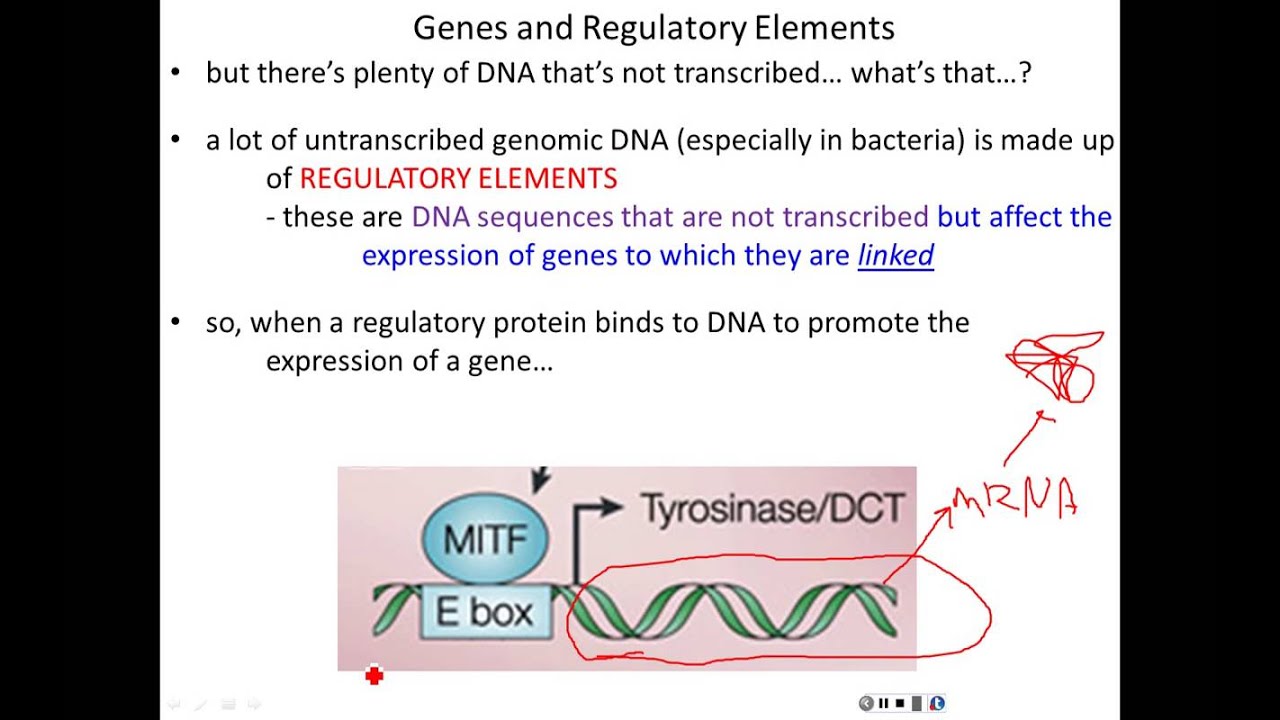
- Definition of genes, structural genes, regulatory genes, and regulatory elements.
- Explanation of positive and negative control with analogies (car and hot water heater).
- Introduction to operons and the lac operon as an example.
- Detailed discussion of lac operon regulation: repressor, inducer, and CAP.
- Introduction to the trp operon and its repressor.
- Explanation of attenuation in the trp operon.
- Summary and concluding remarks.
Contribution & Novelties
The lecture provides a clear and comprehensive overview of prokaryotic gene regulation, with a focus on the lac and trp operons. It effectively explains the concepts of positive and negative control, and the attenuation mechanism. While it does not present new research, it serves as a valuable educational resource for students. For further exploration, the following resources are recommended:
Pour aller plus loin :
- Lac operon - Wikipedia — Detailed article on the lac operon, including its structure and regulation.
- Trp operon - Wikipedia — Comprehensive overview of the trp operon and attenuation.
- Gene regulation - Khan Academy — Educational videos and articles on gene regulation.
106 words
Radar Profile
The radar profile shows high scores in quantity and quality of information, and moderate technical level, indicating a well-balanced lecture that is informative and reliable. The fiabilite_globale score is also high, reflecting the accuracy of the content.