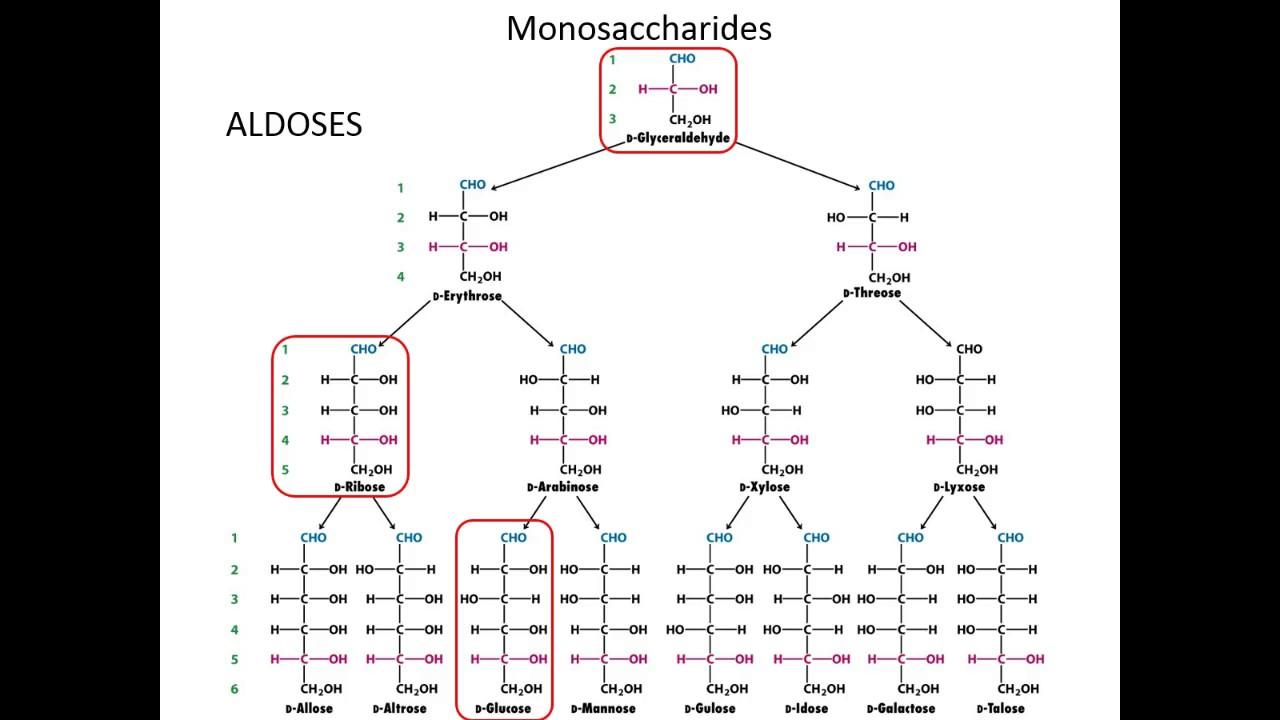
Lecture 10A - Introduction to Sugars
Keywords
Summary
145 words
Critical Evaluation
The lecture provides a solid introduction to carbohydrate chemistry, suitable for students beginning their study of biochemistry. The content is accurate and well-structured, progressing from general concepts to specific details. The instructor clearly explains the nomenclature and structural features of monosaccharides, including chirality, ring formation, and conformational analysis. The use of diagrams and analogies (e.g., chair and boat conformations) aids understanding. The lecture is based on standard textbook material, ensuring reliability. However, it lacks depth in certain areas, such as the chemical properties of glycosidic bonds and the biological significance of complex carbohydrates, which are only briefly mentioned. The presentation is didactic and clear, but the pace may be fast for beginners. The absence of visual aids in the transcription is compensated by the instructor’s verbal descriptions. Overall, the lecture is a valuable educational resource for foundational knowledge in biochemistry.
140 words
Title / Content Match
The title accurately reflects the content, as the lecture provides an introduction to sugars, covering their structure, classification, and basic chemistry.
Quality & Reliability
8/10
The lecture is based on standard biochemistry textbook content (Chapter 16) and presents fundamental concepts accurately. The instructor demonstrates a clear understanding of carbohydrate chemistry, including chirality, ring formation, and conformations. No controversial claims are made, and the content aligns with established scientific knowledge.
Key Moments
Markers derived by PSI from the transcript: the creator did not define chapters.
- Introduction to the lecture series on sugars and overview of topics to be covered.
- Importance of carbohydrates as one of four major biomolecules and their abundance on Earth.
- Definition of monosaccharides, oligosaccharides, and polysaccharides.
- Explanation of the basic formula for carbohydrates and classification by carbon number.
- Introduction to aldoses and ketoses, with examples like glucose and fructose.
- Cyclization of monosaccharides into ring structures, forming pyranose and furanose rings.
- Discussion of chair and boat conformations for pyranose rings and their stability.
- Explanation of envelope conformations for furanose rings.
- Introduction to glycosidic bonds and their role in nucleotides.
Contribution & Novelties
This lecture provides a clear and systematic introduction to carbohydrate chemistry, emphasizing structural diversity and conformational analysis. It serves as a foundation for understanding metabolic pathways involving sugars. The lecture’s strength lies in its pedagogical approach, using analogies to explain complex concepts like ring conformations.
Pour aller plus loin :
- Carbohydrate — Comprehensive overview of carbohydrates, including classification and biological roles.
- Monosaccharide — Detailed information on monosaccharide structure and nomenclature.
- Glycosidic bond — Explanation of glycosidic bond formation and its importance in biomolecules.
83 words
Radar Profile
The radar profile shows high scores in information quantity, quality, and reliability, with a slightly lower technical level, indicating a well-balanced educational lecture that is accessible yet informative.