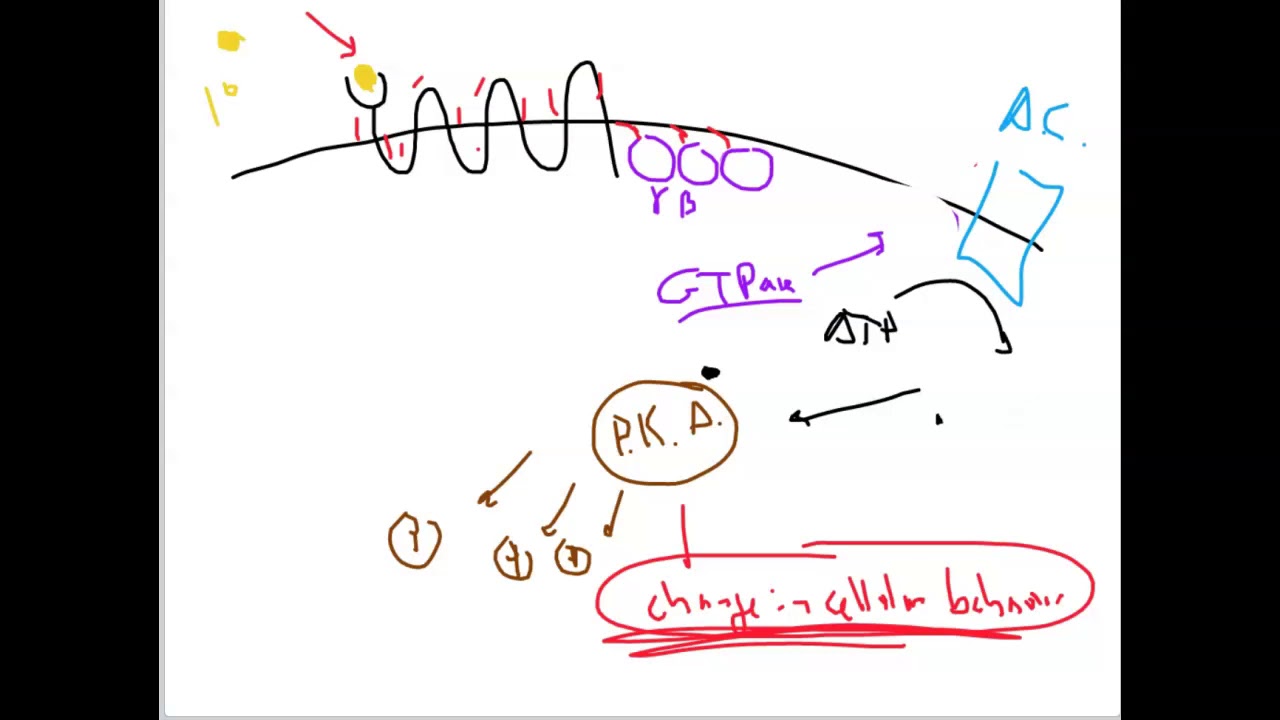
G Protein Coupled Receptors: cAMP and Ca as Second Messenger
Keywords
Summary
188 words
Critical Evaluation
The video offers a clear and detailed explanation of GPCR signaling, making it a valuable resource for students in biochemistry or cell biology. The instructor’s use of analogies and step-by-step narration aids comprehension. The content is scientifically accurate, with correct descriptions of molecular interactions and pathway components. However, the video lacks citations to primary literature, which limits its utility for advanced learners seeking evidence-based sources. The presentation is somewhat informal, with occasional digressions, but this does not detract from the overall quality. The title accurately reflects the content, and the video successfully covers both cAMP and calcium as second messengers. The absence of visual aids or animations may make it less engaging, but the verbal explanations are thorough. Overall, the video is a solid educational tool, though it could benefit from more depth on regulatory mechanisms and clinical relevance.
139 words
Title / Content Match
The title accurately reflects the content, focusing on GPCRs and the roles of cAMP and calcium as second messengers.
Quality & Reliability
7/10
The video provides a detailed and accurate explanation of GPCR signaling pathways, consistent with established biochemistry. The content is well-structured and pedagogically sound, though it lacks citations and depth on certain regulatory aspects.
Key Moments
Markers derived by PSI from the transcript: the creator did not define chapters.
- Introduction to GPCRs and their structure
- Explanation of GPCR synthesis and gene expression
- Ligand binding and G protein activation
- cAMP pathway: adenylate cyclase and PKA
- Signal termination via GTPase activity
- Introduction to phospholipase C pathway
- IP3 and DAG production from PIP2
- Calcium release from ER and influx via PKC
- Calmodulin and calcium/calmodulin-dependent kinase activation
- Summary and conclusion
Concurring Sources
- Molecular Biology of the Cell (Alberts et al.) — Standard textbook reference for cell signaling pathways.
Contribution & Novelties
The video provides a clear pedagogical explanation of GPCR signaling, integrating both major second messenger pathways. It emphasizes the mechanistic details and the importance of signal termination. For further exploration, consider the following resources:
Pour aller plus loin :
- G protein-coupled receptor — Overview of GPCR structure and function.
- Cyclic adenosine monophosphate — Details on cAMP as a second messenger.
- Calcium signaling — Comprehensive coverage of calcium’s role in cellular signaling.
71 words
Radar Profile
The radar profile shows balanced scores across all dimensions, with slightly higher scores in quantity of information and technical level, indicating a comprehensive and technically sound presentation. The lower score in reliability reflects the lack of citations and informal style.
💬 No comments were provided for analysis.