Cytoskeleton Components - A Brief Review of Structure and Function
Keywords
Summary
153 words
Critical Evaluation
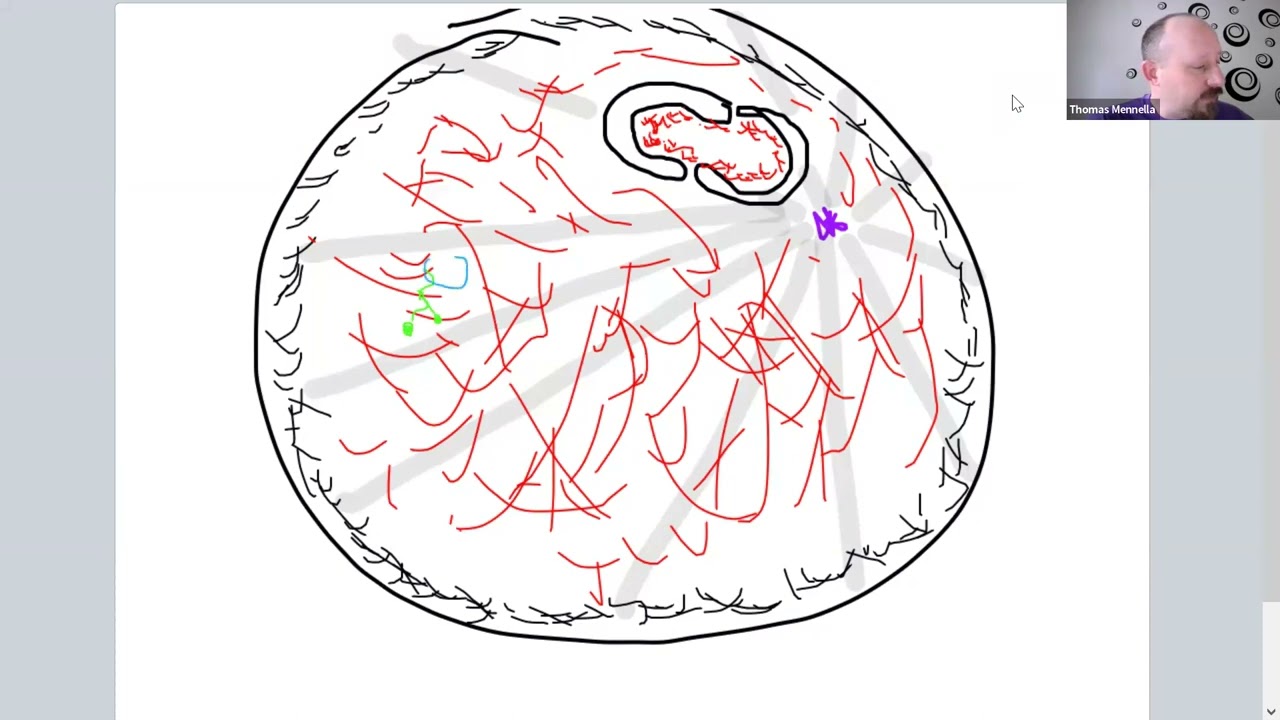
The video offers a solid introductory review of the cytoskeleton, suitable for students in a cell biology course. The instructor’s use of a whiteboard with hand-drawn diagrams effectively conveys the structural differences between the three filament systems. The explanation of subunit composition (globular vs. fibrous) and the analogy of intermediate filaments as ‘rope’ for tensile strength are pedagogically effective. The functional distinctions are clearly presented: microtubules as tracks for motor proteins, actin in cell motility, and intermediate filaments as static structural elements. The mention of the nuclear lamina and keratin as intermediate filaments adds relevant context. However, the video lacks depth in certain areas; for instance, it does not discuss the dynamic instability of microtubules or the regulatory proteins involved in filament assembly. The instructor explicitly states that certain details (like alpha/beta tubulin types) are not required for the exam, which is appropriate for the target audience but limits the comprehensiveness. The absence of citations to primary literature or textbooks is a minor weakness, but for a tutorial, reliance on expert knowledge is acceptable. The adéquation between title and content is excellent. Overall, the video is a valuable resource for students seeking a clear, concise overview, though it does not offer novel insights beyond standard textbook material.
207 words
Title / Content Match
The title accurately reflects the content, which is a brief review of the structure and function of cytoskeleton components.
Quality & Reliability
7/10
The video provides a clear and accurate overview of cytoskeleton components, consistent with established cell biology knowledge. The instructor uses a whiteboard to illustrate structures and functions, and the content is appropriate for an introductory level. However, it lacks citations to primary literature and is based on the instructor's expertise, which is adequate for a tutorial but not exhaustive.
Key Moments
Markers derived by PSI from the transcript: the creator did not define chapters.
- Introduction and overview of the three cytoskeleton components.
- Structure of microtubules: hollow tubes made of tubulin subunits.
- Structure of intermediate filaments: fibrous and rope-like.
- Structure of actin filaments: thin and twisted chains.
- Functions in the cell: microtubules as highways, actin cortex, intermediate filaments for support.
- Motor proteins: kinesin and dynein on microtubules, myosin on actin.
- Summary and key takeaways.
Contribution & Novelties
The video provides a clear and concise review of cytoskeleton components, emphasizing structural differences and functional roles. It effectively uses analogies (highways, rope) to aid understanding. While not novel, it serves as a useful educational resource.
Pour aller plus loin :
- Cytoskeleton - Wikipedia — Comprehensive overview of cytoskeleton components and functions.
- Microtubule - Wikipedia — Detailed information on microtubule structure and dynamics.
- Intermediate filament - Wikipedia — In-depth look at intermediate filament structure and role.
- Actin - Wikipedia — Information on actin structure and function.
- Motor protein - Wikipedia — Overview of motor proteins and their mechanisms.
98 words
Radar Profile
The radar profile shows balanced scores across information quantity, quality, technical level, and reliability, indicating a well-rounded educational video. The high quality and reliability scores reflect accurate content, while the moderate technical level suggests it is accessible to beginners.