Domains, Motifs and Turns (Lecture 3)
Keywords
Summary
118 words
Critical Evaluation
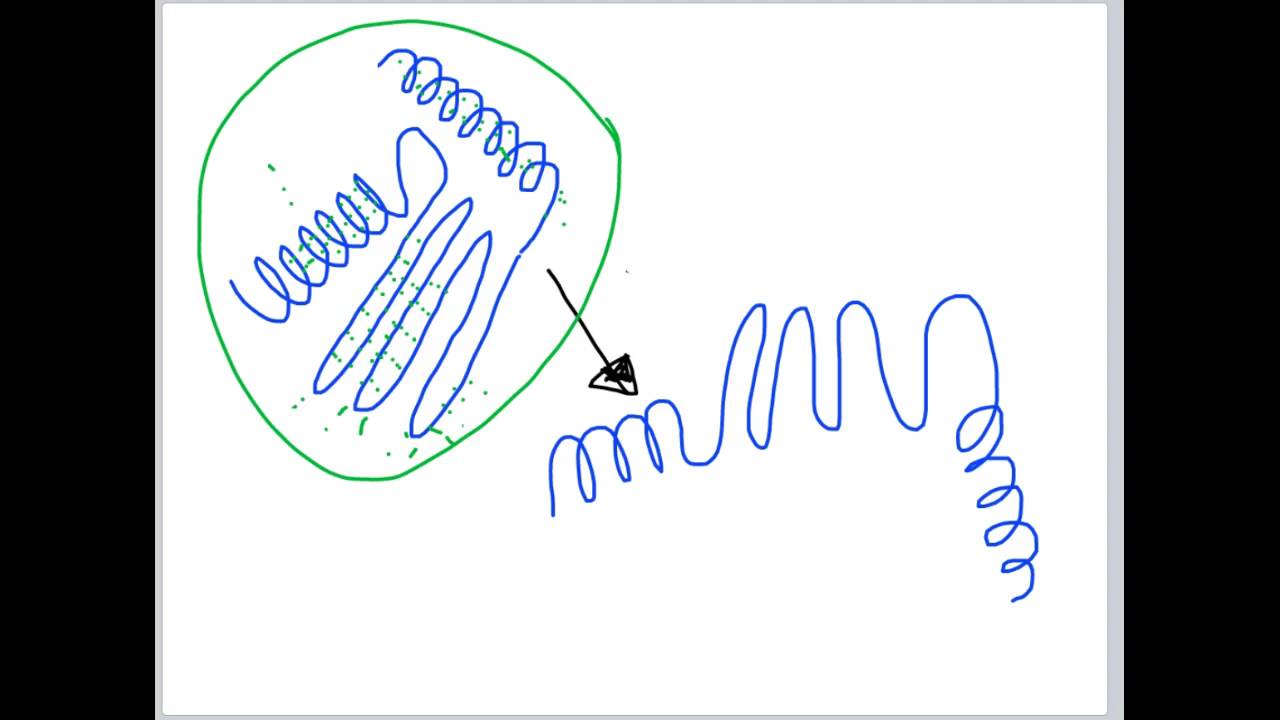
The video provides a clear and pedagogically effective explanation of the differences between protein motifs and domains, a topic that often confuses students. The instructor uses a visual approach, drawing diagrams and employing a thought experiment (cutting the protein) to illustrate the key distinction: motifs are not independently stable, while domains are. This functional definition is accurate and aligns with standard biochemistry textbooks. The explanation of turns, focusing on the roles of proline and glycine, is also correct and well-illustrated. The video’s strength lies in its simplicity and clarity, making complex concepts accessible. However, it lacks citations to primary literature, which is typical for an introductory lecture. The content is accurate, but the lack of references means viewers cannot verify claims or explore further. The video’s production quality is basic, but the visual aids are effective. Overall, the video achieves its goal of clarifying these concepts and is a valuable resource for students. The adéquation between title and content is excellent. The video does not present any controversial or unsupported claims, and the scientific content is reliable.
177 words
Title / Content Match
The title accurately reflects the content, which covers domains, motifs, and turns in protein structure.
Quality & Reliability
8/10
Clear, accurate explanations of fundamental biochemistry concepts, consistent with standard textbooks. No citations provided, but the content is well-established and presented without errors.
Key Moments
Markers derived by PSI from the transcript: the creator did not define chapters.
- Introduction: The video will clarify the difference between motifs and domains, and explain turns.
- Review of secondary structures: alpha helices and beta sheets are held together by hydrogen bonds.
- Definition of a motif: a collection of secondary structures within a larger protein, stabilized by interactions with other parts.
- Thought experiment: cutting a motif out of a protein causes it to lose its structure and function.
- Definition of a domain: a functional region that is independently stable, retaining its structure and function when isolated.
- Comparison: motifs vs. domains - motifs lose function when isolated, domains do not.
- Explanation of turns: sharp changes in direction, often involving proline and glycine.
- Role of proline: kinks the polypeptide chain; role of glycine: small side chain fits in tight spaces.
- Summary: turns are secondary structures that connect other secondary structures.
Contribution & Novelties
The video provides a clear and memorable explanation of the difference between motifs and domains, using a functional definition and a thought experiment. It also clarifies the role of proline and glycine in turns. This is a valuable educational resource for students.
Pour aller plus loin :
- Protein domain — Wikipedia article on protein domains, providing further context.
- Structural motif — Wikipedia article on structural motifs.
- Beta turn — Wikipedia article on beta turns, including the role of proline and glycine.
81 words
Radar Profile
The radar profile shows high scores in quality of information and reliability, with moderate scores in quantity and technical level. This reflects a focused, accurate, and clear educational video that covers a specific topic in depth.
💬 Très positif. Sur les 30 commentaires analysés, tous expriment une gratitude et une satisfaction extrêmes, soulignant la clarté de l'explication et l'efficacité pédagogique, avec des mentions répétées de 'meilleure explication' et de 'sauvé' pour des examens.