Lecture 2C - Amino Acids (Peptide Bonds)
Keywords
Summary
155 words
Critical Evaluation
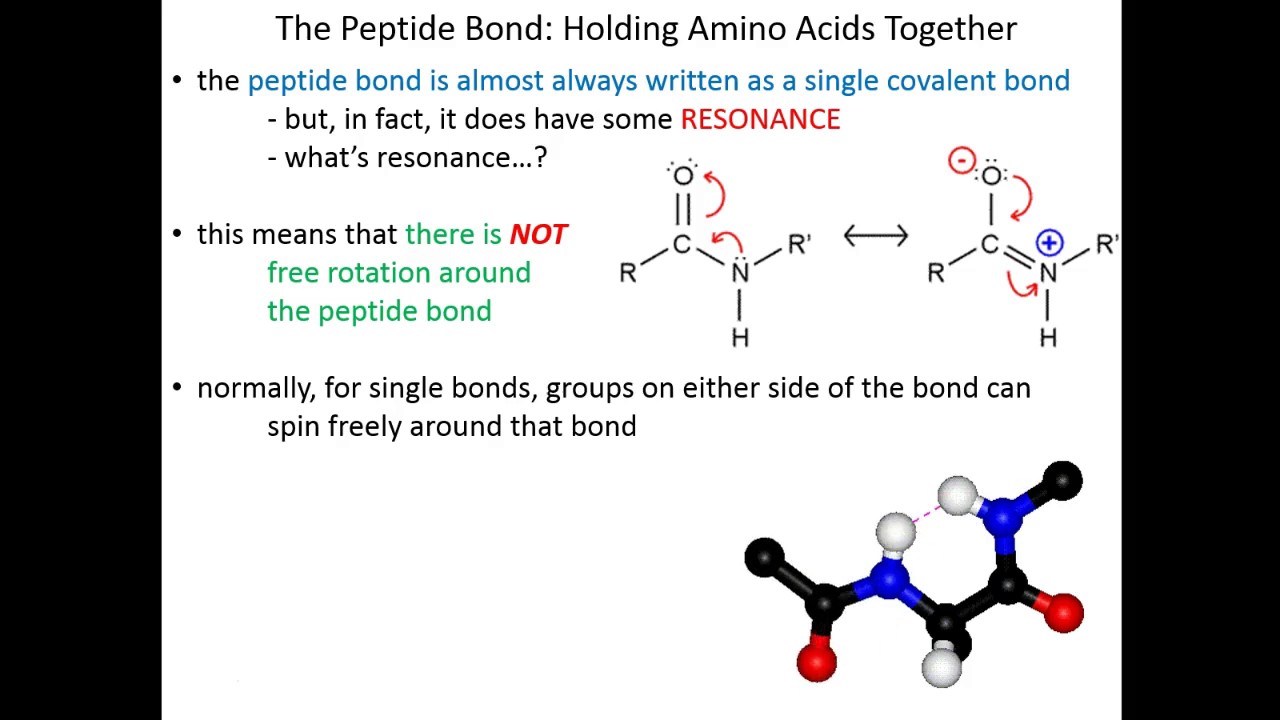
The lecture provides a solid foundation for understanding peptide bonds and their role in protein structure. The explanation of resonance and its effect on bond planarity is particularly clear, using analogies like the foam ball on pencils to illustrate restricted rotation. The distinction between peptides and proteins based on length is well-defined, and the examples of small functional peptides (aspartame, glutathione, enkephalins, oxytocin, vasopressin) effectively demonstrate the physiological importance of these molecules. The connection to translation and the ribosome at the end ties the material to broader biological processes. However, the lecture is introductory and lacks depth in some areas, such as the detailed mechanisms of peptide bond formation or the energetic considerations. The informal tone and occasional digressions (e.g., the movie reference) might not appeal to all learners. The content is scientifically accurate, but the lack of citations or references to primary literature limits its use for advanced study. Overall, it is a valuable educational resource for beginners in biochemistry.
161 words
Title / Content Match
The title accurately reflects the content, which focuses on amino acids and peptide bonds.
Quality & Reliability
8/10
The lecture is scientifically accurate, well-structured, and provides clear explanations of peptide bonds, resonance, and protein structure. The content aligns with established biochemistry knowledge. However, it is a basic educational lecture without citations or references to primary literature, and the presenter's informal style may not suit all audiences.
Key Moments
Markers derived by PSI from the transcript: the creator did not define chapters.
- Introduction to the lecture topic: peptide bonds and protein structure.
- Explanation of how amino acids are linked via peptide bonds.
- Discussion of the dehydration reaction in peptide bond formation.
- Introduction of the term 'residue' and distinction between peptides and proteins.
- Explanation of resonance in the peptide bond and its planar nature.
- Discussion of trans configuration and steric interference.
- Examples of small functional peptides: aspartame, glutathione, enkephalins.
- Discussion of oxytocin and vasopressin as nonapeptides.
- Connection to translation and the ribosome; summary of key points.
Contribution & Novelties
This lecture provides a clear and accessible introduction to peptide bonds and protein structure, suitable for beginners. It effectively explains the concept of resonance and its implications for protein conformation. The examples of small functional peptides illustrate the diversity of peptide functions.
Pour aller plus loin :
- Peptide bond - Wikipedia — For a comprehensive overview of peptide bond chemistry.
- Protein structure - Wikipedia — To explore higher levels of protein organization.
- Resonance (chemistry) - Wikipedia — To deepen understanding of resonance in chemical bonds.
- Oxytocin - Wikipedia — For more details on this hormone’s functions.
- Vasopressin - Wikipedia — To learn about its role in water balance and blood pressure.
111 words
Radar Profile
The radar profile shows high scores in information quantity and quality, with a moderate technical level. This indicates a well-balanced educational resource that is both informative and accessible, though not highly advanced.