Lecture 20 - Cancer
Keywords
Summary
161 words
Critical Evaluation
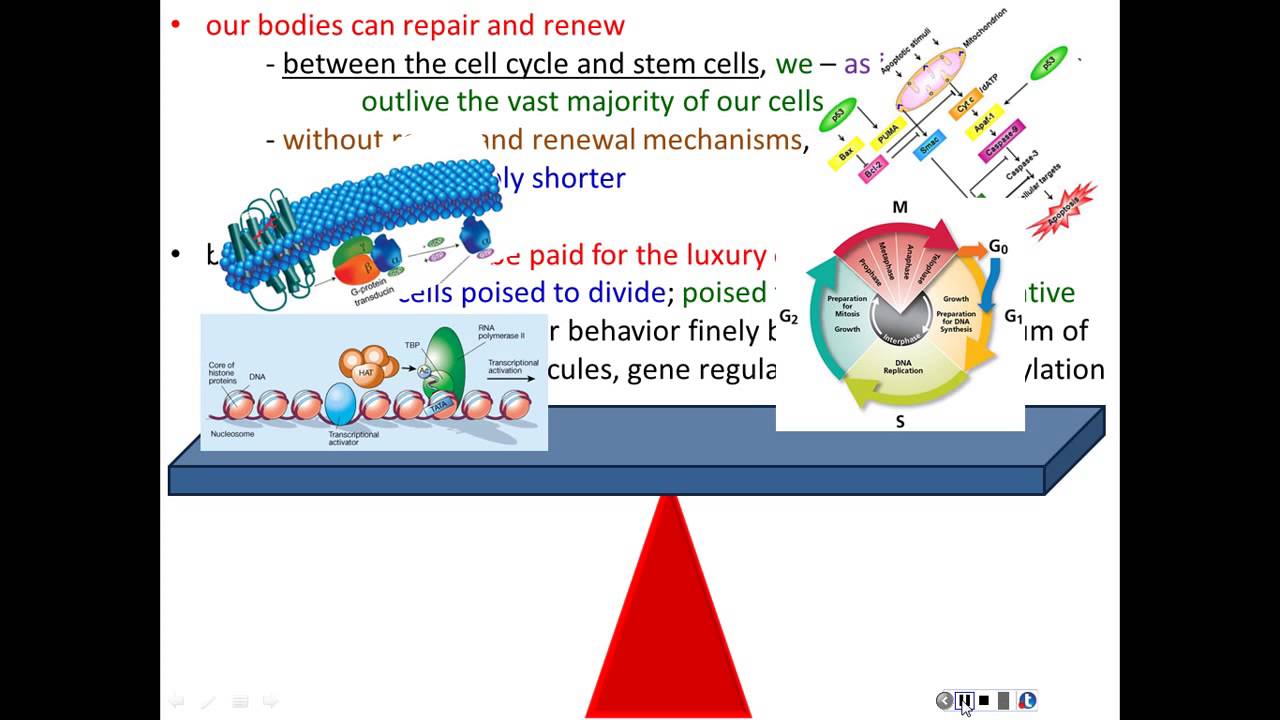
This lecture provides a solid, comprehensive introduction to cancer biology, suitable for an undergraduate cell biology course. The instructor, Thomas Mennella, demonstrates a strong command of the subject, presenting complex concepts in a clear and engaging manner. The content is scientifically accurate, covering fundamental aspects such as the hallmarks of cancer, the role of cell cycle regulation, and the genetic basis of the disease. The use of analogies, such as comparing cancer cells to ‘angry dogs on a leash’ and describing them as ‘sociopathic,’ helps make abstract concepts more relatable, though it may oversimplify some nuances. The lecture is well-structured, progressing logically from the basic characteristics of cancer cells to the mechanisms of development, genetic factors, and potential treatments. The discussion of colorectal cancer as a model is particularly effective in illustrating the multi-step nature of carcinogenesis. However, the lecture lacks specific citations to primary literature, which limits its utility for deeper research. The instructor’s personal anecdotes about his family’s experience with cancer add a human touch but do not detract from the scientific content. The treatment of current and future therapies is somewhat brief, but it provides a reasonable overview. Overall, this is a high-quality educational resource that effectively synthesizes key concepts in cancer biology, though it is not without minor simplifications. The lecture’s strength lies in its clarity and pedagogical approach, making it valuable for students seeking a foundational understanding of the topic.
235 words
Title / Content Match
The title accurately reflects the content, which is a comprehensive lecture on cancer biology.
Quality & Reliability
8/10
The lecture is part of a formal cell and molecular biology course, presenting established scientific concepts about cancer. The instructor demonstrates expertise and provides a balanced view, acknowledging the severity of the disease. No specific sources are cited, but the content aligns with standard textbook knowledge.
Key Moments
Markers derived by PSI from the transcript: the creator did not define chapters.
- Introduction to the lecture and overview of topics to be covered.
- Discussion on why cancer is a cellular disease and the challenge of treating it because cancer cells are the patient's own cells.
- Explanation of the three main characteristics of cancer cells: proliferative, invasive, and metastatic.
- Introduction to the concept of cancer as a breakdown of cellular social order, comparing cancer cells to sociopaths.
- Discussion on the causes of cancer, including environmental triggers and genetic factors.
- Explanation of the role of oncogenes and tumor suppressor genes in cancer development.
- Detailed look at the progression of cancer, including the concept of clonal selection and accumulation of mutations.
- Case study of colorectal cancer to illustrate the stepwise progression of mutations.
- Discussion of current and future cancer treatments, including targeted therapies and immunotherapies.
- Conclusion and summary of key points from the lecture.
Contribution & Novelties
This lecture provides a comprehensive and accessible overview of cancer biology, integrating concepts from cell biology and genetics. It emphasizes the social nature of cells and frames cancer as a breakdown of cellular cooperation. The lecture is particularly effective in explaining the genetic basis of cancer and the challenges of treatment.
Pour aller plus loin :
- Hallmarks of Cancer — This Wikipedia article outlines the key capabilities acquired by cancer cells, providing a framework that complements the lecture.
- Oncogene — A detailed explanation of oncogenes, which are mutated genes that promote cancer, directly relevant to the lecture’s discussion of cancer genetics.
- Tumor suppressor gene — This article covers the role of tumor suppressor genes in preventing cancer, a key concept discussed in the lecture.
- Metastasis — This resource explains the process of metastasis, which is one of the defining characteristics of cancer cells mentioned in the lecture.
147 words
Radar Profile
The radar profile shows high scores across all dimensions, indicating a well-rounded and reliable educational resource. The lecture excels in providing substantial information with good technical depth and high reliability, making it a valuable learning tool.