Lecture 6 - From Genes to Proteins Translation (Chapter 7, Part 2)
Keywords
Summary
158 words
Critical Evaluation
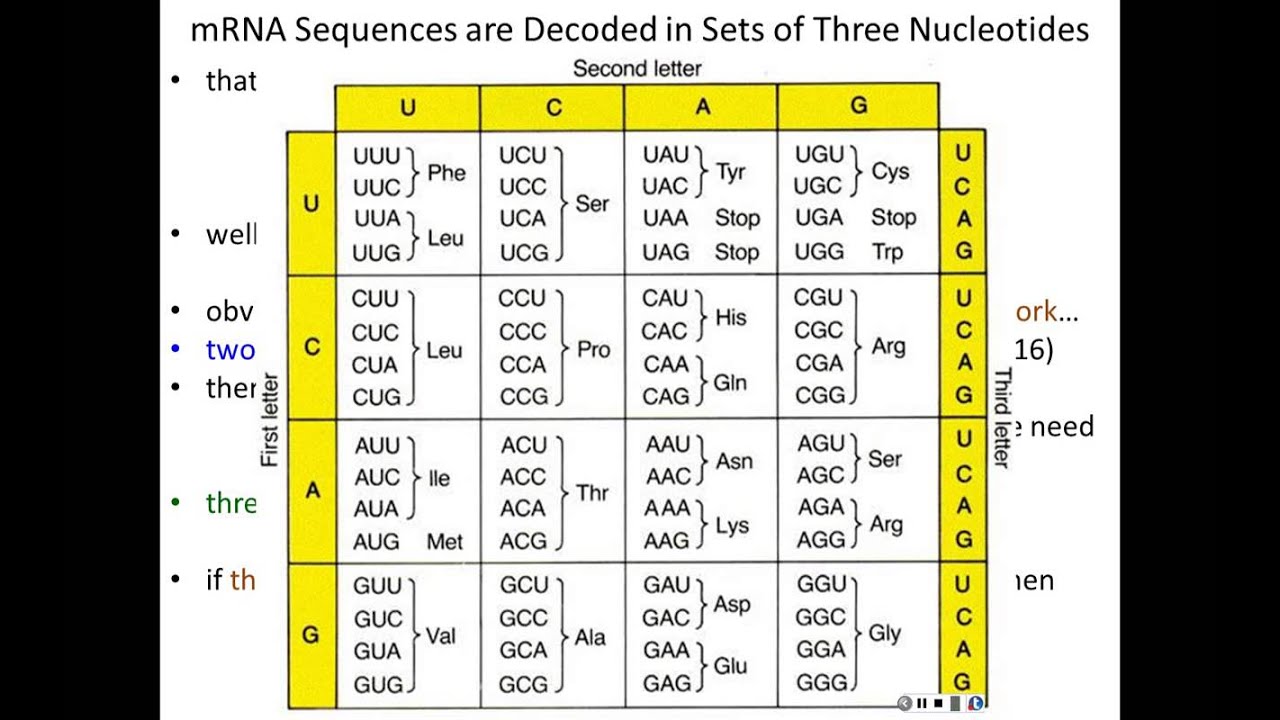
This lecture provides a thorough and accurate overview of translation, a core process in molecular biology. The instructor, Thomas Mennella, demonstrates a strong command of the subject, explaining complex concepts in a clear and accessible manner. The content is scientifically sound, aligning with established knowledge in the field. The lecture begins by addressing the conceptual challenge of translating a four-letter nucleotide language into a 20-letter amino acid language, effectively using the analogy of alphabetic versus character-based languages. This sets the stage for explaining why codons are triplets, as one or two nucleotides would not provide enough combinations to code for all 20 amino acids. The genetic code is presented with its redundancy, which is correctly described as a buffer against mutations. The universality of the code is also mentioned, with minor exceptions, which is accurate. The structure and function of tRNA are explained, including the concept of charging, which is essential for understanding how amino acids are matched to codons. The ribosome is described as the site of protein synthesis, and the three stages of translation—initiation, elongation, and termination—are covered in detail. The lecture also discusses polysomes and the action of antibiotics, providing a broader context. One strength is the use of examples and analogies, which aid comprehension. However, the lecture lacks citations to primary literature or specific sources, which would enhance its scholarly value. Additionally, while the content is accurate, it does not delve into recent advances or nuances in translation regulation. Overall, this is a high-quality educational lecture that effectively teaches the fundamentals of translation. The title accurately reflects the content, and the lecture is well-paced and engaging. The absence of visual aids in this transcript is a limitation, but the verbal explanations are sufficient. The lecture is suitable for students with a basic understanding of molecular biology, and it serves as an excellent resource for learning about translation.
311 words
Title / Content Match
The title accurately reflects the content: a lecture on translation, the second part of Chapter 7 on gene expression.
Quality & Reliability
8/10
The lecture is based on established molecular biology concepts, presented accurately and pedagogically. The instructor demonstrates deep knowledge and uses clear examples. The content aligns with standard textbooks and scientific consensus. Minor limitations include a lack of citations to primary literature and a focus on foundational material rather than cutting-edge research.
Key Moments
Markers derived by PSI from the transcript: the creator did not define chapters.
- Introduction to the lecture, covering reading frames and codons.
- Explanation of the genetic code and its redundancy.
- Discussion on tRNA structure and charging.
- Overview of ribosome structure and function.
- Detailed explanation of translation initiation.
- Elongation phase of translation.
- Termination of translation and release of the protein.
- Polysomes and their role in protein synthesis.
- Antibiotics that target translation.
- Introduction to regulation of translation.
Contribution & Novelties
This lecture provides a comprehensive and pedagogically effective explanation of translation, clarifying the conceptual leap from nucleotides to amino acids. It emphasizes the redundancy of the genetic code as a protective mechanism against mutations, a point often underappreciated. The lecture also integrates the roles of tRNA, ribosomes, and the stages of translation into a coherent narrative.
Pour aller plus loin :
- Genetic code - Wikipedia — Provides a detailed overview of the genetic code, including its history and variations.
- Translation (biology) - Wikipedia — Comprehensive article on the process of translation, including initiation, elongation, and termination.
- Ribosome - Wikipedia — Detailed information on ribosome structure and function.
- tRNA - Wikipedia — Explains the role of tRNA in translation.
- Nobel Prize in Physiology or Medicine 1968 — Awarded for the interpretation of the genetic code, highlighting the historical significance.
138 words
Radar Profile
The radar profile shows high scores in quantity and quality of information, with a slightly lower but still strong score in technical level. This indicates a well-balanced lecture that provides substantial content with solid scientific accuracy, suitable for an introductory to intermediate audience.