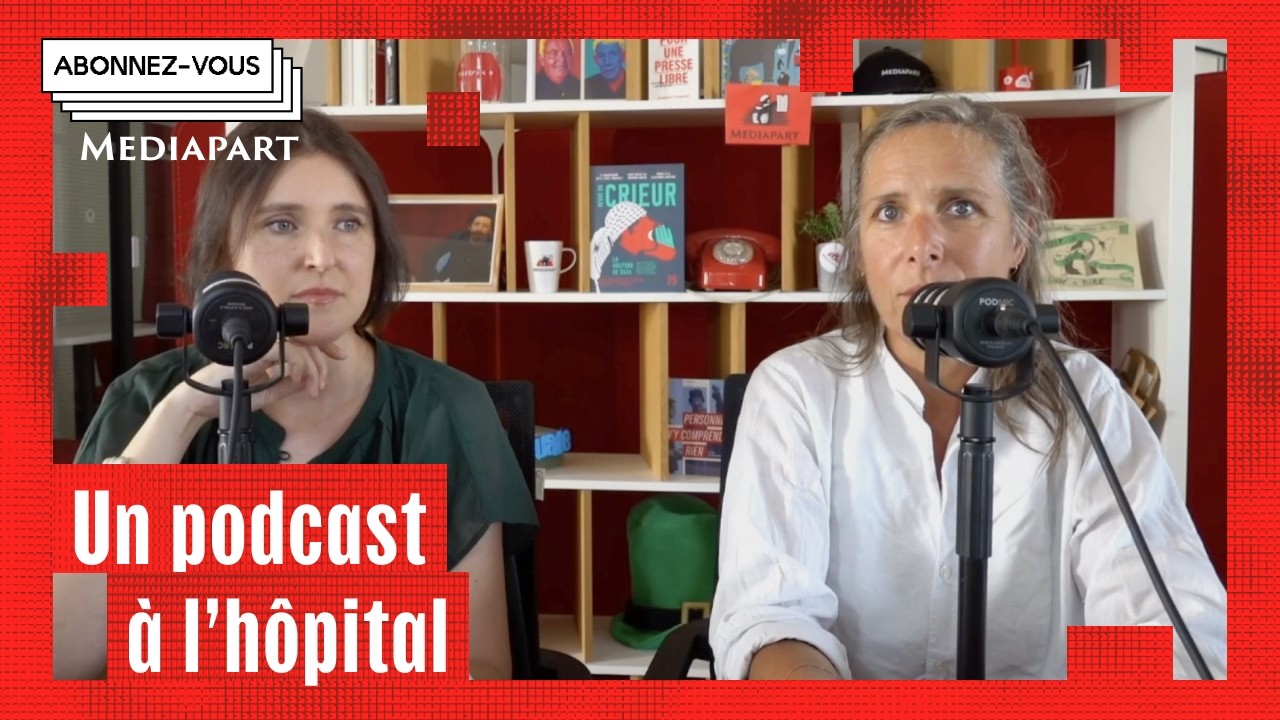
En consultation avec les mineur·es : les coulisses d’un podcast à l’hôpital, avec Fabienne Laumonier
Keywords
Summary
130 words
Critical Evaluation
The video provides a valuable insider perspective on the creation of a sensitive documentary podcast. Fabienne Laumonier’s expertise as a documentary filmmaker is evident in her thoughtful reflections on ethics, consent, and the impact of recording on therapeutic settings. She demonstrates a strong commitment to respecting the patients’ autonomy, allowing them to withdraw at any time, and ensuring their stories are told with dignity. The discussion is grounded in concrete examples, such as the case of a patient who withdrew at the last moment, illustrating the real-world challenges of such projects. The argumentation is coherent and credible, supported by the institutional context of Mediapart and the collaboration with medical professionals. However, the content is primarily anecdotal and based on personal experience rather than systematic research, which limits its generalizability. The sources cited are limited to Mediapart’s promotional links, which are relevant but not academic. The title accurately reflects the content, and the discussion offers practical insights for journalists and documentarians. Overall, the video is informative and ethically sound, though it lacks broader contextualization of addiction in minors. The public comments, if any, would provide additional perspectives, but none were provided in this case.
193 words
Title / Content Match
The title accurately reflects the content: a behind-the-scenes discussion of a podcast recorded in a hospital with minors, featuring the documentary maker.
Quality & Reliability
8/10
The discussion is led by an experienced documentary filmmaker and is grounded in a real, institutional project (recording in a hospital). The speaker provides detailed, coherent explanations of the production process, ethical considerations, and collaboration with medical staff. The content is subjective (personal experience) but credible due to the concrete context and the reputation of the media outlet.
Key Moments
Markers derived by PSI from the transcript: the creator did not define chapters.
- Introduction of Fabienne Laumonier and her background as a documentary filmmaker.
- Explanation of how she responded to Mediapart's call for projects on addictions.
- Discussion of the recording process over four months, with visits every two weeks.
- Details on the team involved: Michael Hdenberg, Pascal Pascariello, and others.
- Challenges of obtaining authorizations from the hospital administration (AP-HP).
- Ethical considerations: patients could withdraw at any time, and consent was paramount.
- Selection of protagonists based on diverse addiction profiles and complementary stories.
- Case study of Tina, a patient with addiction to crack and a history of overdose.
- Technical aspects: different microphones for different types of speech (mono vs stereo).
- Reflections on the impact of recording on therapy and the value of giving voice to patients.
Cited Sources
- Mediapart - Addictions : en consultation avec des mineur·es — Official page for the podcast series discussed in the video.
- Mediapart Subscription — Link to subscribe to Mediapart, mentioned as a way to support their work.
- Mediapart Donation — Link to donate to Mediapart, mentioned as an alternative support method.
- Mediapart Newsletters — Link to sign up for Mediapart newsletters, mentioned in the description.
Concurring Sources
- Mediapart - Addictions : en consultation avec des mineur·es — The podcast series itself, which aligns with the discussion.
Contribution & Novelties
The video offers a unique behind-the-scenes look at the production of a documentary podcast in a hospital setting, highlighting ethical and practical challenges. It provides insights into gaining access to sensitive environments, building trust with patients and medical staff, and the importance of consent and anonymity. The discussion also touches on the technical aspects of sound recording and editing, which are rarely discussed in such detail.
Pour aller plus loin :
- Addiction in adolescents — WHO fact sheet on adolescent mental health, including substance use.
- Ethics of recording minors — UNICEF page on the Convention on the Rights of the Child, relevant to consent and protection.
- Documentary ethics — Wikipedia article on documentary film, discussing ethical considerations.
117 words
Radar Profile
The radar profile shows high scores in quantity and quality of information, reflecting the detailed and credible discussion. The technical level is moderate, suitable for a general audience interested in documentary production. The overall reliability is strong due to the speaker's expertise and the institutional backing.