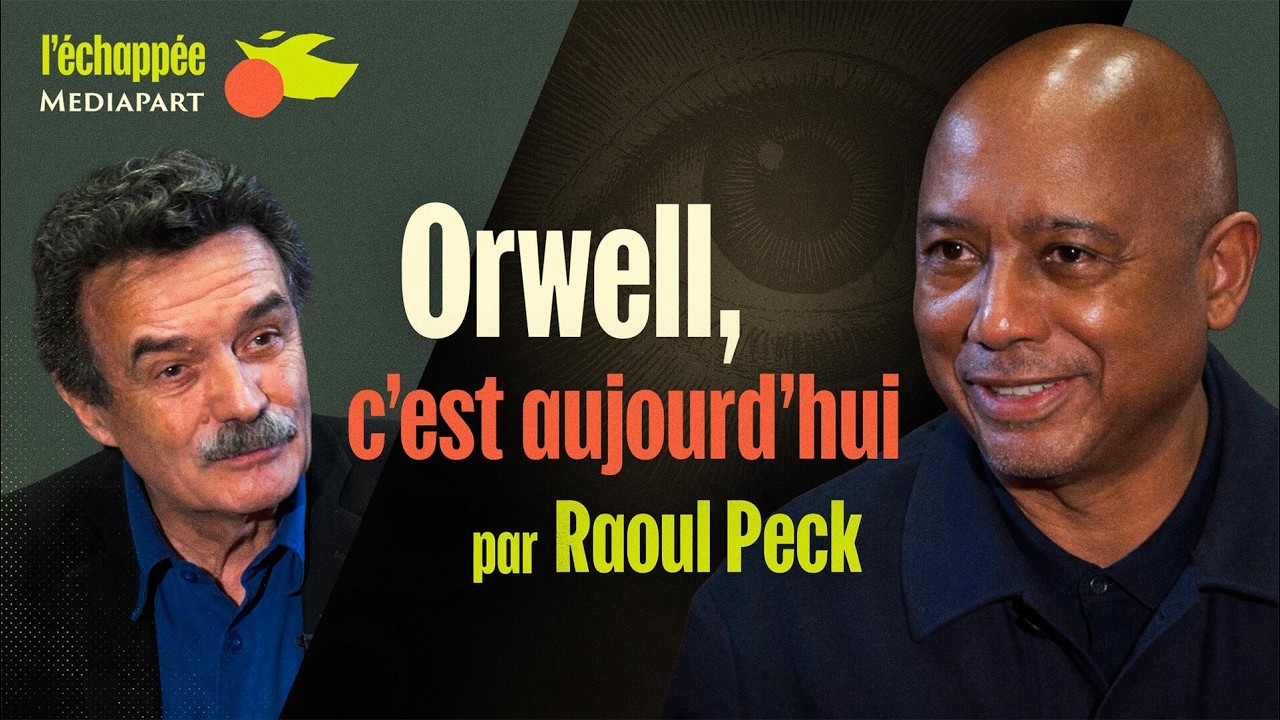
Orwell, c’est aujourd’hui, par Raoul Peck
Keywords
Summary
150 words
Critical Evaluation
The interview provides a compelling and insightful analysis of George Orwell’s work and its contemporary relevance. Raoul Peck, as a filmmaker and intellectual, brings a unique perspective, connecting Orwell’s themes to current political events, particularly the rise of authoritarianism and the erosion of truth. The discussion is well-structured, moving from the origins of the film to a deep exploration of Orwell’s ideas and their manifestation today. Peck’s arguments are grounded in historical context, referencing Orwell’s essays and the reception of ‘1984’ during the Cold War, which adds depth to the analysis. The conversation also benefits from the interviewer’s informed questions, which guide the discussion toward critical issues such as media complicity and the dangers of normalizing fascism. However, the content is primarily opinion-based, relying on Peck’s expertise rather than systematic evidence or data. While Peck’s credibility is high, the lack of diverse sources or counterarguments limits the critical rigor. The adéquation between title and content is strong, as the interview directly addresses Orwell’s relevance today. Overall, the interview is intellectually stimulating and offers valuable insights, but it could benefit from a more balanced examination of opposing viewpoints. The public comments reflect a positive reception, with many expressing appreciation for the interview’s depth and clarity. No significant negative trends are observed.
210 words
Title / Content Match
The title accurately reflects the content, as the interview focuses on Orwell's contemporary relevance, particularly in light of current political events.
Quality & Reliability
8/10
The interview features Raoul Peck, a renowned filmmaker, discussing George Orwell's relevance today. The content is well-informed, drawing on Orwell's works and historical context, and is presented in a thoughtful manner. However, it is primarily an opinion-based discussion rather than a systematic analysis, and the sources cited are limited to Mediapart articles.
Key Moments
Markers derived by PSI from the transcript: the creator did not define chapters.
- Introduction to the interview and the film 'Orwell: 2+2=5'.
- Raoul Peck explains how the film project started.
- Discussion on Orwell's life and his colonial experience.
- Analysis of Orwell's warnings about totalitarianism and language.
- Comparison of Orwell's themes to contemporary politics, especially Trump.
- Discussion on the role of media and the rewriting of history.
- Peck emphasizes the need for resistance and citizen action.
- Exploration of the 'no limits' nature of authoritarian power.
- Discussion on the Epstein case and its connections to political and financial crimes.
- Conclusion and call to take Orwell's warnings seriously.
Cited Sources
- Les colères intactes de Raoul Peck — Article from Mediapart about Raoul Peck's work and perspectives.
- Raoul Peck, invité exceptionnel d’« À l’air libre » — Previous interview with Raoul Peck on Mediapart.
Concurring Sources
- George Orwell — Wikipedia article providing background on Orwell's life and works.
- Nineteen Eighty-Four — Wikipedia article on the novel, including its themes and reception.
External References
Contribution & Novelties
The interview offers a fresh perspective on Orwell’s work by connecting it to contemporary political events, particularly the rise of authoritarianism and the manipulation of truth. Peck’s film ‘Orwell: 2+2=5’ is presented as a tool to understand current threats to democracy. The discussion highlights the importance of language and history in maintaining democratic societies, and it calls for active resistance against authoritarian tendencies.
Pour aller plus loin :
- George Orwell — Overview of Orwell’s life and works.
- Nineteen Eighty-Four — Detailed analysis of the novel and its themes.
- Hannah Arendt — Philosopher whose ideas on truth and politics are relevant to the discussion.
- Steve Bannon — Political figure mentioned in the interview, known for his role in the Trump administration.
120 words
Radar Profile
The radar profile shows high scores in quantity and quality of information, reflecting the rich content and insightful discussion. The technical level is moderate, as the interview is accessible to a general audience. Reliability is high due to the credibility of the speaker and the reputable platform.
💬 Très positif : Sur les 30 commentaires analysés, l'écrasante majorité exprime une grande gratitude et admiration pour l'interview, saluant la clarté et la profondeur des propos de Raoul Peck, avec quelques mentions de l'envie de voir le film.