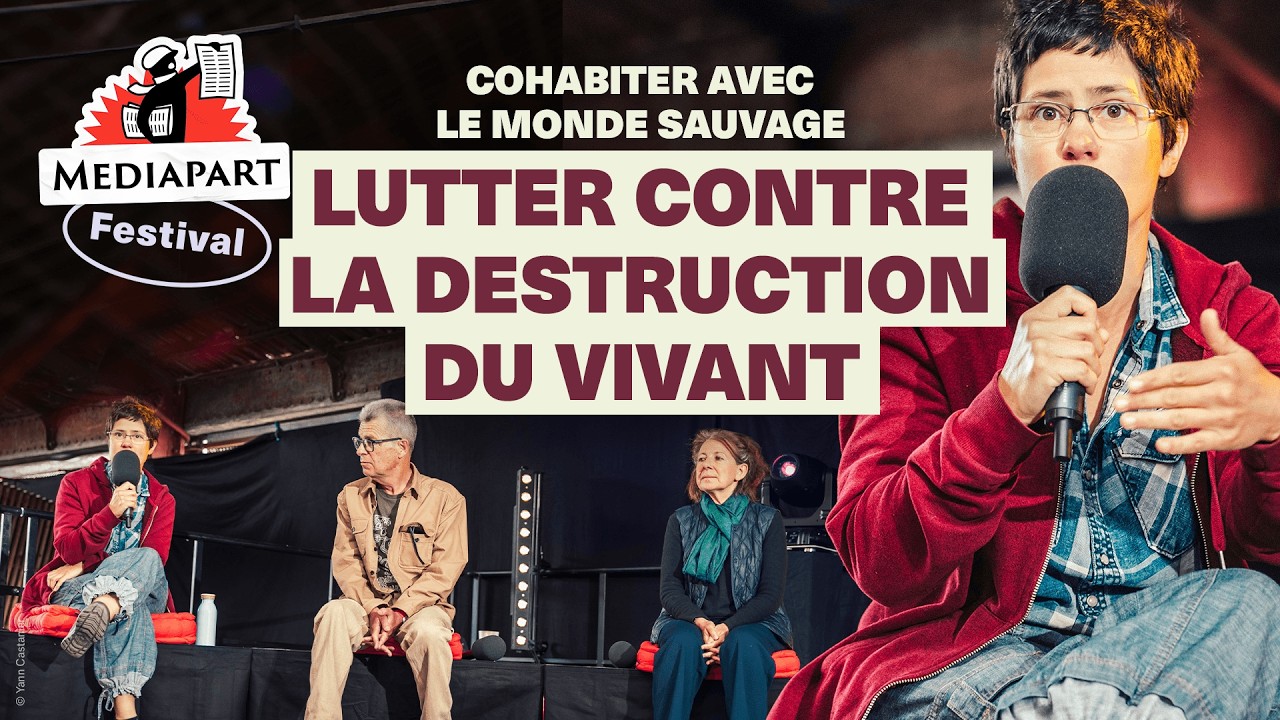
Cohabiter avec le monde sauvage : comment lutter contre la destruction du vivant ?
Keywords
Summary
217 words
Critical Evaluation
The video provides a well-rounded and informative discussion on biodiversity loss and coexistence with wildlife. The panelists bring complementary expertise: Frédéric Maller offers concrete data from the LPO, Christelle Puvinet emphasizes the interconnectedness of species and human habitats, and Joël Zasque provides a philosophical perspective on urban-wildlife relations. The moderation by Amélie Poinssot ensures a coherent flow and addresses key questions. The information is generally reliable, with references to the LPO’s barometer and specific examples like the recovery of storks and flamingos. However, the discussion lacks direct citations to peer-reviewed studies, and some claims, such as the exact percentage of media coverage, are presented without clear sources. The argumentation is solid, but the debate format means that some points are not deeply explored. The title accurately reflects the content, and the video successfully highlights the urgency of biodiversity loss while offering nuanced perspectives on solutions. The presence of a brief sponsorship segment does not detract from the content’s quality. Overall, the video is a valuable resource for understanding the challenges and potential approaches to biodiversity conservation in France.
178 words
Title / Content Match
The title accurately reflects the content, which focuses on biodiversity loss and strategies for coexistence with wildlife.
Quality & Reliability
8/10
The video is a structured debate featuring experts in philosophy, ecology, and ornithology. It provides concrete data from the LPO and references to scientific reports, while also presenting diverse perspectives. The discussion is well-moderated and grounded in factual information, though it lacks direct citations to peer-reviewed studies.
Key Moments
Markers derived by PSI from the transcript: the creator did not define chapters.
- Introduction to the topic and the concept of 'mute news' regarding biodiversity.
- Frédéric Maller presents the LPO's barometer showing declines in farmland and urban birds.
- Discussion on the recovery of species like storks and flamingos due to conservation efforts.
- Christelle Puvinet explains the 'Naturalistes des terres' movement and the importance of species that coevolved with humans.
- Joël Zasque discusses wild animals moving into cities and the historical separation between cities and nature.
- Examples of wildlife in urban areas, including kangaroos and snakes, and the role of human living conditions.
- Debate on whether to protect nature in enclosures or learn to coexist, with perspectives from the panel.
- Discussion on the role of media and politics in addressing biodiversity loss.
- Audience questions and further exploration of local actions and systemic change.
- Concluding remarks on the need for a harmonious relationship with the natural world.
Cited Sources
- Mediapart subscription page — Mentioned in the video description as a way to support Mediapart.
- Mediapart donation page — Mentioned in the video description as a way to support Mediapart.
- Mediapart newsletter signup — Mentioned in the video description for subscribing to Mediapart's newsletter.
Concurring Sources
- LPO (Ligue pour la Protection des Oiseaux) — Frédéric Maller is the scientific delegate of LPO, and the video references their barometer of biodiversity.
Contribution & Novelties
The video contributes to the public discourse on biodiversity by bringing together philosophical, ecological, and activist perspectives. It highlights the underrepresentation of biodiversity in media and politics, and proposes a nuanced approach to coexistence with wildlife in urban environments. The discussion challenges the traditional dichotomy between nature and city, suggesting that cities can be redesigned to accommodate wild species.
Pour aller plus loin :
- Biodiversity loss — Provides a broad overview of the causes and consequences of biodiversity decline.
- Urban ecology — Explores the study of ecosystems in urban areas and the interactions between organisms and their environment.
- Rewilding — Discusses the concept of restoring ecosystems and allowing nature to self-regulate, relevant to the debate on coexistence.
117 words
Radar Profile
The radar profile shows high scores in quantity and quality of information, with a moderate technical level. This indicates a well-informed discussion that is accessible to a general audience while still providing substantial data and expert insights.
💬 Sur les 0 commentaires analysés, aucune tendance n'a pu être dégagée.