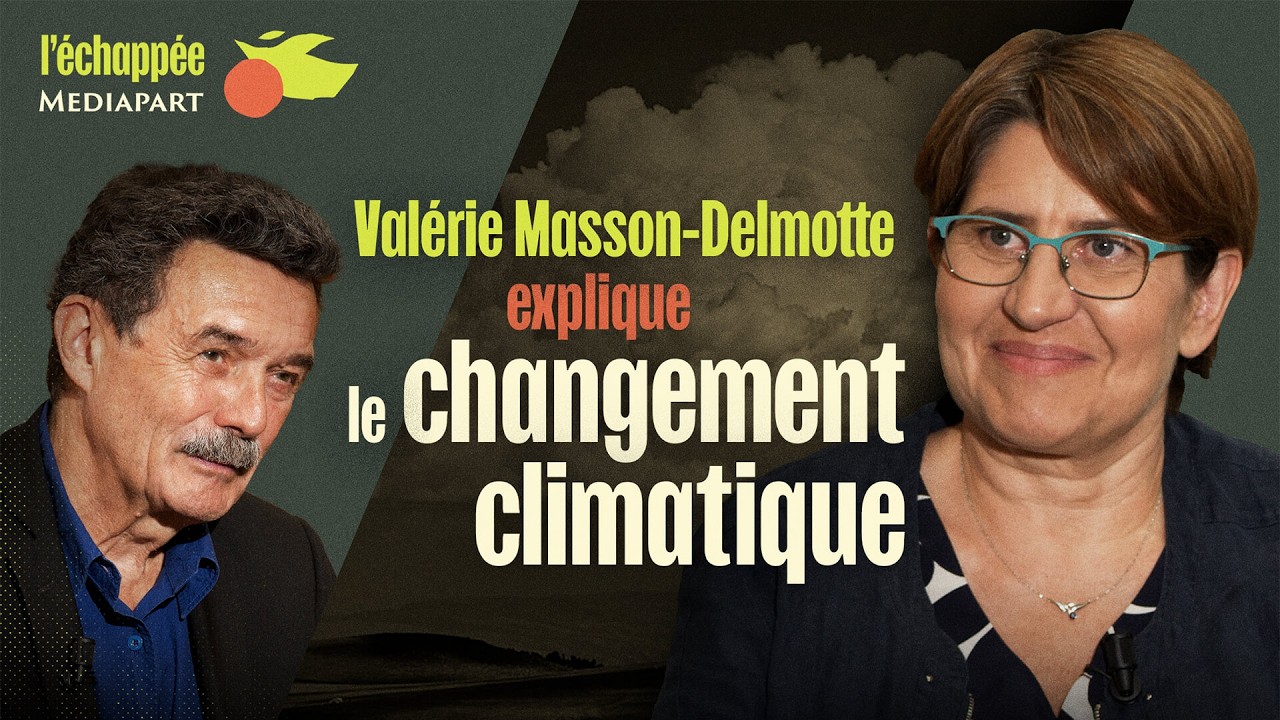
Valérie Masson-Delmotte explique le changement climatique
Keywords
Summary
162 words
Critical Evaluation
The interview is a masterclass in science communication, offering a clear and nuanced explanation of climate change and its broader implications. Valérie Masson-Delmotte demonstrates exceptional scientific credibility, drawing on her extensive experience as a climate scientist and IPCC co-chair. She effectively communicates complex concepts such as the greenhouse effect, climate projections, and the difference between weather and climate, making them accessible without oversimplifying. The discussion is well-structured, moving from the scientific basis of climate change to the political and economic forces that hinder action, and finally to potential solutions and the importance of resilience.
The argumentation is solid, grounded in peer-reviewed science and international reports. Masson-Delmotte correctly emphasizes the high confidence in the scientific consensus and the observable impacts, such as heatwaves and sea-level rise. She also addresses common misconceptions and disinformation tactics, such as the ‘merchants of doubt’ and the recent attacks on science by populist leaders. The interview highlights the legal and ethical dimensions, referencing the ICJ advisory opinion and the obligations of states to protect the climate system.
The quality of sources is high, with references to IPCC reports, the Paris Agreement, and the work of the Haut Conseil pour le climat. However, the interview is primarily an opinion piece and does not provide new empirical data. It is a synthesis of existing knowledge, which is appropriate for its purpose.
The title accurately reflects the content, and the interview lives up to its promise of explaining climate change. The only minor criticism is that the discussion could have delved deeper into specific adaptation strategies and the role of individual action, but this is a minor point given the breadth of topics covered.
Overall, this is an excellent resource for anyone seeking to understand the current state of climate science and the political context. It is scientifically rigorous, well-argued, and highly informative. The interview also serves as a powerful reminder of the importance of defending science and democratic values in the face of growing authoritarianism and disinformation.
329 words
Title / Content Match
The title accurately reflects the content: an in-depth interview with Valérie Masson-Delmotte explaining climate change, its impacts, and the political context.
Quality & Reliability
9/10
High-quality interview with a leading climate scientist, Valérie Masson-Delmotte, who is a research director at CEA, former co-chair of an IPCC working group, and member of the Haut Conseil pour le climat. The discussion is grounded in established scientific evidence and references to international legal developments. The source is Mediapart, a reputable investigative outlet. The content is well-structured and informative, with clear explanations of complex issues.
Key Moments
Markers derived by PSI from the transcript: the creator did not define chapters.
- Introduction of Valérie Masson-Delmotte and the context of the interview at the Institut de France.
- Discussion of the 'scienticide' and attacks on science, referencing Trump's speech at the UN.
- Explanation of the three reasons for the escalation of attacks on climate science: solid scientific evidence, worsening impacts, and the threat to fossil fuel interests.
- Mention of the International Court of Justice advisory opinion linking climate change to human rights, and the countries that voted against it.
- Analysis of the 'illimitism' and the alliance of petrostates in obstructing climate action.
- Discussion of the US withdrawal from the Paris Agreement and other international environmental treaties.
- Explanation of the scientific basis of climate change, including the greenhouse effect and climate models.
- Review of observed impacts of climate change, such as heatwaves and sea-level rise, and the concept of climate attribution.
- Discussion of adaptation and resilience strategies, and the importance of local action.
- Call to action: the need for political will, public engagement, and defending science and democracy.
Cited Sources
- Mediapart article on third heatwave peak — Referenced in the video description as related to the discussion on heatwaves.
- Mediapart's L'Échappée program page — The interview is part of this series.
Concurring Sources
- IPCC Sixth Assessment Report — The scientific basis for the statements made by Masson-Delmotte regarding climate change impacts and projections.
- International Court of Justice Advisory Opinion — The legal opinion linking climate change to human rights, as discussed in the interview.
Dissenting Sources
- Climate change denial claims — The interview addresses and refutes common climate change denial arguments, such as those made by political figures like Donald Trump.
External References
Contribution & Novelties
This interview provides a comprehensive and accessible synthesis of the current state of climate science and the political challenges, delivered by one of the world’s leading climate scientists. It offers unique insights into the recent attacks on science and the legal developments such as the ICJ advisory opinion. The discussion is particularly valuable for its clear explanation of the scientific consensus and the urgency of action.
Pour aller plus loin :
- IPCC Sixth Assessment Report — The most comprehensive scientific assessment of climate change, its impacts, and future risks.
- International Court of Justice Advisory Opinion on Climate Change — The official website of the ICJ, where the advisory opinion and related documents can be found.
- Haut Conseil pour le Climat — The French independent body providing advice on climate policy, of which Masson-Delmotte is a member.
- The Merchants of Doubt — A book and concept that explains the tactics used to cast doubt on scientific consensus, relevant to the discussion on disinformation.
162 words
Radar Profile
The radar profile shows high scores in quantity and quality of information, reflecting the depth and reliability of the content. The technical level is moderate, making it accessible to a broad audience while still providing scientific depth. The overall reliability is excellent, consistent with the credibility of the speaker and the source.
💬 Très positif. Sur les 30 commentaires analysés, la grande majorité exprime une admiration et un soutien massifs pour Valérie Masson-Delmotte, saluant sa clarté, son calme et sa rigueur scientifique, ainsi que la qualité de l'interview de Mediapart.