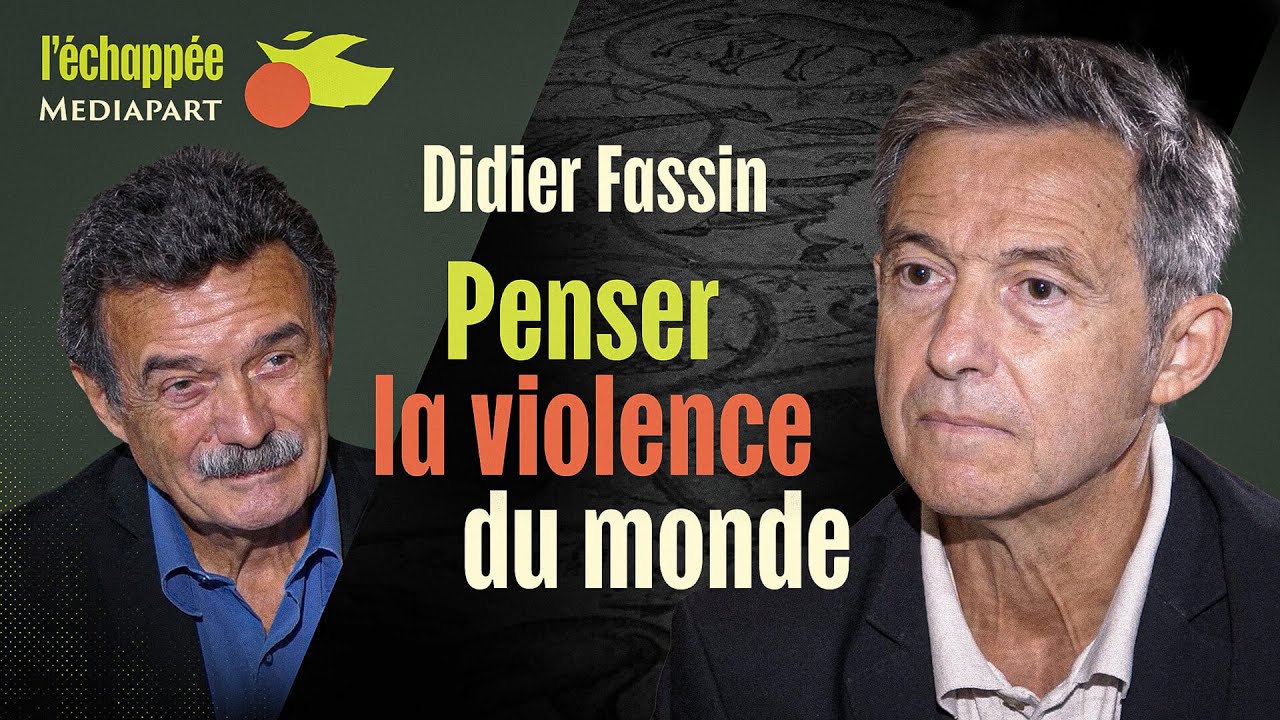
L’échappée. Didier Fassin pense la violence du monde à l’ombre de Gaza
Keywords
Summary
138 words
Critical Evaluation
The interview provides a profound and intellectually rigorous analysis of the violence in Gaza, framed within a broader philosophical and anthropological context. Didier Fassin’s expertise is evident as he weaves together historical references, personal observations, and theoretical insights. The discussion is well-structured, with Edwy Plenel’s questions guiding the conversation to explore the moral dimensions of the conflict. Fassin’s arguments are compelling and grounded in his extensive research and fieldwork. He effectively critiques the international community’s response, highlighting the selective application of moral principles. The interview also addresses the silencing of dissent, which adds a layer of contemporary relevance. However, the content is inherently opinionated, reflecting Fassin’s personal stance, which may not appeal to all viewers. The lack of counterarguments or alternative perspectives could be seen as a limitation, but within the context of an interview, it allows for a deep exploration of the topic. The sources cited, including Fassin’s own books and references to historical figures, lend credibility to the discussion. Overall, the interview is a valuable contribution to the discourse on violence and morality, offering a critical perspective that is both thought-provoking and well-supported.
185 words
Title / Content Match
The title accurately reflects the content: a conversation with Didier Fassin about violence, with Gaza as a central reference point.
Quality & Reliability
8/10
The interview features Didier Fassin, a professor at the Collège de France, known for his rigorous academic work. The discussion is grounded in his published books and references to historical and contemporary events. The content is well-argued and based on documented sources, though it is an opinion-led interview rather than a peer-reviewed study.
Key Moments
Markers derived by PSI from the transcript: the creator did not define chapters.
- Introduction of Didier Fassin and the context of the interview at the Institut du monde arabe.
- Fassin explains the motivation behind his book 'Une étrange défaite' and the need to document the events in Gaza.
- Discussion on the moral abdication of Western countries and the concept of 'consent to the crushing of Gaza'.
- Fassin draws parallels with historical events, including the Holocaust and the work of Theodor Adorno.
- Analysis of the unequal value of lives, referencing the ratio of deaths and the work of 'We are not numbers'.
- Discussion on the repression of pro-Palestinian voices in France and the United States.
- Fassin addresses the rhetorical denial of the genocide and the role of intellectuals.
- Exploration of the broader implications for humanity and the future of moral order.
Cited Sources
- Mediapart - L'Échappée — The interview is part of the L'Échappée series on Mediapart.
- Mediapart subscription page — Mentioned in the description as a way to support Mediapart.
- Mediapart donation page — Mentioned in the description as a way to support Mediapart.
- Mediapart newsletter sign-up — Mentioned in the description for subscribing to newsletters.
Concurring Sources
- United Nations reports on Gaza — UN reports and resolutions on the situation in Gaza, which align with Fassin's documentation.
Dissenting Sources
- Israeli government statements
Contribution & Novelties
The interview offers a unique perspective on the violence in Gaza, combining anthropological and philosophical insights. Fassin’s concept of ‘consent to the crushing’ provides a new framework for understanding the international community’s response. The discussion also highlights the silencing of dissent and the unequal value of lives, which are often overlooked in mainstream discourse.
Pour aller plus loin :
- Theodor Adorno - Minima Moralia — Adorno’s work is referenced as a model for reflecting on violence and morality.
- Marc Bloch - L’Étrange Défaite — Bloch’s book is cited as an inspiration for Fassin’s title.
- Charles Mills - The Racial Contract — Mentioned in comments, relevant to discussions on inequality and moral order.
112 words
Radar Profile
The radar profile shows high scores in information quality and reliability, reflecting the depth and credibility of the discussion. The technical level is moderate, making it accessible to a general audience while still offering intellectual depth. The overall balance indicates a well-rounded and thought-provoking interview.
💬 Positif. Sur les 30 commentaires analysés, la majorité exprime une profonde gratitude et admiration pour l'entretien, soulignant la lucidité humaniste et la qualité des échanges.