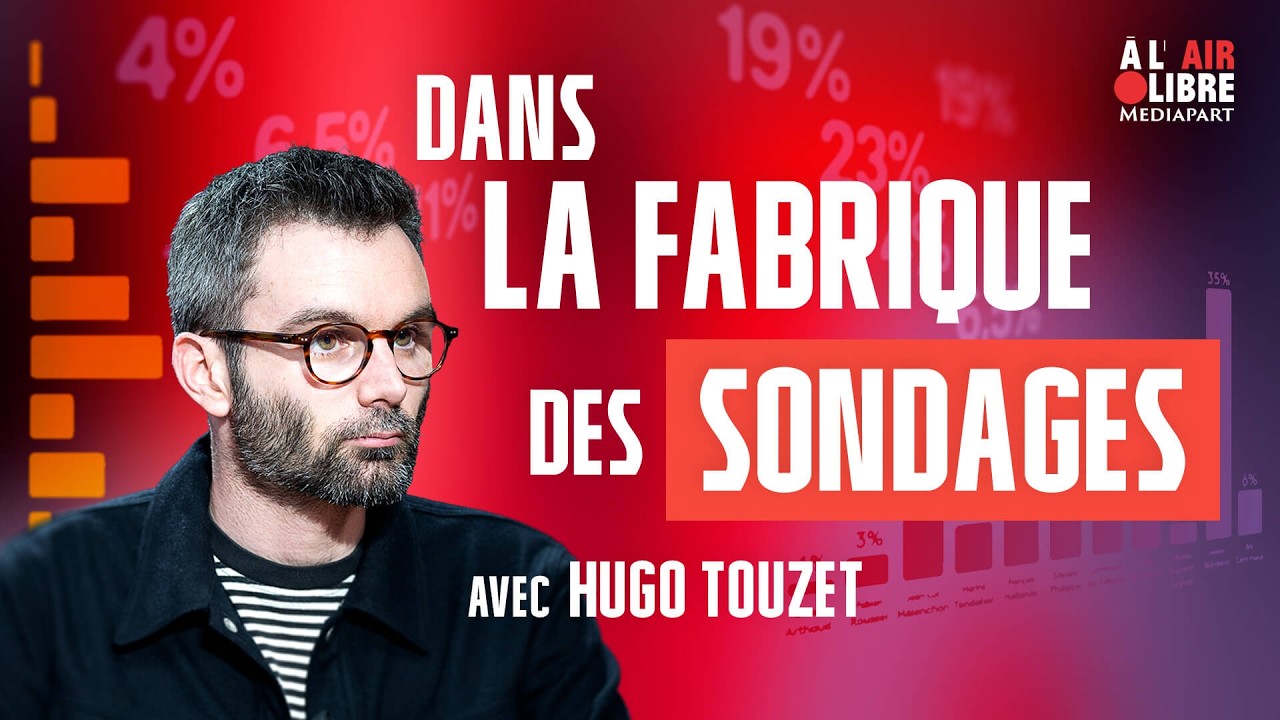
Les sondages et leur utilisation médiatique participent à la banalisation du RN
Keywords
Summary
190 words
Critical Evaluation
The video offers a valuable and timely critique of the role of polls in contemporary politics, particularly in the context of the upcoming French presidential election. The guest, Hugo Touzet, brings a unique perspective as a sociologist who conducted fieldwork inside a polling institute, providing rare insider knowledge. His arguments are well-grounded in academic literature, notably referencing Pierre Bourdieu’s seminal work on public opinion. The discussion is rigorous and avoids simplistic condemnations, acknowledging that polls are not the sole drivers of political outcomes. The show’s format allows for a nuanced exploration of the topic, with the host and journalist asking pertinent questions that draw out the complexities of the polling industry. The main strength is the depth of analysis regarding the economic and methodological aspects of poll production, which are often overlooked in mainstream media. The critique of media’s role in amplifying certain polls while ignoring others is particularly insightful, highlighting how agenda-setting works in practice. However, the video is primarily an opinion piece, and while it cites sources, it does not provide a systematic review of evidence. The reliance on a single expert, albeit well-informed, means that alternative perspectives are not explored. Additionally, the title’s focus on the RN’s normalization is somewhat narrower than the broader discussion on polls, though it is a recurring theme. Overall, the video is a high-quality contribution to the public debate on polls, offering both theoretical and practical insights. It would benefit from a more balanced presentation of counterarguments, but as an expert interview, it excels in clarity and depth. The production values are professional, and the use of archival footage of Bourdieu adds historical context. The video successfully fulfills its aim of encouraging critical thinking about polls, making it a valuable resource for viewers interested in media literacy and political communication.
298 words
Title / Content Match
The title accurately reflects the main thesis: polls and their media coverage contribute to normalizing the far-right RN. The content consistently supports this argument.
Quality & Reliability
8/10
The video features a rigorous academic (Hugo Touzet) with a book based on a five-year field study inside a polling institute, providing unique insider insights. Mediapart has a reputation for investigative journalism and explicitly does not commission or comment on polls. The discussion is well-structured and references academic works (Bourdieu, Asimov). However, it is an opinion-led interview, not a peer-reviewed study, and the sources cited are mostly Mediapart articles and the guest's own book.
Key Moments
Markers derived by PSI from the transcript: the creator did not define chapters.
- Introduction of the topic and guest Hugo Touzet, author of 'Produire l'opinion'.
- Discussion on the exponential increase in polls and the economic motivations behind it.
- Reference to Pierre Bourdieu's 'L'opinion publique n'existe pas' and its relevance today.
- Analysis of how polls shape media agenda and public debate, often prioritizing security and immigration.
- Insights from Touzet's fieldwork inside a polling institute, revealing commercial pressures.
- Discussion on the role of polls in candidate selection and the potential for self-fulfilling prophecies.
- Conclusion and call for a more critical approach to polls, similar to media literacy.
Cited Sources
- Comment le couple sondages et médias enfante le pire — Article by Mediapart referenced in the description, likely related to the topic of polls and media.
- Musulmans de France : les failles d’un sondage choc — Article by Mediapart referenced in the description, likely critiquing a specific poll.
- Produire l'opinion : une enquête sur le travail des sondeurs — Book by Hugo Touzet, the guest, which is the basis for the discussion.
- L'opinion publique n'existe pas — Text by Pierre Bourdieu, cited in the video as a foundational critique of polls.
Concurring Sources
- Comment le couple sondages et médias enfante le pire — Mediapart article that likely aligns with the video's critique of polls and media.
- Musulmans de France : les failles d’un sondage choc — Mediapart article exposing flaws in a specific poll, supporting the video's argument about poll reliability.
External References
Contribution & Novelties
This video provides a unique insider perspective on the polling industry, based on Hugo Touzet’s fieldwork inside a polling institute. It goes beyond common critiques by detailing the economic and methodological pressures that shape poll production. The discussion also connects polls to media agenda-setting and the normalization of far-right politics, offering a timely analysis for the upcoming French presidential election.
Pour aller plus loin :
- Pierre Bourdieu - L’opinion publique n’existe pas — The foundational text critiquing the concept of public opinion.
- Commission nationale des sondages — Official French body regulating polls, relevant to the discussion on poll oversight.
- Isaac Asimov - Franchise (A voté) — The science-fiction story referenced in the video, illustrating the dystopian potential of polls.
119 words
Radar Profile
The radar profile shows high scores in quality of information and reliability, reflecting the expert guest and rigorous discussion. The quantity of information is also substantial, though the technical level is moderate, making it accessible to a general audience. Overall, the video is a strong contribution to the public understanding of polls.
💬 Très positif. Sur les 30 commentaires analysés, la grande majorité exprime un soutien enthousiaste à l'émission et à Mediapart, saluant la pertinence de l'analyse et la critique des sondages. Plusieurs commentaires soulignent l'importance de cette mise en garde contre l'influence des sondages sur l'opinion.