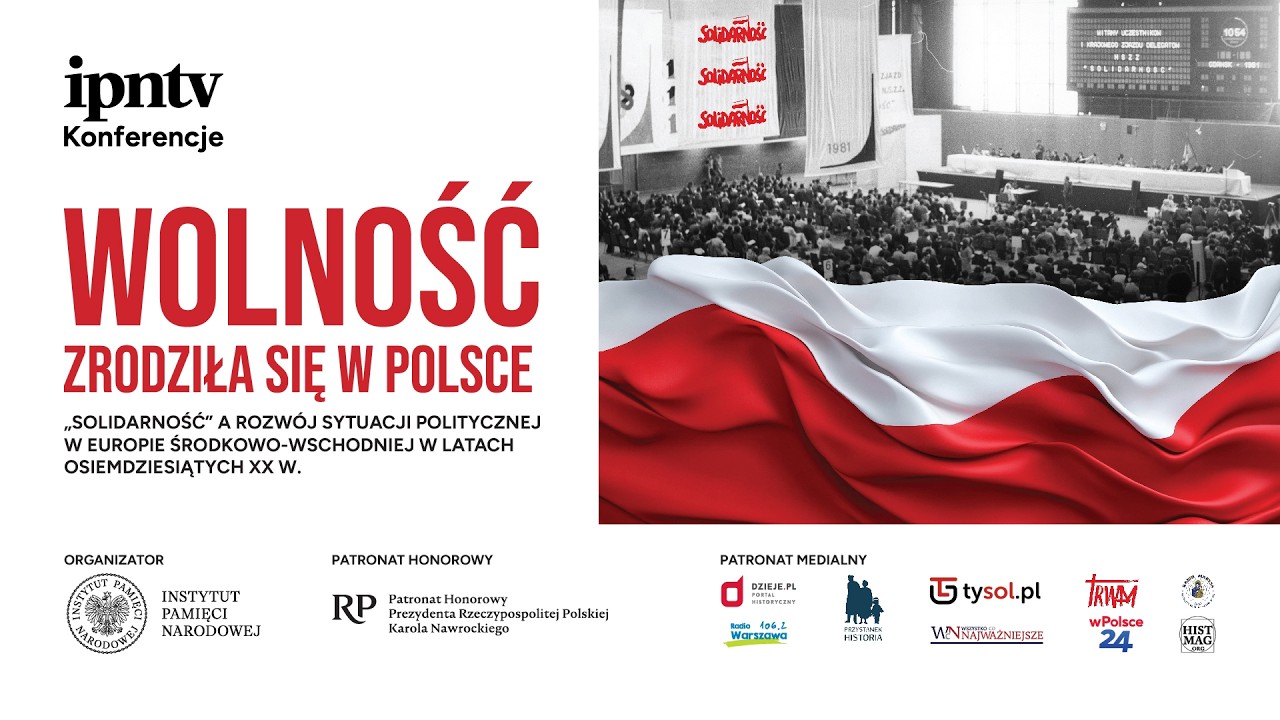
Dyskusja Inspiracja i nadzieja. Opór narodów Europy Środkowo-Wschodniej komunizmu w latach 80.XX w.
Discussion Inspiration and hope. Resistance of the nations of Central and Eastern Europe to communism in the 1980s.
Keywords
Summary
116 words
Critical Evaluation
Value of the Information & Strength of the Argument
The value of the information is high, as it provides nuanced, comparative perspectives from three Central European countries, based on archival research and personal expertise. The argumentation is solid, with each historian grounding their points in specific examples, such as the ‘Action Asanace’ in Czechoslovakia or the Hungarian regime’s fear of a ‘second 1956’. The discussion is well-structured, with each panelist addressing the questions directly and building on each other’s points, leading to a coherent and insightful analysis.
Scientific Rigor, Source Quality, Title Accuracy
The discussion demonstrates scientific rigor, with references to archival materials (e.g., Slovak National Archives, state security operations) and historical events. The sources are institutional (IPN, USTR, ÚPN, NEB), lending credibility. The title accurately reflects the content, which focuses on the inspirational role of Solidarity and the hope it generated. The discussion is well-adapted to the title, covering both the inspiration and the subsequent hope and disillusionment.
159 words
Title / Content Match
The title accurately reflects the content: a discussion on the inspiration and hope provided by the Polish Solidarity movement to the opposition in Central and Eastern Europe during the 1980s.
Quality & Reliability
8/10
Discussion among historians from official memory institutions (IPN, USTR, ÚPN, NEB) based on archival research and personal expertise. The content is well-documented and presented in a scholarly manner, though it remains a debate rather than a peer-reviewed publication.
Key Moments
Markers derived by PSI from the transcript: the creator did not define chapters.
- Introduction of the panel and the first question on the birth and significance of Solidarity.
- Kamil Nedvědický discusses the Czech opposition's intellectual nature and the inspiration from Polish workers.
- Peter Jašek explains the lack of social mobilization in Slovakia due to the shock of 1968 and the fading hope after martial law.
- Réka Kiss Földváryné analyzes the Hungarian opposition's focus on intellectual debate and the legacy of 1956.
- Discussion on the effectiveness of censorship in Czechoslovakia and the role of books and personal contacts in spreading information.
- Peter Jašek describes the regime's propaganda and the monitoring of public opinion, including the 'Action North'.
- Réka Kiss Földváryné explains the Hungarian regime's response, including censorship and the fear of national sentiments.
- Kamil Nedvědický discusses the direct contacts between Czech and Polish dissidents and the need for joint research.
- Peter Jašek details the channels of communication, including the secret church and the dangers of cross-border contacts.
- Concluding remarks on the importance of a common narrative and collaboration between memory institutions.
Cited Sources
- IPNtv Konferencje — Video source
Concurring Sources
- IPN (Institute of National Remembrance) — Polish memory institution, organizer of the conference.
- USTR (Institute for the Study of Totalitarian Regimes) — Czech memory institution, represented by Kamil Nedvědický.
- ÚPN (Nation's Memory Institute) — Slovak memory institution, represented by Peter Jašek.
- NEB (National Committee of National Remembrance) — Hungarian memory institution, represented by Réka Kiss Földváryné.
Contribution & Novelties
The video provides a comparative analysis of the impact of Solidarity on opposition movements in Czechoslovakia and Hungary, highlighting the different conditions and responses. It offers insights into the role of personal networks, the Catholic Church, and the effectiveness of censorship. The discussion also emphasizes the importance of archival research and international collaboration among memory institutions.
Pour aller plus loin :
- Solidarity (Polish trade union) — Overview of the Solidarity movement.
- Charter 77 — Czech opposition document.
- Hungarian Revolution of 1956 — Context for Hungarian opposition.
86 words
Radar Profile
The radar profile shows high scores in quantity and quality of information, reflecting the dense and well-structured discussion. The technical level is moderate, suitable for a general audience interested in history. The overall reliability is high due to the institutional affiliations of the speakers.
💬 No comments were provided for analysis.