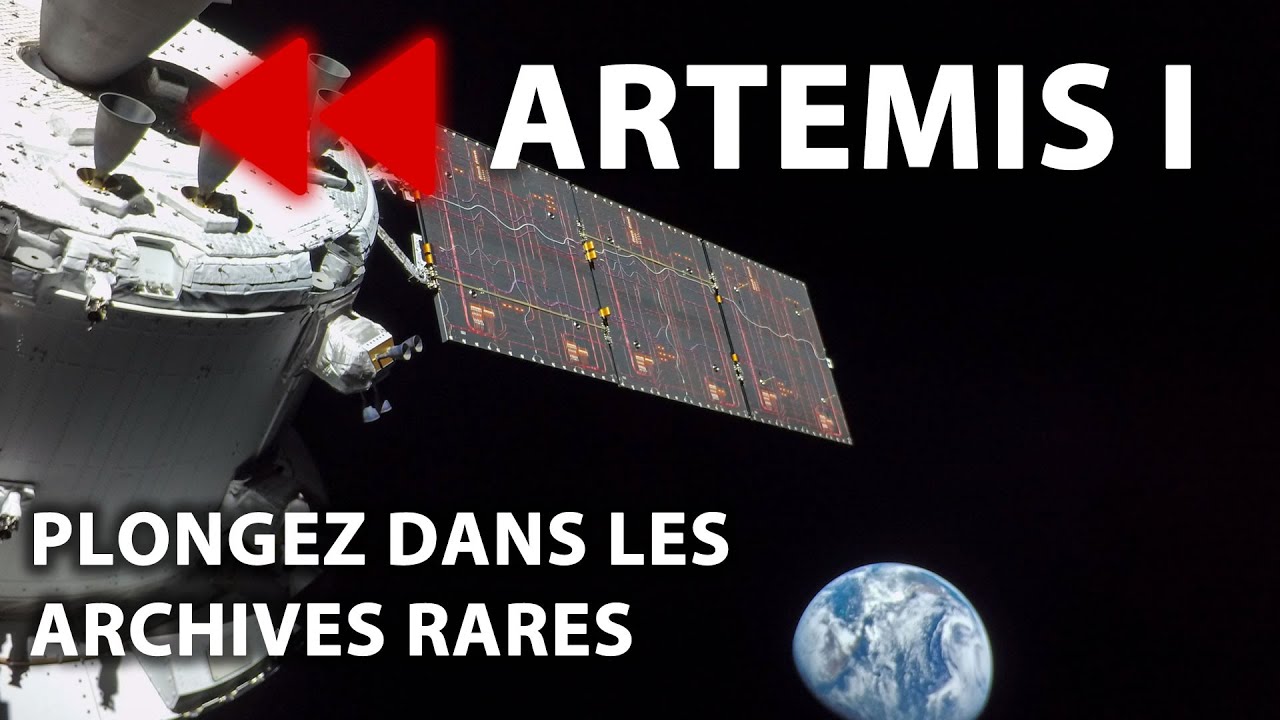
🔴 LIVE 🚀 REWIND - Retour sur Artemis I
Keywords
Summary
135 words
Critical Evaluation
Value of the Information & Strength of the Argument
The value of the information lies in the curation and contextualization of rare NASA archival footage. The host provides technical explanations about the Artemis I mission, such as the role of the European service module, the testing procedures at Plum Brook, and the logistics of transporting rocket boosters. The argumentation is based on the visual evidence presented and the host’s knowledge, but it is not a formal scientific analysis. The live format allows for spontaneous commentary and audience interaction, but the lack of a structured narrative may reduce the depth of the argumentation.
Scientific Rigor, Source Quality, Title Accuracy
The primary source is NASA’s official archival footage, which is highly reliable. The host also references his own website, WikiArchives.space, where the footage is available. The title accurately reflects the content, as the stream is a retrospective on Artemis I. The commentary is informal and not peer-reviewed, but it does not misrepresent the facts. The host clearly distinguishes between NASA-provided material and his own interpretations.
173 words
Title / Content Match
The title accurately reflects the content: a live session reviewing Artemis I mission archives.
Quality & Reliability
7/10
The video is a live commentary on archival footage from NASA's Artemis I mission. The creator provides context and explanations, but the primary content is raw NASA material. The reliability is high due to the use of official NASA archives, but the commentary is informal and not peer-reviewed.
Key Moments
Markers derived by PSI from the transcript: the creator did not define chapters.
- Introduction and overview of the stream's purpose, mentioning the availability of archives on WikiArchives.space.
- Showing NASA 3D animations of the SLS rocket, with commentary on their use for media.
- Footage of the Orion capsule arriving at Plum Brook Station for testing, with explanations of the test procedures.
- Time-lapse of the Orion capsule being transported to Florida, highlighting the logistics and protective measures.
- Installation of solar panels on the service module, with discussion of the European contribution.
- Footage of the SLS rocket stacking process in the Vehicle Assembly Building.
- Transport of booster segments by train, with commentary on safety measures.
- Helicopter footage of the SLS rollout for the wet dress rehearsal, with commentary on the crawler and spectators.
Cited Sources
- WikiArchives.space — The host's website where all the archival footage from the Artemis I mission is available for download.
Concurring Sources
- NASA Artemis I — Official NASA mission page, confirming the mission's objectives and timeline.
Contribution & Novelties
The video provides a unique compilation of rarely seen NASA archival footage from the Artemis I mission, offering viewers an in-depth look at the engineering and logistics behind the launch. The host’s commentary adds context that is not typically found in official NASA releases.
Pour aller plus loin :
- Artemis I mission overview — Official NASA page with mission details and updates.
- Space Launch System (SLS) — Wikipedia article on the SLS rocket, its design, and development.
- Orion spacecraft — Wikipedia article on the Orion capsule, its components, and missions.
90 words
Radar Profile
The radar profile shows high scores in information quantity and reliability, reflecting the extensive use of official NASA footage. The technical level is moderate, as the commentary is accessible but includes some engineering details. The overall quality is good, with a slight dip in the 'qualite_information' due to the informal nature of the presentation.
💬 No comments were provided for analysis.