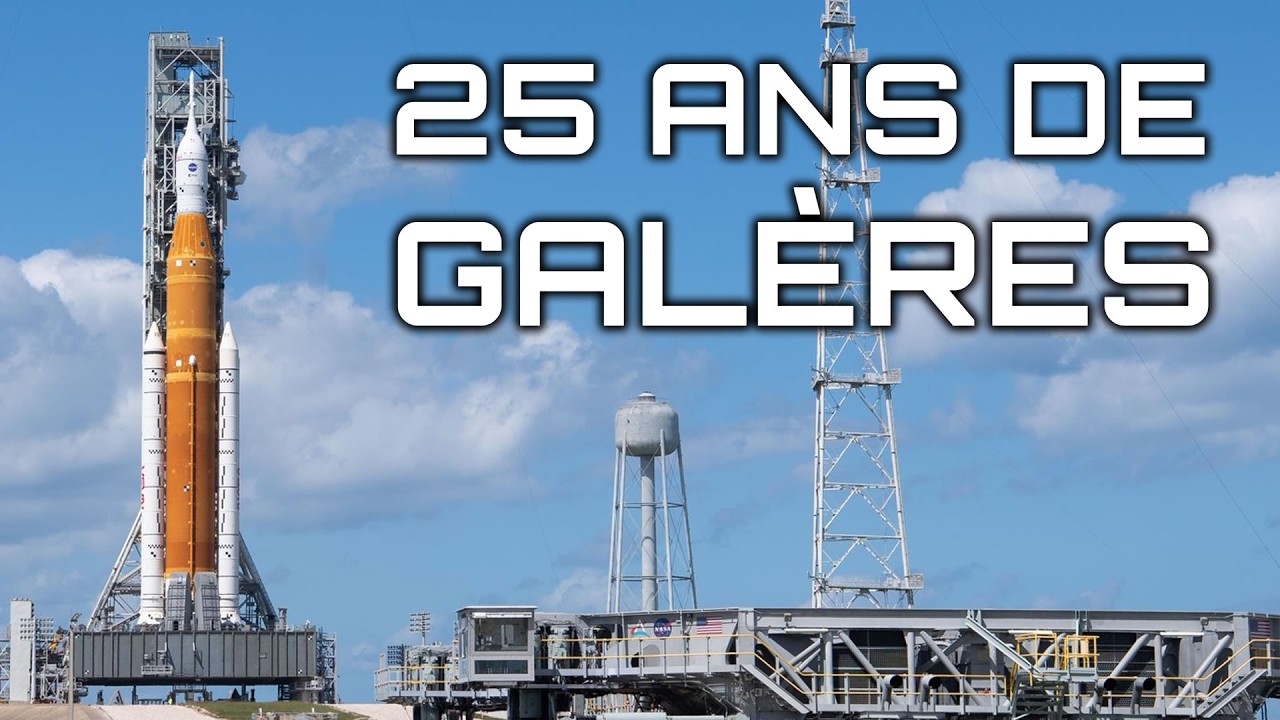
Artemis : Les origines (sombres) - Film Documentaire
Keywords
Summary
173 words
Critical Evaluation
Value of the Information & Strength of the Argument
The documentary provides a comprehensive and well-argued narrative, combining historical facts with technical details and political analysis. It excels in explaining the complex interplay between politics, budget, and space exploration. The argumentation is solid, supported by a wide range of sources, including NASA reports, news articles, and interviews. The film’s value lies in its ability to contextualize the Artemis program within the broader history of space exploration, offering insights into why lunar return has been so challenging. The storytelling is engaging and thought-provoking, effectively conveying the ‘dark origins’ of the program, including the political compromises and the overshadowing of scientific goals.
Scientific Rigor, Source Quality, Title Accuracy
The documentary demonstrates high scientific rigor, with a clear commitment to factual accuracy. It cites numerous primary sources, including NASA technical reports, official press kits, and reputable news outlets like BBC and Space.com. The sources are relevant and directly support the claims made. The title accurately reflects the content, which explores the complex and often overlooked political and historical origins of the Artemis program. The film’s structure is logical, moving from Apollo to the present, and it maintains a balanced perspective, acknowledging both achievements and failures. The inclusion of interviews with European engineers adds depth and authenticity. Overall, the documentary meets high standards of journalistic and scientific integrity.
224 words
Title / Content Match
The title accurately reflects the content, which explores the dark and complex origins of the Artemis program, tracing its roots from Apollo through political and technical challenges.
Quality & Reliability
9/10
The documentary is meticulously researched, citing numerous primary sources from NASA, ESA, and reputable news outlets. The narrative is well-structured and historically accurate, with clear explanations of technical and political contexts. The creator's expertise and transparency about sources enhance credibility.
Key Moments
Markers derived by PSI from the transcript: the creator did not define chapters.
- Introduction to the Artemis program and its political launch in 2017.
- Kennedy's 1961 speech and the start of the Apollo program.
- Overview of the Apollo missions and the challenges faced.
- The post-Apollo era and the development of the Space Shuttle.
- The Constellation program and its cancellation under Obama.
- Development of Orion and the SLS.
- Interviews with Airbus engineers about the European service module.
- The Artemis program announcement and its goals.
- Technical details of the SLS and Orion.
- The Artemis I mission and its challenges.
Cited Sources
- NASA Technical Report: Orion Service Module — Technical details on Orion's service module.
- NASA OIG Report on Artemis — Inspector General's report on Artemis program management.
- University of Houston: Microchips in Space — Story about microchips sent to space on Artemis I.
- BBC News: Artemis I Launch — News coverage of Artemis I launch.
- Cité de l'espace: Artemis I Passengers — Details on the passengers aboard Artemis I.
- FunkyStuff: Artemis I Sequence of Events — Detailed timeline of Artemis I mission events.
- ICT Journal: Callisto and Alexa — Article about the Callisto payload using Alexa on Artemis I.
- NASA JPL: Stardust Return Press Kit — Press kit for the Stardust mission, possibly referenced for context.
- NASA: Artemis I Media Resources — Official NASA media resources for Artemis I.
- NASA: Orion to Fly Thousands of Names — Article about names flown on Orion.
- NASA: SLS Solid Rocket Booster — Reference on SLS solid rocket boosters.
- NASA: Artemis I Official Flight Kit — Official flight kit for Artemis I.
- Space.com: Artemis 1 Rocket Damage — Article about damage from Hurricane Nicole.
- Space.com: Artemis 1 Red Crew Repair — Article about the Red Crew repair during launch.
- The Weather Network: Artemis 1 Ready for Launch — Weather report on Artemis I readiness.
- NASA: Artemis I Special — NASA special page for Artemis I.
Concurring Sources
- NASA Artemis I Media Resources — Official NASA resources confirming mission details.
- BBC News: Artemis I Launch — News coverage aligning with the documentary's account.
- Space.com: Artemis 1 Rocket Damage — Confirms the impact of Hurricane Nicole on Artemis I.
Dissenting Sources
- NASA OIG Report on Artemis — The OIG report may highlight cost overruns and management issues that the documentary does not fully address, providing a more critical perspective on the program's efficiency.
External References
Contribution & Novelties
The documentary offers a comprehensive and nuanced historical narrative of the Artemis program, highlighting the political and economic factors that have shaped its development. It provides a unique perspective by incorporating European contributions and interviews, which are often overlooked in American-centric narratives. The film’s critical analysis of the program’s scientific value and its political motivations adds depth to the public understanding.
Pour aller plus loin :
- Artemis program — Overview of the Artemis program’s goals and missions.
- Space Launch System — Detailed technical information on the SLS rocket.
- Orion (spacecraft) — Information on the Orion capsule and its development.
- Apollo program — Historical context of the original lunar missions.
- Constellation program — Details on the cancelled program that preceded Artemis.
120 words
Radar Profile
The radar profile shows high scores in information quantity, quality, and technical level, with a slightly lower but still strong score in global reliability. This indicates a well-researched and technically detailed documentary that maintains high credibility, though the reliability score is slightly tempered by the inherent biases of a narrative-driven format.
💬 Très positif. Sur les 30 commentaires analysés, l'écrasante majorité exprime une admiration profonde pour la qualité du documentaire, la rigueur des sources et la beauté du montage, avec des remerciements appuyés au créateur.