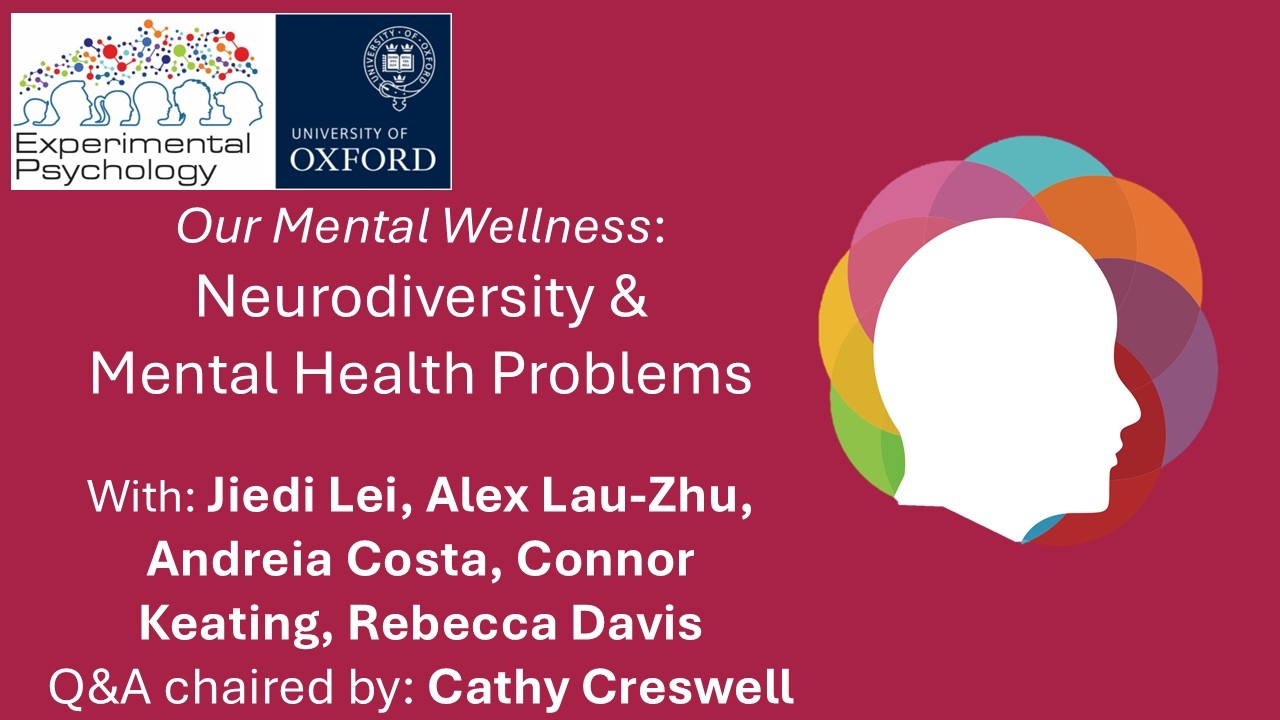
Neurodiversity Wellbeing Webinar
Keywords
Summary
143 words
Critical Evaluation
Value of the Information & Strength of the Argument
The webinar provides valuable information by debunking common myths and presenting evidence-based perspectives on neurodiversity. The argumentation is solid, drawing on clinical experience and research, and emphasizes the social model of disability. The speakers effectively challenge deficit-based views and advocate for environmental adaptations. However, the format limits depth, and some claims are presented without detailed citations. The panel discussion adds practical insights, but the overall argumentation is more informative than critically analytical.
Scientific Rigor, Source Quality, Title Accuracy
The scientific rigor is high, given the credentials of the speakers and the institutional backing. The sources cited are primarily the speakers’ own research and clinical work, along with references to organizations like the National Autistic Society and Autistica. The title accurately reflects the content. The webinar does not include a commercial sponsorship segment. The adequacy between title and content is strong, as the webinar directly addresses neurodiversity and wellbeing.
157 words
Title / Content Match
The title accurately reflects the content, which is a webinar on neurodiversity and wellbeing.
Quality & Reliability
8/10
The webinar is presented by clinical psychologists and researchers from the University of Oxford, with a panel including individuals with lived experience. The content is grounded in current research and clinical practice, and the speakers are credible. However, the format is a webinar with limited depth on each topic, and some claims are presented without specific citations within the talk.
Key Moments
Markers derived by PSI from the transcript: the creator did not define chapters.
- Introduction to the webinar and the topic of neurodiversity and mental health.
- Discussion of the first myth: what neurodiversity means, including the social model of disability.
- Myth 2: 'I can't focus, do I have ADHD?' - explanation of ADHD symptoms and prevalence.
- Myth 3: 'Aren't we all a bit autistic?' - discussion of the autism spectrum as a wheel.
- Myth 4: Co-occurrence of autism and ADHD, and the concept of AuDHD.
- Myth 5: Gender differences in diagnosis, focusing on women and girls.
- Myth 6: ADHD and autism are just for children - discussion of adulthood and the 'lost generation'.
- Myth 7: Special talents and superpowers - emphasis on personal values.
- Myth 8: Anxiety is just part of autism - discussion of drivers and protective factors.
- Myth 9: Trauma and neurodiversity - sensitivity to stress and subjective perception.
- Myth 10: The neurodivergent person should change - person-centered care and allyship.
- Panel discussion with Andreia Costa, Connor Keating, and Becky Davis.
Cited Sources
- Jiedi Lei - University of Oxford — Speaker profile and research background.
- Alex Lau-Zhu - University of Oxford — Speaker profile and research background.
- Andreia Costa - University of Oxford — Panel member profile and lived experience.
- Connor Keating - University of Oxford — Panel member profile and research focus.
- Rebecca Davis - University of Oxford — Panel member profile and research focus.
- Cathy Creswell - University of Oxford — Host and professor of developmental clinical psychology.
Concurring Sources
- National Autistic Society — Mentioned in the webinar as a resource for autistic women's lived experiences.
- Autistica — Mentioned in the webinar regarding autistic autonomy initiative.
Contribution & Novelties
The webinar provides a comprehensive overview of neurodiversity myths, synthesizing current research and clinical insights. It emphasizes the social model of disability and person-centered approaches, offering a valuable resource for both professionals and the public. The inclusion of lived experiences from the panel adds depth.
Pour aller plus loin :
- Neurodiversity - Wikipedia — Overview of the neurodiversity movement and its principles.
- Social model of disability - Wikipedia — Explanation of the social model, central to the webinar’s argument.
- Autism spectrum - Wikipedia — Detailed information on autism spectrum conditions.
- Attention deficit hyperactivity disorder - Wikipedia — Comprehensive overview of ADHD.
- National Autistic Society — Resource for autism support and information.
- Autistica — Research charity focusing on autism.
118 words
Radar Profile
The radar profile shows high scores in quality and reliability, reflecting the expert panel and evidence-based content. The quantity of information is moderate, and the technical level is accessible, making it suitable for a broad audience. The overall balance indicates a reliable educational resource.