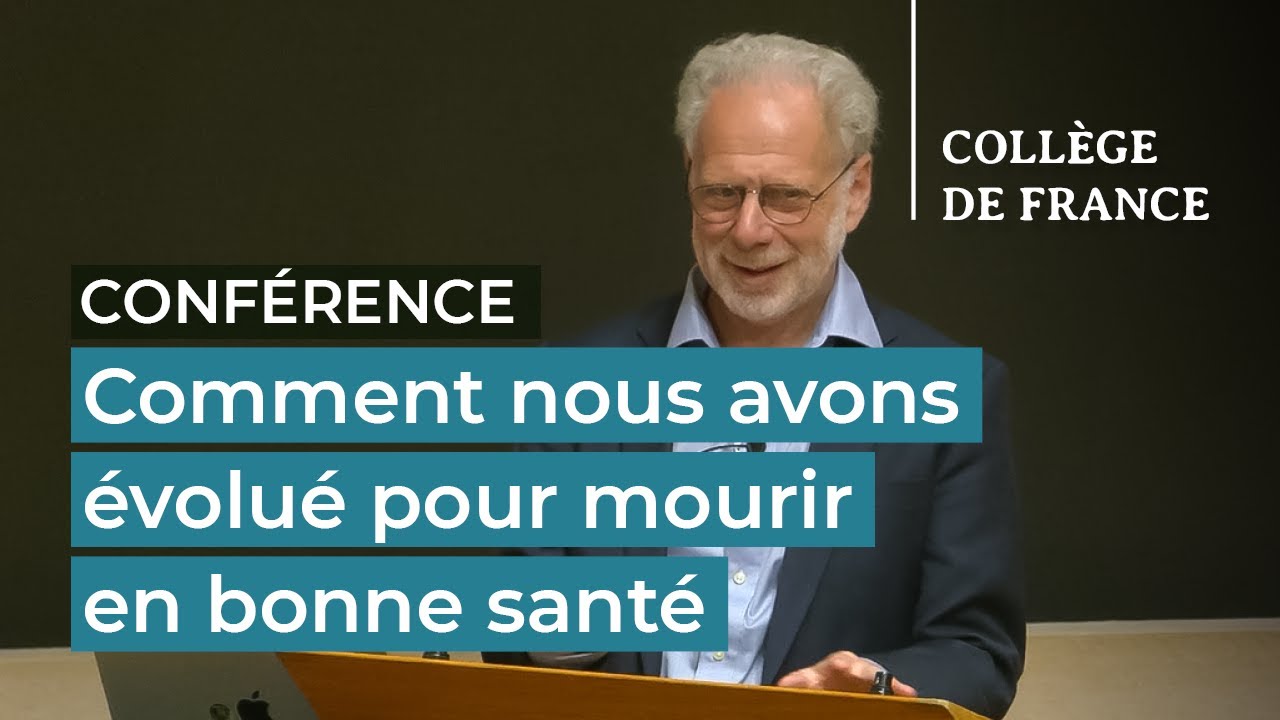
Daniel Lieberman (2) - Jean-Jacques Hublin (2025-2026)
Keywords
Summary
186 words
Critical Evaluation
This lecture provides a rigorous and nuanced perspective on evolutionary medicine and diet. Lieberman, a leading expert, effectively uses evolutionary theory to deconstruct common misconceptions about the paleo diet. He presents a balanced view, acknowledging that while ancestral diets were generally healthy, they were not uniform, and that modern health issues stem from a mismatch between our evolved biology and current food environments. The argumentation is solid, grounded in archaeological and ethnographic evidence, and he avoids oversimplification. He correctly points out that the paleo diet’s assumptions about ancestral eating are often inaccurate, and that cooking and processing can mitigate antinutrient effects. The lecture is well-structured, moving from general principles to specific examples, and is accessible without sacrificing scientific depth. The sources cited are credible, including his own published research and archaeological findings. The title accurately reflects the content, and the lecture is part of a prestigious series at the Collège de France, adding to its authority. The only minor limitation is the brevity of the discussion on practical dietary recommendations, but this is addressed in subsequent lectures. Overall, this is an excellent, evidence-based presentation that contributes to public understanding of evolutionary medicine.
192 words
Title / Content Match
The title accurately reflects the content: a lecture by Daniel Lieberman on evolutionary medicine, part of a series hosted by Jean-Jacques Hublin.
Quality & Reliability
9/10
Lecture by a leading evolutionary biologist at a prestigious institution, based on published research and archaeological evidence, with clear reasoning and balanced perspective.
Key Moments
Markers derived by PSI from the transcript: the creator did not define chapters.
- Introduction by Jean-Jacques Hublin, setting the context for the lecture series.
- Lieberman begins his talk, acknowledging the difficulty of the topic and his French.
- Discussion of modern food abundance and the question of what to eat.
- Introduction of the four principles of evolutionary medicine.
- Critique of the paleo diet: first problem - ancestral consumption of cereals and legumes.
- Second problem: variation among hunter-gatherer diets.
- Third problem: antinutrients and the role of cooking.
- Fourth problem: evolution optimizes reproductive success, not health.
- Explanation of how humans became omnivores: evolutionary steps.
- Discussion of the role of cooking and cultural evolution in diet.
Cited Sources
- Collège de France - Conférencier invité: Comment nous avons évolué pour mourir en bonne santé — Official page for the lecture series, providing context and additional resources.
- Collège de France - Chaire Paléoanthropologie — Chair of Paleoanthropology held by Jean-Jacques Hublin, related to the lecture series.
Concurring Sources
- Collège de France - Official website — Institutional source confirming the lecture's context and credibility.
External References
Contribution & Novelties
This lecture provides a clear and evidence-based critique of the paleo diet, emphasizing the diversity of ancestral diets and the role of cultural evolution in shaping human nutrition. It offers a framework for understanding obesity and chronic disease through the lens of evolutionary mismatch.
Pour aller plus loin :
- Evolutionary mismatch — Concept central to the lecture, explaining how traits evolved in past environments may be maladaptive today.
- Paleolithic diet — The diet critiqued in the lecture, with detailed information on its claims and criticisms.
- Human evolution and diet — A scientific article on the evolution of human diet, relevant to the lecture’s themes.
104 words
Radar Profile
The radar profile shows high scores across all dimensions, indicating a lecture that is rich in information, technically sound, and highly reliable, with a strong balance between depth and accessibility.