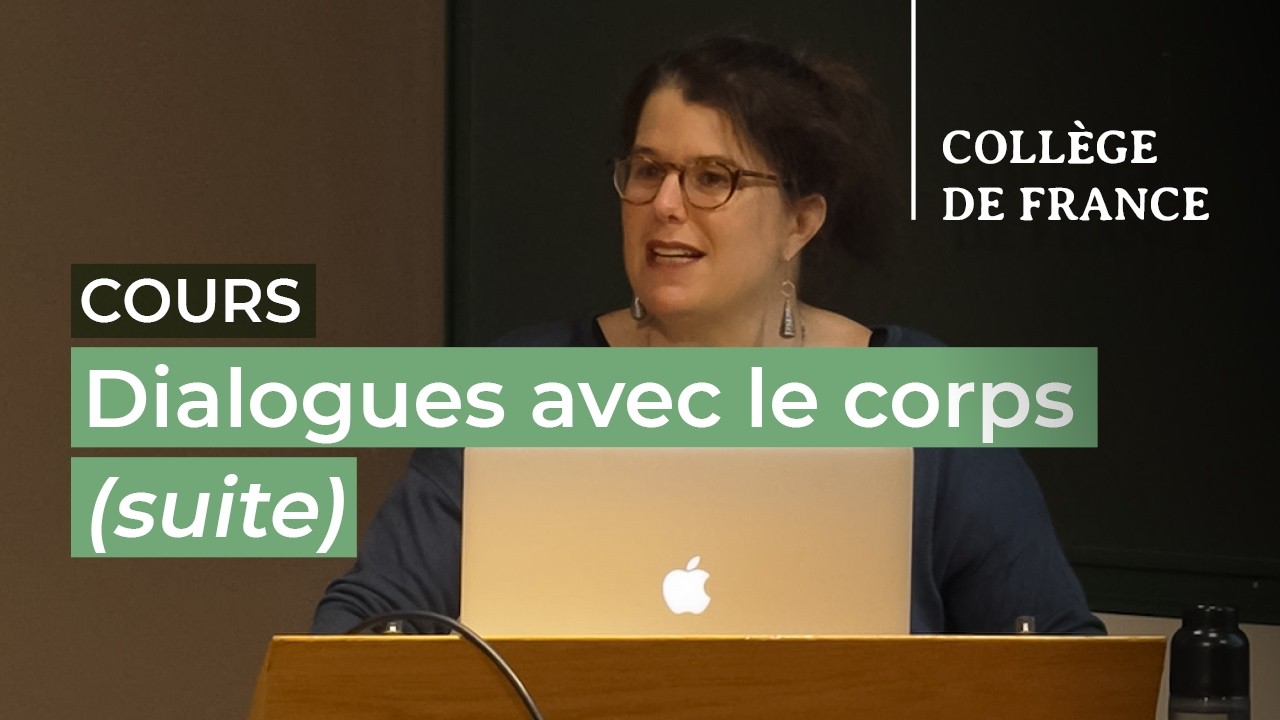
Dialogues avec le corps... (3) - Sonia Garel (2025-2026)
Keywords
Summary
148 words
Critical Evaluation
The lecture is of high scientific quality, delivered by an expert in the field. Professor Garel provides a comprehensive overview of pain as a neuroimmune phenomenon, integrating current research findings. She clearly distinguishes between nociception and pain, which is crucial for understanding the complexity of pain processing. The argumentation is solid, with logical progression from peripheral mechanisms to central processing. She cites specific studies and mechanisms, such as the role of cytokines, glial cells, and neuroimmune interactions, demonstrating a rigorous scientific approach. The content is up-to-date and reflects the state of the art in pain research. The lecture is well-structured, with clear explanations that make complex concepts accessible. The only minor limitation is that, due to time constraints, not all aspects of pain are covered, but this is acknowledged by the speaker. Overall, this is an excellent lecture that provides valuable insights into the neuroimmune basis of pain and its clinical implications.
152 words
Title / Content Match
The title accurately reflects the content, which is the third lecture in a series on interactions between the immune system and the nervous system, focusing on pain as a neuroimmune phenomenon.
Quality & Reliability
9/10
Lecture by a professor at Collège de France, a prestigious institution. The content is based on established scientific knowledge and recent research, with references to specific studies and mechanisms. The presentation is rigorous and well-structured, with clear distinctions between concepts.
Key Moments
Markers derived by PSI from the transcript: the creator did not define chapters.
- Introduction and recap of previous lectures on neuroimmune interactions.
- Discussion of sickness behavior and the role of cytokines.
- Introduction to autoimmune encephalitis and its impact on behavior.
- Transition to the topic of pain and its importance.
- Distinction between nociception and pain.
- Peripheral mechanisms: nociceptors and tissue inflammation.
- Role of immune cells in sensitizing nociceptors.
- Spinal cord processing and glial cell involvement.
- Central sensitization and chronic pain.
- Clinical implications and potential therapeutic targets.
Cited Sources
- Collège de France - Course page — Official course page for the lecture series.
- Sonia Garel's chair page — Information about the professor's chair and research.
- Playlist of lectures — YouTube playlist containing all lectures in the series.
Concurring Sources
- Collège de France - Course page — Official course page confirming the lecture content.
External References
Contribution & Novelties
This lecture provides a comprehensive and up-to-date synthesis of pain as a neuroimmune phenomenon, integrating recent research on how immune cells and inflammatory mediators interact with the nervous system to modulate pain. It emphasizes the importance of considering pain not just as a neuronal process but as a complex interplay between the immune and nervous systems. The lecture highlights the potential for new therapeutic approaches targeting neuroimmune interactions, which could address the limitations of current pain treatments.
Pour aller plus loin :
- Neuroimmune interactions in pain — Review article on neuroimmune interactions in pain.
- Nociceptors and pain — Overview of nociceptors and pain pathways.
- Chronic pain and glial cells — Article on the role of glial cells in chronic pain.
120 words
Radar Profile
The radar profile shows high scores across all dimensions, indicating a lecture with substantial information, high quality, technical depth, and reliability. The balance between these aspects suggests a well-rounded and authoritative presentation.