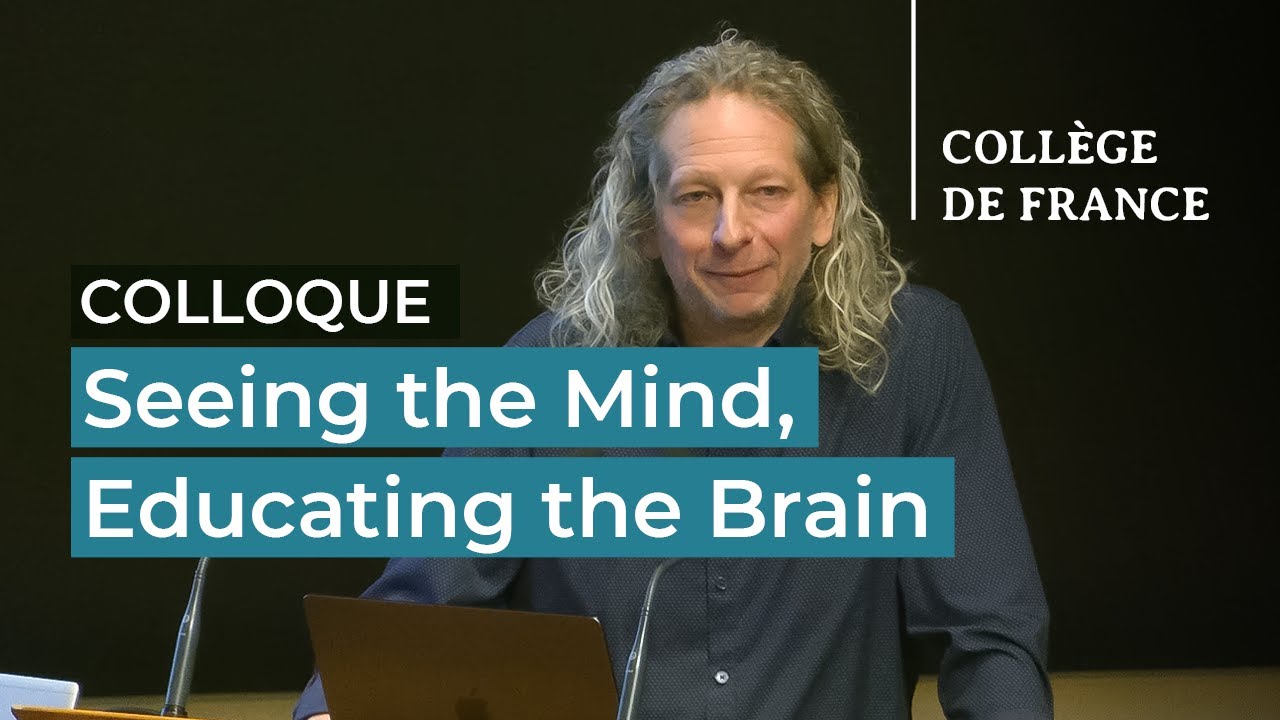
Scaling Intelligence the Human Way
Keywords
Summary
145 words
Critical Evaluation
Josh Tenenbaum’s talk provides a compelling overview of his research program in computational cognitive science, emphasizing the unique aspects of human intelligence and how they might inform AI. The interactive demonstration effectively illustrates the core concept of structured probabilistic inference from sparse data, engaging the audience and grounding abstract ideas. Tenenbaum’s argument that current AI systems, despite their impressive capabilities, lack the flexibility and generality of human cognition is well-supported by examples like language models and self-driving cars. He highlights the ‘jaggedness’ of AI, where systems excel in narrow domains but fail to transfer skills. The talk is scientifically rigorous, drawing on decades of research in probabilistic models, core knowledge, and cognitive development. Tenenbaum references his own work and that of colleagues, providing a credible foundation. However, the talk is more of a high-level overview than a detailed technical exposition, which may limit its depth for specialists. The lack of specific citations during the talk is compensated by the description links to the Collège de France and his publications. The title accurately reflects the content, focusing on scaling intelligence the human way. Overall, the talk is insightful and thought-provoking, offering a valuable perspective on the intersection of cognitive science and AI.
201 words
Title / Content Match
The title accurately reflects the content, focusing on human-like intelligence scaling and its contrast with current AI approaches.
Quality & Reliability
8/10
Talk by a leading researcher in computational cognitive science, presenting established concepts and ongoing research, with references to published work and open-access resources. High credibility due to institutional affiliation and peer-reviewed background.
Key Moments
Markers derived by PSI from the transcript: the creator did not define chapters.
- Introduction by Stanislas Dehaene, presenting Josh Tenenbaum.
- Interactive demonstration: predicting the trajectory of a dot.
- Discussion of the experiment showing structured uncertainty in human predictions.
- Tenenbaum acknowledges influence from Dehaene and others, and outlines big questions.
- Contrast between AI systems and human flexibility, using examples like ChatGPT and self-driving cars.
- Introduction of the research roadmap: core knowledge, learning, and language.
- Discussion of probabilistic programs and the book 'Probabilistic Models of Cognition'.
- Emphasis on making good guesses and bets as fundamental brain function.
- Three phases of human development: learning language, then using it to learn.
- Conclusion and thanks, with reference to open-access resources.
Cited Sources
- Collège de France - Seeing the Mind, Educating the Brain — Official colloquium page with program and resources.
- Stanislas Dehaene - Chaire Psychologie cognitive expérimentale — Chair page for the host professor.
- Probabilistic Models of Cognition (book) — Open-access textbook on probabilistic programming models.
Concurring Sources
- Probabilistic Models of Cognition — Supports the probabilistic inference framework discussed.
- Collège de France - Seeing the Mind, Educating the Brain — Confirms the event and context.
External References
Contribution & Novelties
The talk presents a synthesis of Tenenbaum’s research on human-like intelligence, emphasizing the importance of structured probabilistic inference and core knowledge. It offers a roadmap for building AI systems that learn and reason like humans, contrasting with current deep learning approaches.
Pour aller plus loin :
- Probabilistic Models of Cognition — Open-access textbook on probabilistic programming.
- Core knowledge theory — Overview of the theory of innate cognitive systems.
- Bayesian inference in cognitive science — Background on Bayesian methods used in modeling cognition.
82 words
Radar Profile
The radar profile shows high scores in quality and reliability, with moderate scores in quantity and technical level, reflecting a well-structured but not overly technical talk.