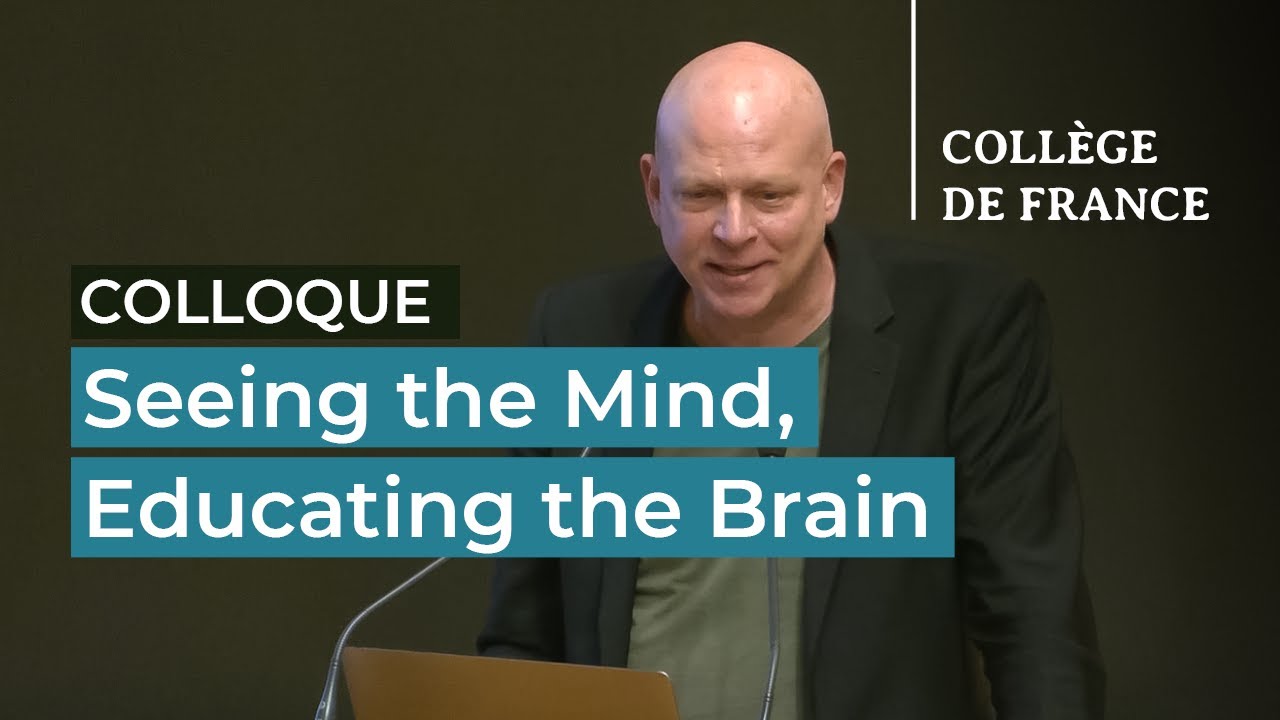
Seeing the Mind, Educating the Brain (27) - Stanislas Dehaene
Keywords
Summary
122 words
Critical Evaluation
The presentation is scientifically rigorous, based on direct recordings from human neurons, which is a rare and valuable methodology. The speaker clearly explains the technical aspects and limitations, such as undersampling. The evidence for concept neurons is compelling, with clear examples and replication. The collaborative study with Dehaene adds systematicity, using a large dataset and a semantic space to map tuning. The argumentation is solid, though the talk is more of an overview of ongoing research than a comprehensive review. The speaker acknowledges the limitations and open questions. The sources are primarily the speaker’s own work and that of colleagues, which is appropriate for a conference talk. The title accurately reflects the content. Overall, this is a high-quality, informative presentation for an audience with some background in neuroscience.
128 words
Title / Content Match
The title accurately reflects the content: a lecture on neural correlates of perception and memory in the human medial temporal lobe, part of a symposium on brain and education.
Quality & Reliability
8/10
Presentation by a leading researcher in human single-neuron recordings, based on peer-reviewed studies and direct experimental evidence. The talk is a conference at Collège de France, a prestigious institution, and includes replication of known findings. However, it is a single expert's perspective and not a systematic review.
Key Moments
Markers derived by PSI from the transcript: the creator did not define chapters.
- Introduction and context of the talk
- Explanation of single-neuron recording in epilepsy patients
- Description of electrode implantation and recording setup
- Introduction to concept neurons and the Marilyn Monroe example
- Example of a neuron responding to a soccer player across modalities
- Discussion of semantic tuning and the Harry Potter example
- Collaborative study with Dehaene using THINGS database to map semantic tuning
- Implications and conclusions about concept neurons
Cited Sources
- Collège de France - Seeing the Mind, Educating the Brain — Official page of the symposium where this talk was given.
- Stanislas Dehaene's chair page — Information about the chair and related resources.
- YouTube playlist of Dehaene's lectures — Playlist containing recordings of Dehaene's lectures.
Concurring Sources
- Quiroga et al. (2005) - Invariant visual representation by single neurons in the human brain — Original paper describing concept neurons (Jennifer Aniston cells).
- Mormann et al. (2017) - A category-specific response to animals in the right human amygdala — Study from the same group on category-specific responses.
Dissenting Sources
External References
Contribution & Novelties
The talk provides an accessible overview of human single-neuron recordings and concept neurons, highlighting their significance for understanding memory and perception. It presents recent collaborative work using the THINGS database to systematically map semantic tuning, which is a novel approach.
Pour aller plus loin :
- Concept neurons and Jennifer Aniston cells — Background on the discovery and significance.
- THINGS database — A large stimulus set for studying object recognition.
- Medial temporal lobe and memory — Overview of the brain region’s role in memory.
83 words
Radar Profile
The radar profile shows high scores across all dimensions, indicating a well-rounded and reliable presentation. The talk is technically detailed, scientifically robust, and provides substantial information, making it a valuable resource for those interested in human neuroscience.