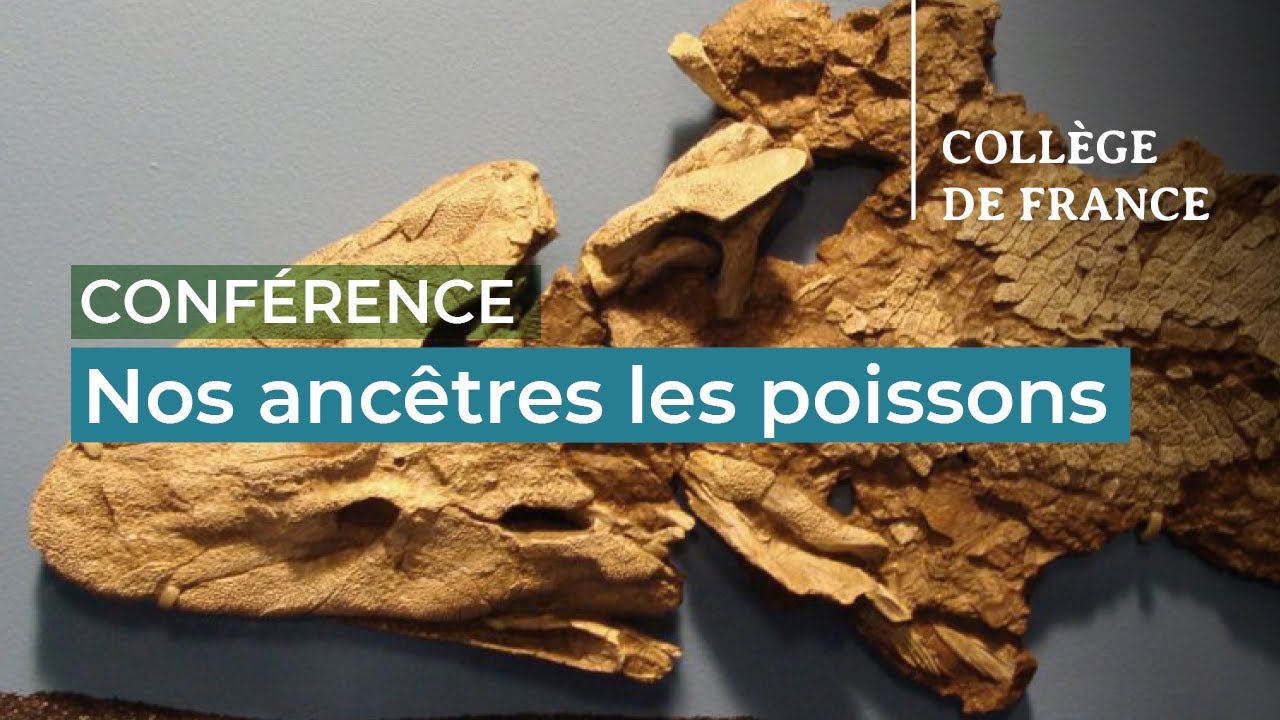
Finding The History We Share With Fish
Keywords
Summary
144 words
Critical Evaluation
The lecture is a masterclass in scientific communication, delivered by a leading expert in the field. Neil Shubin’s presentation is clear, engaging, and logically structured, making complex paleontological concepts accessible to a broad audience. He effectively combines personal anecdotes with rigorous scientific reasoning, illustrating the process of scientific discovery in a compelling way. The content is based on decades of research, including his own landmark discoveries, and is presented with appropriate caveats and acknowledgments of uncertainty. The lecture’s strength lies in its demonstration of how paleontologists formulate hypotheses and design expeditions to test them, providing valuable insight into the scientific method. Shubin’s emphasis on the biomedical relevance of evolutionary history adds a practical dimension to the discussion, highlighting the importance of basic research. The lecture is well-supported by visual aids, including diagrams and fossil images, which enhance understanding. While the lecture is primarily descriptive, it successfully conveys the excitement of scientific discovery and the importance of understanding our deep evolutionary past. The only minor weakness is that the lecture covers a lot of ground, and some concepts, such as deep homology, are introduced but not fully explored in this first session. Overall, this is an excellent lecture that is both informative and inspiring.
203 words
Title / Content Match
The title accurately reflects the content, which explores the deep evolutionary history shared between fish and humans.
Quality & Reliability
9/10
Lecture by a renowned paleontologist and evolutionary biologist, Neil Shubin, at the Collège de France. The content is based on decades of research, including the discovery of Tiktaalik, and is presented with scientific rigor. The institutional setting and the speaker's credentials ensure high reliability.
Key Moments
Markers derived by PSI from the transcript: the creator did not define chapters.
- Introduction by Denis Duboule, highlighting Neil Shubin's career and achievements.
- Shubin introduces the theme: our bodies contain artifacts of the history of life.
- Shubin explains the importance of understanding our past for biomedical research.
- Shubin describes his background and the question of how we know about the fish inside us.
- Shubin outlines the three criteria for targeting fossil expeditions: right age, right type, right environment.
- Shubin explains the importance of ancient delta systems as target environments.
- Shubin discusses the discovery of Tiktaalik and its significance.
- Shubin elaborates on the anatomical features of Tiktaalik that bridge fish and tetrapods.
- Shubin reflects on the broader implications of the fossil record for understanding evolution.
- Shubin concludes by previewing future lectures on innovation and novelty.
Cited Sources
- Collège de France - Nos ancêtres les poissons — Official page for the lecture series, providing context and additional resources.
- Chaire Évolution du développement et des génomes — Denis Duboule's chair page, relevant to the introduction and the lecture series.
- Collège de France - YouTube Playlist — Playlist containing recordings of the lecture series.
Concurring Sources
- Collège de France — Institutional source providing the lecture and related resources.
External References
Contribution & Novelties
This lecture provides a unique insight into the methodology of paleontological research, specifically how scientists target fossil discoveries to answer evolutionary questions. Shubin’s emphasis on the practical aspects of expedition planning, such as selecting rocks of the right age and type, offers a behind-the-scenes look at the scientific process. The lecture also highlights the concept of deep homology, which has significant implications for understanding the genetic basis of limb development across species.
Pour aller plus loin :
- Tiktaalik roseae — A key fossil discussed in the lecture, representing a transitional form between fish and tetrapods.
- Deep homology — A concept introduced by Shubin and colleagues, explaining the genetic similarities in limb development across diverse species.
- Devonian — The geological period during which the fish-to-tetrapod transition occurred, providing context for the fossil record.
132 words
Radar Profile
The radar profile shows high scores in quality of information and reliability, reflecting the speaker's expertise and the institutional backing. The quantity of information is also strong, though the technical level is moderate, making it accessible to a general audience. Overall, the lecture is highly informative and trustworthy.