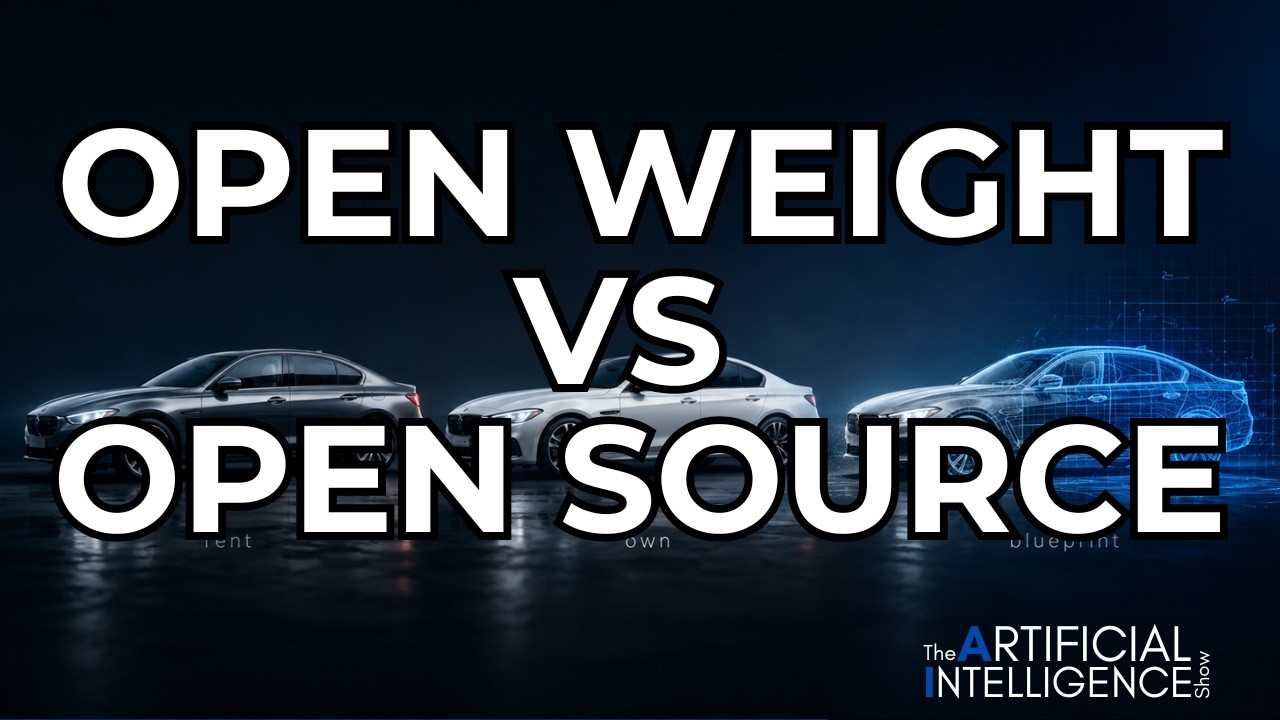
Open Weight vs. Open Source, Explained Simply
Keywords
Summary
153 words
Critical Evaluation
Value of the Information & Strength of the Argument
The video provides valuable context on a current industry debate, clearly explaining the nuances between open weight and open source models. The argumentation is coherent, using a relatable analogy and citing specific examples and quotes from tech leaders. However, it leans heavily on opinion and does not delve into technical details or provide a balanced analysis of the risks and benefits.
Scientific Rigor, Source Quality, Title Accuracy
The video references the ‘OpenWeights’ letter and quotes from industry leaders, but does not provide direct links to these sources in the description. The title accurately reflects the content, which is a simplified explanation of the topic. The discussion is based on expert opinion rather than peer-reviewed research, and the lack of citations reduces its scientific rigor.
133 words
Title / Content Match
The title accurately reflects the content, which focuses on explaining the difference between open weight and open source models using a car analogy and discussing the industry debate.
Quality & Reliability
7/10
The video provides a clear explanation of the distinction between open weight and open source AI models, supported by references to a recent industry letter and quotes from tech leaders. However, it lacks detailed technical depth and relies heavily on opinion and anecdotal evidence.
Key Moments
Markers derived by PSI from the transcript: the creator did not define chapters.
- Introduction to the OpenWeights letter and its signatories.
- Explanation of the difference between open weight and open source using a car analogy.
- Discussion of why Microsoft supports open weights, linking to Azure cloud usage.
- Excerpts from the OpenWeights letter and its arguments for open ecosystems.
- Reactions from tech leaders including Jensen Huang, Mark Zuckerberg, and Sundar Pichai.
- Anthropic's opposition, citing Dario Amodei's 2023 Senate testimony.
- Discussion of potential risks and the possibility of government regulation.
- Conclusion and personal reflection on the open weights debate.
Cited Sources
- AI Academy — Mentioned as a resource for further learning.
- Slack community — Mentioned as a way to connect with the community.
- Free webinar — Mentioned as a resource for webinars.
- MAICON — Mentioned as a conference.
- LinkedIn — Mentioned as a social media connection.
- Newsletter — Mentioned as a way to get the weekly newsletter.
Concurring Sources
- OpenWeights: An American AI Leadership — The letter discussed in the video, which argues for the benefits of open weight models.
Dissenting Sources
- Anthropic's stance on open source AI — Anthropic, as represented by Dario Amodei, opposes open weight models at the frontier due to safety concerns.
Contribution & Novelties
The video offers a clear and accessible explanation of the open weight vs. open source distinction, using a car analogy that is easy to understand. It provides a snapshot of the current industry debate and the positions of major players, which is valuable for those following AI policy. However, it does not introduce new technical concepts or original research.
Pour aller plus loin :
- Open-source software — Provides background on the open source movement.
- Artificial intelligence — General overview of AI.
- AI safety — Discusses concerns about AI risks and safety.
91 words
Radar Profile
The radar chart shows a balanced profile with moderate scores across all dimensions, indicating a video that provides useful information but lacks deep technical rigor and originality.