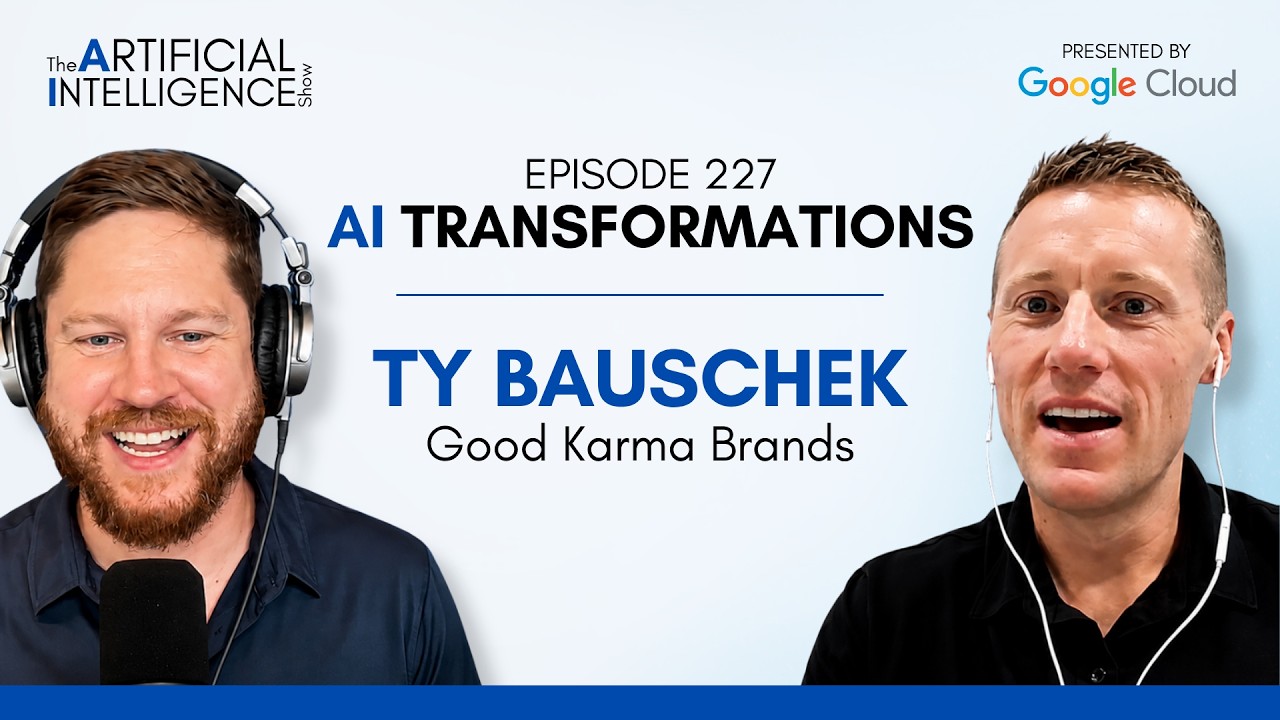
Ep. 227: How Good Karma Brands Got Serious About AI and Made It Stick
Keywords
Summary
165 words
Critical Evaluation
Value of the Information & Strength of the Argument
The episode offers valuable, concrete insights into AI transformation, with specific examples and metrics that illustrate the journey. The argumentation is coherent and persuasive, emphasizing the importance of executive sponsorship, grassroots experimentation, and a shift from usage to impact. However, the evidence is largely anecdotal and self-reported, with no independent verification of the claimed results. The discussion is practical and actionable, but lacks critical analysis of potential challenges or failures.
Scientific Rigor, Source Quality, Title Accuracy
The scientific rigor is moderate; the episode is based on a single company’s experience, with no external sources or data to support the claims. The quality of sources is limited to the company’s own reports and the sponsor’s promotional content. The title accurately reflects the content, and the episode stays focused on the topic. No comments were provided, so no analysis of public reception is possible.
151 words
Title / Content Match
The title accurately reflects the content: a detailed discussion of how Good Karma Brands implemented AI across the organization and sustained adoption.
Quality & Reliability
7/10
The episode presents a credible case study of AI adoption at Good Karma Brands, with specific metrics and examples. However, it relies heavily on anecdotal evidence and self-reported success, with limited independent verification. The sponsor (Google Cloud) may introduce bias, though the content focuses on practical implementation.
Key Moments
Markers derived by PSI from the transcript: the creator did not define chapters.
- Introduction to the AI Transformations series
- Meet Ty Bauschek and Good Karma Brands
- Why AI became an urgent, top-down priority
- The rollout: a 50-person pilot and seven Tuesdays
- The tools: ChatGPT Enterprise, Claude, Codex
- How adoption evolved
- Use-case spotlight
- Driving real adoption, not shallow use
- Hitting 65% daily usage: training & the newsletter
- Building an innovation department & the 'Cam' breakthrough
- How the innovation specialist role works day to day
- Deciding where to focus & freeing up partner time
- What's next & Ty's advice for other companies
Cited Sources
- Show notes for episode 227 — Detailed show notes and links mentioned in the episode
- Google Cloud — Sponsor of the series; mentioned as presenting partner
- Marketing AI Institute newsletter — Weekly newsletter mentioned for further resources
- AI Academy — Educational platform mentioned for AI training
Concurring Sources
- How Companies Can Make AI Adoption Stick — HBR article discussing similar strategies for AI adoption, aligning with the episode's insights.
External References
Contribution & Novelties
The episode provides a detailed, real-world case study of AI transformation in a mid-sized company, offering practical strategies for driving adoption and measuring impact. It highlights the importance of executive sponsorship, grassroots innovation, and shifting from usage metrics to impact metrics. The creation of dedicated innovation specialist roles is a novel approach.
Pour aller plus loin :
- Diffusion of Innovations — Relevant for understanding adoption curves and strategies.
- Change Management — Key concepts for leading organizational change.
- AI Adoption in Business — Harvard Business Review article on sustaining AI adoption.
90 words
Radar Profile
The radar profile shows high scores in information quantity and quality, reflecting the detailed case study. Technical level is moderate, suitable for a business audience. Reliability is moderate due to reliance on self-reported data. Overall, the episode is informative but could benefit from more rigorous evidence.