MLT | Week-3 and 4 | Revision Session-2
Keywords
Summary
175 words
Critical Evaluation
Value of the Information & Strength of the Argument
The video provides a clear, step-by-step explanation of the k-means algorithm, including the objective function, cluster indicators, and the iterative update steps. The instructor uses a simple example to illustrate the reassignment process, which helps in understanding the mechanics. The argumentation is logically structured, moving from the problem formulation to the algorithmic solution. However, the presentation is informal and includes several digressions and incomplete sentences, which may reduce clarity. The instructor correctly identifies the NP-hard nature of the optimization problem, but does not provide a formal proof or reference. Overall, the content is valuable for students seeking a conceptual understanding of k-means, but it lacks depth in terms of theoretical guarantees and practical considerations.
Scientific Rigor, Source Quality, Title Accuracy
The video is a live lecture, so it does not cite external sources. The instructor relies on his own explanations and student interactions. The mathematical notation is mostly consistent, but there are occasional ambiguities (e.g., the use of ‘z’ for both cluster indicators and the objective function). The title accurately reflects the content, as it is a revision session for weeks 3 and 4. The video is not a formal scientific presentation, so the rigor is moderate. The lack of references and the informal style limit its scientific credibility, but the core concepts are correctly presented.
225 words
Title / Content Match
The title accurately reflects the content: a revision session for weeks 3 and 4 of a Machine Learning Techniques course, focusing on clustering.
Quality & Reliability
6/10
The session is a live revision class covering k-means clustering and related concepts. The instructor explains the objective function, cluster assignments, and the iterative steps of k-means. The content is mathematically sound but presented in a conversational, unscripted manner with some digressions and incomplete derivations. No external sources are cited, and the video is not peer-reviewed.
Key Moments
Markers derived by PSI from the transcript: the creator did not define chapters.
- Introduction to the revision session, overview of clustering and k-means.
- Explanation of cluster indicators (z_i) and their role in assigning data points to clusters.
- Definition of the objective function for k-means: sum of squared distances to cluster means.
- Discussion on the number of possible cluster assignments (k^n) and the NP-hard nature of the problem.
- Introduction to the k-means algorithm: initialization and iterative steps.
- Detailed explanation of the mean update step (computing cluster centers).
- Explanation of the reassignment step: assigning each point to the nearest mean.
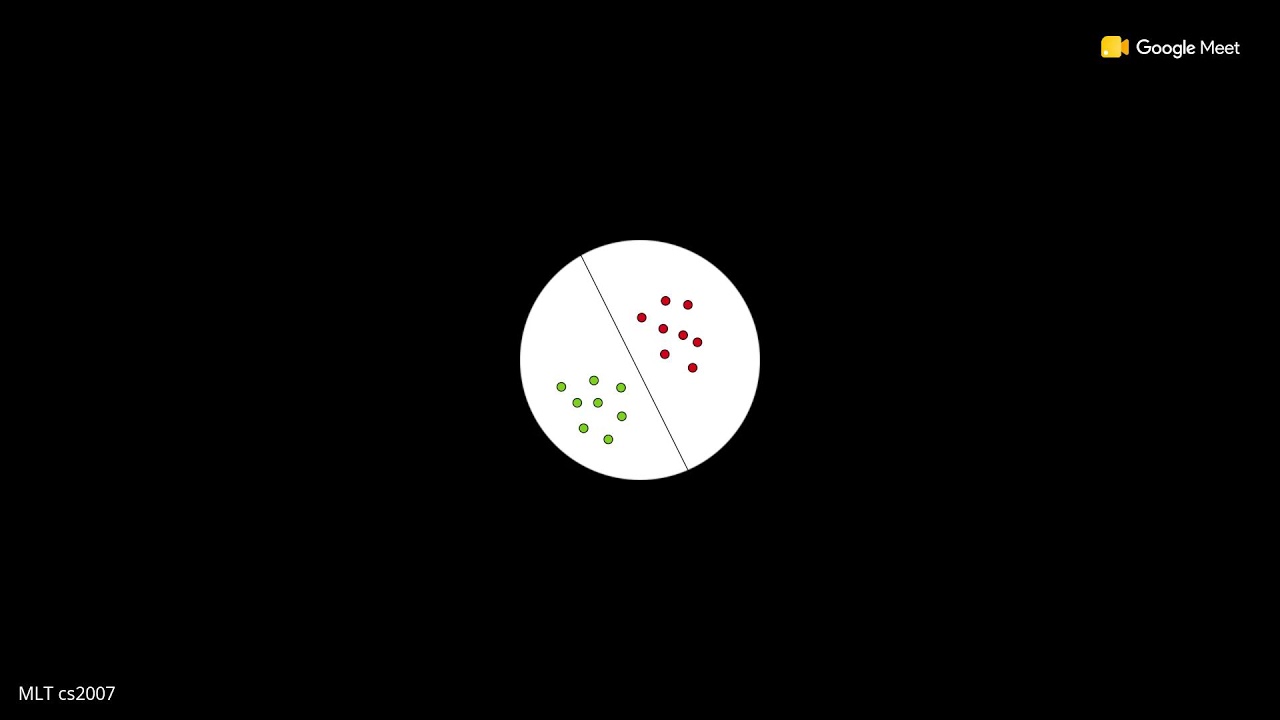
- Illustrative example of reassignment using a simple 2D plot.
- Continuation of the example and clarification of the distance calculation.
Contribution & Novelties
This video serves as a revision session, reinforcing the fundamentals of k-means clustering. It provides a clear walkthrough of the algorithm’s steps, which is beneficial for students. However, it does not introduce new research or advanced techniques. The interactive format allows for immediate clarification of doubts, which is an added value for learners.
Pour aller plus loin :
- K-means clustering (Wikipedia) — Provides a comprehensive overview of the algorithm, its variants, and applications.
- Lloyd’s algorithm (Wikipedia) — The standard iterative algorithm for k-means, named after Stuart Lloyd.
- NP-hardness of k-means (Wikipedia) — Discusses the computational complexity and NP-hardness of the optimization problem.
102 words
Radar Profile
The radar profile shows moderate scores across all dimensions, with a slightly higher score in quantity of information due to the long duration and coverage of multiple aspects. The quality and technical level are adequate for a revision session, but the lack of external sources and informal presentation lower the reliability score.