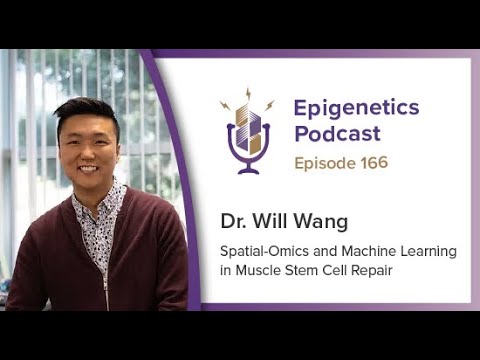
Epigenetics Podcast #166 - Spatial-Omics and Machine Learning in Muscle Stem Cell Repair w Will Wang
Keywords
Summary
151 words
Critical Evaluation
Value of the Information & Strength of the Argument
The podcast provides valuable insights into the latest research on muscle stem cell biology and the application of advanced technologies like spatial-omics and machine learning. Wang’s arguments are well-supported by his own published work and that of others, and he clearly explains the rationale behind his experimental approaches. The discussion is scientifically rigorous, with a focus on mechanistic understanding and potential therapeutic implications.
Scientific Rigor, Source Quality, Title Accuracy
The scientific rigor is high, as Wang references specific studies and techniques, including his own publications and those of his collaborators. The sources mentioned are credible, though the podcast format does not allow for detailed citation. The title accurately reflects the content, and the discussion stays on topic throughout.
127 words
Title / Content Match
The title accurately reflects the content, focusing on spatial-omics and machine learning in muscle stem cell repair, as discussed with Will Wang.
Quality & Reliability
7/10
The podcast features a leading researcher discussing his published work and ongoing research, with references to specific studies and techniques. However, as a conversational format, it lacks detailed methodological descriptions and peer-review context.
Key Moments
Markers derived by PSI from the transcript: the creator did not define chapters.
- Introduction to the podcast and guest Dr. Will Wang.
- Discussion on the importance of spatial biology in disease research.
- Wang's scientific journey and early interest in biology.
- Explanation of muscle stem cell quiescence and activation.
- Details on the role of PAX7 and Myf5 in muscle stem cell specification.
- Discussion on the dynamic nature of the transcriptome and epigenome.
- Wang's postdoc work on metabolism and histone acetylation.
- Introduction to spatial-omics and machine learning projects.
- Findings on prostaglandin signaling in muscle regeneration and aging.
- Future implications for regenerative medicine and age-related muscle loss.
Cited Sources
- Active Motif Epigenetics Podcast — The podcast episode itself, featuring the interview with Will Wang.
Concurring Sources
- Active Motif Epigenetics Podcast — The podcast itself, which is the primary source of the information discussed.
Contribution & Novelties
The podcast provides an expert perspective on the integration of spatial-omics and machine learning in muscle stem cell research, highlighting recent advances and future directions. It offers a unique behind-the-scenes look at the development of novel computational tools and their application to understand tissue regeneration and aging.
Pour aller plus loin :
- Spatial transcriptomics — Overview of spatial transcriptomics technologies.
- Muscle stem cell — Background on muscle stem cells and their role in regeneration.
- Prostaglandin E2 — Information on prostaglandin E2 signaling in various biological processes.
86 words
Radar Profile
The radar chart shows a balanced profile with high scores in information quantity, quality, and reliability, but a slightly lower technical level, reflecting the accessible yet expert nature of the podcast.