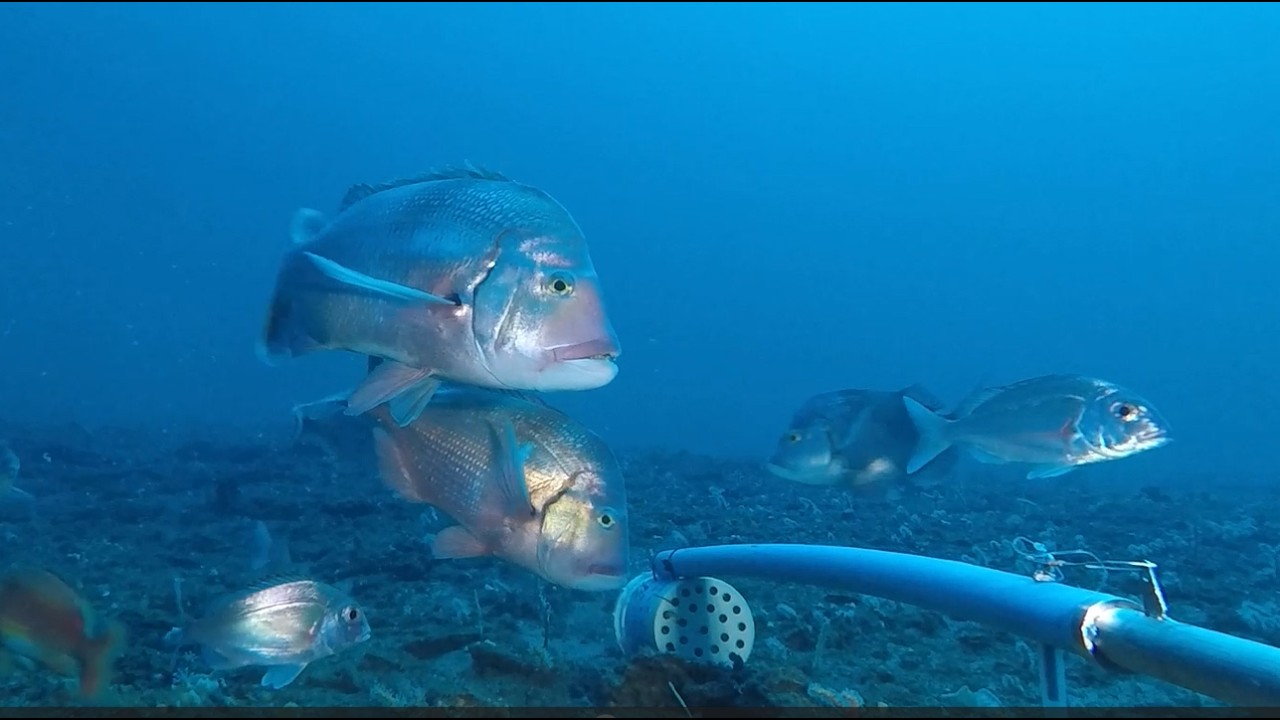
MaRIP Platform
Keywords
Summary
142 words
Critical Evaluation
Value of the Information & Strength of the Argument
The video provides high practical value for researchers and students in marine biology, offering a detailed, step-by-step guide that is not commonly available in such depth. It emphasizes standardization and data interoperability, which are crucial for comparative studies. The argumentation is solid, based on established best practices and the institute’s extensive experience. The video does not present new scientific findings but rather consolidates existing knowledge into a practical protocol. The logical flow from system design to field deployment to data management is clear and well-structured.
94 words
Title / Content Match
The title 'MaRIP Platform' is somewhat vague; the video focuses on the Marine Remote Imagery Platform and specifically on stereo-BRUV methodology, which is not immediately clear from the title.
Quality & Reliability
8/10
The video is an instructional tutorial produced by a reputable research institute (NRF-SAIAB), providing detailed, step-by-step protocols for stereo-BRUV deployment. It references international best practices (Ocean Best Practice System) and includes specific technical details (calibration, sampling design, field logistics). The content is consistent with established marine research methodologies, though it lacks direct citations to peer-reviewed literature within the video itself.
Key Moments
Markers derived by PSI from the transcript: the creator did not define chapters.
Cited Sources
- Ocean Best Practice System — Referenced as the source for internationally accepted best practices for stereo-BRUV design and deployment.
- CAL software by CGIS — Mentioned as the most widely used software for stereo camera calibration.
- EventMeasure software — Mentioned as the video annotation software that works with CAL calibration results.
Concurring Sources
- Langlois et al. (2020) - A field and video annotation guide for baited remote underwater stereo-video surveys of demersal fish assemblages — Provides similar methodological guidelines for stereo-BRUV surveys, supporting the video's recommendations.
Contribution & Novelties
The video provides a comprehensive, practical tutorial on stereo-BRUV methodology, which is valuable for training new researchers and standardizing practices. It consolidates information from various sources into a single accessible format. The emphasis on African-led ocean science and the platform’s achievements highlights the growing capacity in marine research in the region.
Pour aller plus loin :
- Baited remote underwater video systems (BRUVs) — Provides an overview of BRUVs and their applications.
- Stereo photogrammetry — Explains the principles of photogrammetry used for size measurements.
- Marine biodiversity monitoring — Contextualizes the importance of such monitoring efforts.
94 words
Radar Profile
The radar profile shows high scores in information quantity, quality, and reliability, with a slightly lower technical level, indicating a well-balanced and trustworthy tutorial suitable for both beginners and experienced researchers.
💬 No comments were provided for analysis.