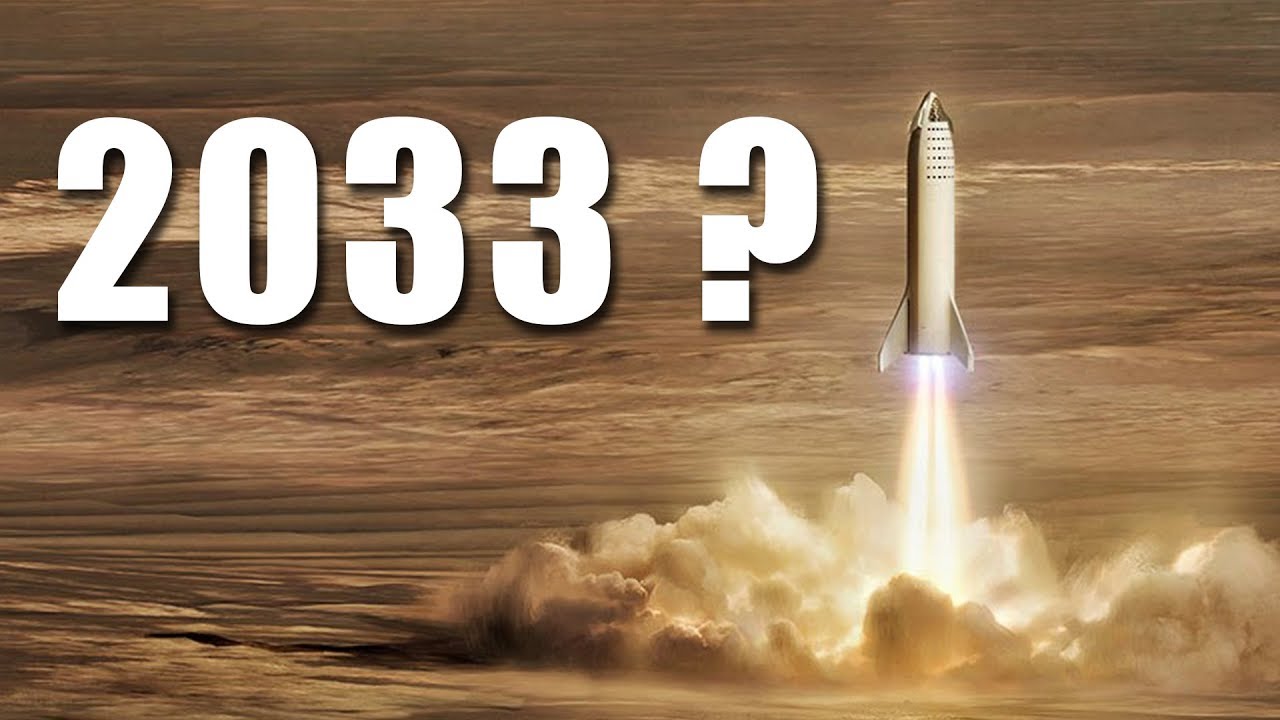
Quand sera le premier voyage vers Mars ? LDDE
Keywords
Summary
143 words
Critical Evaluation
Value of the Information & Strength of the Argument
The video provides a balanced and nuanced analysis of the feasibility of a crewed Mars mission. It avoids sensationalism and presents a realistic assessment based on current programs and technological readiness. The argumentation is solid, supported by references to NASA’s official plans, ESA’s rationale, and industry developments. The narrator effectively explains the complexity of Mars missions, including the need for ISRU, habitat modules, and energy sources, and highlights the gap between current capabilities and the requirements for a Mars expedition. The discussion of potential catalysts (e.g., SpaceX’s Starship, geopolitical competition) adds depth, while maintaining a cautious tone about over-optimistic timelines.
Scientific Rigor, Source Quality, Title Accuracy
The video demonstrates strong scientific rigor by citing reputable sources such as NASA, ESA, SpaceNews, and Inverse. The sources are directly relevant to the topics discussed, including NASA’s Moon-to-Mars campaign and SpaceX’s Mars plans. The title accurately reflects the content, which focuses on the timeline and conditions for a first Mars voyage. The video does not overstate claims and acknowledges uncertainties, which enhances its credibility. The inclusion of multiple perspectives and the clear distinction between facts and speculation further strengthen its reliability.
197 words
Title / Content Match
The title accurately reflects the content, which explores the timeline and feasibility of a crewed Mars mission.
Quality & Reliability
8/10
The video is a well-structured documentary that synthesizes information from reputable sources (NASA, ESA, SpaceNews, Inverse). It clearly distinguishes between established facts (e.g., NASA's Moon-to-Mars program, MOXIE experiment) and speculative scenarios (e.g., private Mars missions). The reasoning is transparent and acknowledges uncertainties, enhancing its reliability.
Key Moments
Markers derived by PSI from the transcript: the creator did not define chapters.
- Introduction to the topic and NASA's Moon-to-Mars program
- Discussion of the political and economic challenges for Mars missions
- Overview of SpaceX's Starship and its potential role
- Technical challenges: ISRU, habitats, and energy sources
- The importance of a lunar base as a precursor
- NASA's optimistic timeline and its feasibility
- Scenarios for a Mars mission: NASA-led, private-led, or geopolitical race
- The role of cost efficiency and commercial partnerships
- Potential game-changers: Starlink, China, and scientific discoveries
- Conclusion: realistic timeline and the passion for exploration
Cited Sources
- Bridenstine says NASA planning for human Mars missions in 2030s — Cited for NASA's official timeline for crewed Mars missions.
- NASA's Exploration Campaign: Back to the Moon and on to Mars — Cited for NASA's Moon-to-Mars program details.
- SpaceX's timeline for getting to Mars and starting a colony — Cited for SpaceX's Mars plans and timelines.
- Why go to Mars — Cited for ESA's perspective on Mars exploration.
- Preparing to go — Cited for NASA's preparation for Mars missions.
Concurring Sources
- NASA's Moon to Mars — Supports the video's discussion of NASA's long-term strategy.
- SpaceX Mars program — Provides background on SpaceX's Mars ambitions.
Dissenting Sources
- Mars One — Mars One was a private project that claimed to establish a Mars colony, but it failed due to lack of funding and unrealistic plans, contrasting with the video's cautious approach.
External References
Contribution & Novelties
The video provides a comprehensive and accessible synthesis of the current state of Mars exploration, highlighting the gap between political rhetoric and technical reality. It offers a balanced view of potential pathways, emphasizing the importance of a lunar base and ISRU. The analysis of cost and organizational challenges is particularly insightful, as it goes beyond simple timeline predictions.
Pour aller plus loin :
- NASA’s Moon to Mars — Official NASA page detailing the Moon to Mars approach.
- In-situ resource utilization — Wikipedia article explaining ISRU concepts.
- SpaceX Starship — Wikipedia article on the Starship spacecraft.
- Artemis program — Wikipedia article on NASA’s lunar program.
104 words
Radar Profile
The radar profile shows high scores in information quantity, quality, and reliability, with a slightly lower technical level, indicating that the video is well-researched and reliable but may not delve into the most technical details. The overall balance suggests a strong documentary suitable for a general audience interested in space exploration.
💬 Très positif. Sur les 30 commentaires analysés, les spectateurs expriment une admiration unanime pour la qualité du contenu, la clarté des explications et la passion communicative, avec des demandes de sujets complémentaires et des remerciements pour le travail fourni.