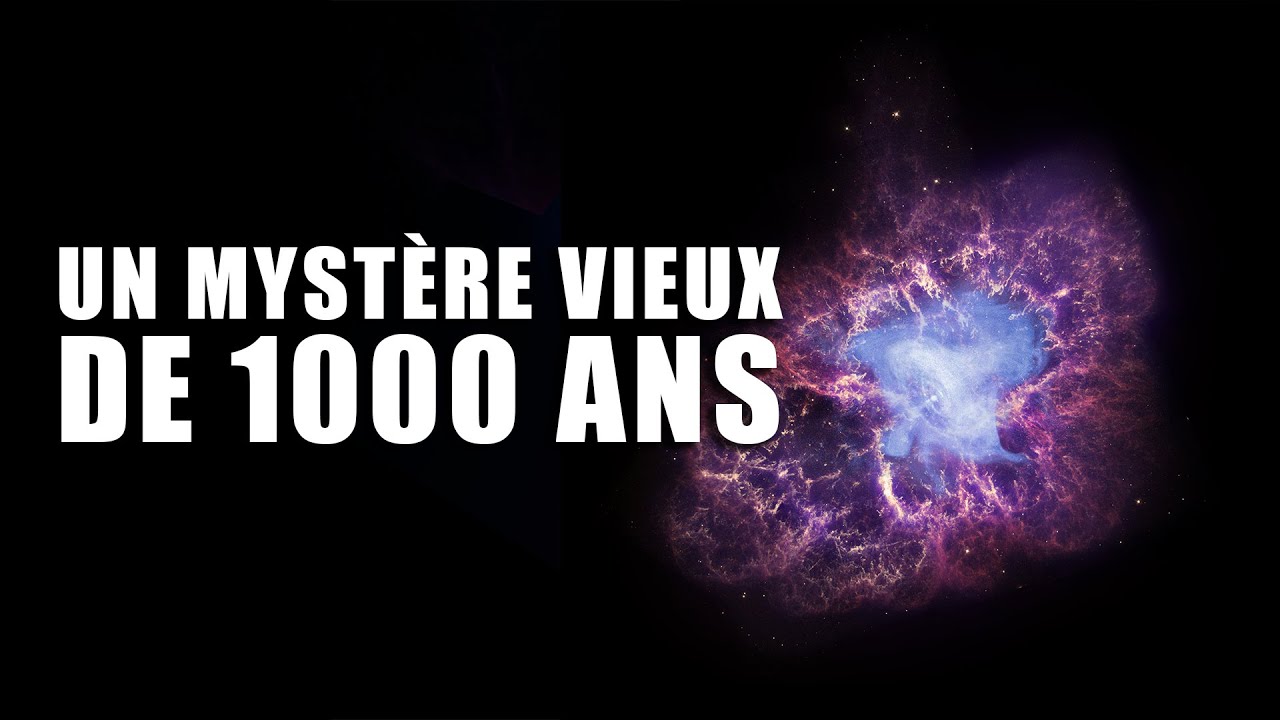
Supernova - Un MYSTÈRE Vieux de 1000 ans ENFIN Résolu ? DNDE #209
Keywords
Summary
163 words
Critical Evaluation
Value of the Information & Strength of the Argument
The video provides valuable information by presenting recent scientific discoveries and space industry developments in an accessible manner. The main segment on the electron-capture supernova is well-argued, explaining the theoretical background and the observational evidence that led to the confirmation. The argumentation is solid, referencing a Nature Astronomy study and observations from the Keck Observatory. The coverage of other news is concise but informative, with clear explanations of technical aspects such as the Mars radar signals and the ExoMars parachute tests. The video maintains a balanced perspective, acknowledging uncertainties and ongoing research.
Scientific Rigor, Source Quality, Title Accuracy
The video demonstrates scientific rigor by citing primary sources for each news item, including links to Nature Astronomy, Keck Observatory, NASA, ESA, and other reputable institutions. The sources are relevant and recent, supporting the claims made. The title accurately reflects the main topic, and the content matches the title’s promise. The video also includes a brief mention of a sponsorship or promotional segment, but it does not detract from the scientific content. The overall quality of sources is high, and the title-content alignment is good.
192 words
Title / Content Match
The title accurately reflects the main topic of the video, which focuses on the resolution of the Crab Nebula's origin as an electron-capture supernova.
Quality & Reliability
8/10
The video presents recent scientific findings with references to primary sources (Nature Astronomy, Keck Observatory, NASA, ESA). The information is accurate and well-contextualized, though the format is a news review rather than an in-depth analysis.
Key Moments
Markers derived by PSI from the transcript: the creator did not define chapters.
- Introduction and presentation of the Crab Nebula mystery
- Explanation of the two known supernova mechanisms
- Introduction of the electron-capture supernova hypothesis
- Discovery of SN 2018zd and its confirmation as electron-capture supernova
- Link between SN 2018zd and the Crab Nebula
- Ingenuity's ninth flight on Mars
- ExoMars parachute test success
- New studies on Mars' south pole radar signals
- Upcoming suborbital flights by Virgin Galactic and Blue Origin
- Virgin Orbit's third mission success and Relativity Space's expansion
Cited Sources
- Nature Astronomy - Electron-capture supernova study — Study providing evidence for the electron-capture supernova mechanism
- Keck Observatory - Electron-capture supernova — Observatory press release about the discovery
- NASA Mars Helicopter Status - Flight 9 — NASA update on Ingenuity's ninth flight
- ESA - ExoMars parachute test success — ESA announcement of successful high-altitude drop test
- Virgin Galactic - First fully crewed spaceflight — Announcement of Richard Branson's upcoming flight
- Ars Technica - Relativity Space factory — Article about Relativity Space's new factory
Concurring Sources
- Nature Astronomy - Electron-capture supernova study — Primary source confirming the electron-capture supernova mechanism
- Keck Observatory - Electron-capture supernova — Observatory press release supporting the findings
External References
Contribution & Novelties
The video provides a clear and accessible explanation of a recent scientific breakthrough: the confirmation of electron-capture supernovae, which solves the long-standing mystery of the Crab Nebula’s origin. It effectively bridges the gap between specialized research and public understanding, highlighting the importance of amateur astronomers in scientific discovery. The video also offers a concise overview of other space news, making it a valuable resource for enthusiasts.
Pour aller plus loin :
- Electron-capture supernova - Wikipedia — Provides background on the theoretical mechanism.
- Crab Nebula - Wikipedia — Detailed information about the nebula and its historical observation.
- SN 2018zd - Wikipedia — Information about the supernova that provided the first evidence.
- Ken’ichi Nomoto - Wikipedia — The astrophysicist who proposed the electron-capture supernova mechanism.
123 words
Radar Profile
The radar profile shows high scores across all dimensions, indicating a well-rounded and reliable video. The strongest aspects are the quantity and quality of information, while the technical level is slightly lower, reflecting the accessible nature of the content.
💬 Très positif. Sur les 30 commentaires analysés, tous expriment une appréciation enthousiaste, louant la qualité des vidéos, la musique, et la vulgarisation scientifique.